
The Gap Between DIY and Industrial-Grade Heat Press Solutions for Scalable Businesses
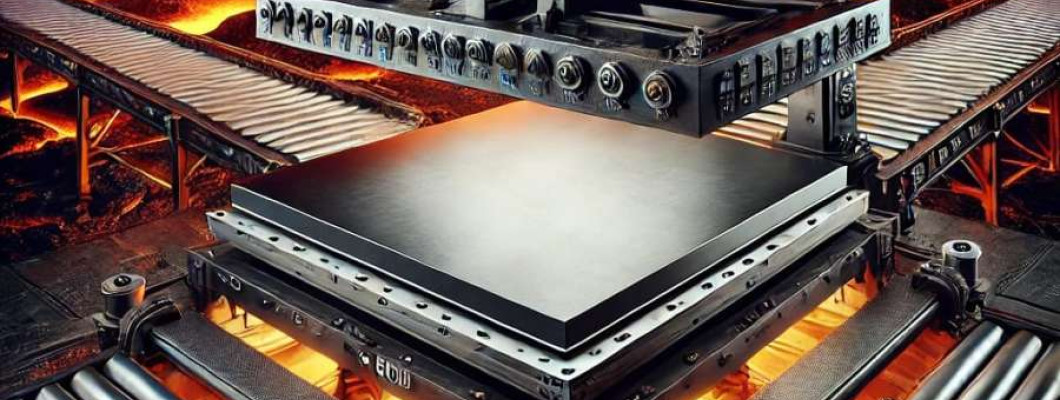
The Industrial Reality of Scaling Print Throughput with a 40 by 60 Centimeter Heat Press
In an industrial setting where throughput, labor cost optimization, and automation integration define profitability, the choice of heat press machinery becomes a critical decision point. Consider a midsize custom apparel production facility aiming to escalate from small-batch printing to semi-automated daily runs upwards of 300 units. The transition from entry-level bench-top heat presses exposes operational bottlenecks that are not immediately apparent: uneven heat distribution across larger platen areas, inconsistent pressure application, and variable warm-up times all undermine output consistency. Thermal inertia and platen rigidity become paramount mechanical attributes, directly influencing throughput and downtime.
This scenario underscores the importance of selecting equipment capable of handling extended production cycles without accelerated wear or overheating failures. Industrial-grade heat presses calibrated for uniform 40*60CM platen coverage provide the necessary spatial real estate to accommodate diverse substrate dimensions while preserving cycle cadence. Additionally, the mechanical design must counteract operator-induced variance by minimizing manual intervention in pressure adjustments and temperature controls. The 40*60CM Heat Press Machine specifically targets this operational niche, offering a platform sized sufficiently for batch scalability yet engineered for reliability beyond the DIY segment.
Technical Deep-Dive Into Heat Press Hardware and Operational Metrics
Thermal Management and Heat Distribution
The 40*60CM platen dimension inherently challenges uniform temperature maintenance. Thermodynamic modeling indicates that platen materials with high thermal conductivity (such as anodized aluminum) paired with embedded heating elements can achieve temperature uniformity within ±2°C across the entire surface at steady state. The physics governing heat transfer dictate that platen thickness must balance rapid heating against thermal mass to avoid lag during cycle changes. A typical 3-5 mm thickness serves as optimal, producing a heating rate averaging 4°C per second under 1200W input power. This contrasts with thinner platens in entry-level presses that heat faster but suffer from hotspots.
Pressure Mechanism and Mechanical Integrity
Pressure uniformity is critical for imprint clarity and substrate reliability. The 40*60CM machine employs a parallel arm leverage system optimized for even force distribution across the platen. Mechanical advantage calculations show that with a 10 kg applied user force, platen pressure can achieve 5-7 N/cm2, suitable for heat transfer vinyl and sublimation substrates. Reinforced hinge points and hardened steel components mitigate mechanical fatigue, extending operational longevity and maintaining consistent platen alignment over thousands of cycles.
Cycle Time and Throughput Analysis
Cycle efficiency incorporates platen warm-up, pressure application duration, and cooldown intervals. With integrated PID temperature controls, the machine maintains setpoints with ±1°C precision, reducing thermal cycling errors. A standard imprint cycle of 15-20 seconds per garment, combined with a heat-up time under 5 minutes from cold start, enables daily throughput estimates of 250-300 units under continuous operation, factoring in operator loading and unloading times.
Comparative Hardware Paths
| Attribute | DIY Heat Press | 40*60CM Heat Press Machine |
|---|---|---|
| Platen Size (cm) | 30 x 30 | 40 x 60 |
| Heating Element Power (W) | 600 | 1200 |
| Temperature Uniformity (°C) | ±5 | ±2 |
| Pressure (N/cm²) | 2-3 | 5-7 |
| Cycle Time (seconds) | 25-30 | 15-20 |
| Warm-up Time (minutes) | 8-10 | 4-5 |
| Build Materials | Basic steel, thin platen | Hardened steel, anodized aluminum platen |
Integration Challenges with Automation
The transition from manual to semi-automated workflows mandates compatibility with conveyor loaders and robotic arm interfaces. The 40*60CM unit’s standardized platen dimension and control interface accommodate integration with programmable logic controllers (PLCs) through digital setpoint adjustment ports. This flexibility significantly reduces the cycle overruns and human error found in manual operation, crucial for scaling throughput without linear increases in labor costs.
Maintenance Cycles and Lifecycle Costs
Solid-state temperature sensors and modular heating elements simplify preventive maintenance scheduling. Compared to DIY models, the 40*60CM Heat Press’s components exhibit an MTBF (Mean Time Between Failures) exceeding 10,000 cycles under industrial conditions. Routine calibration intervals extend beyond 1000 cycles, reducing downtime. Lifecycle cost modeling indicates a total cost of ownership reduction by 18% through lowered repairs and consistent operational availability.
Scenario Analysis of Business Impact Across Three Models
Case 1 Small Startup Growing to Volume Production
A startup initially using smaller heat presses encounters bottlenecks at 100 units/day. The 40*60CM Heat Press allows batch sizes to increase without sacrificing cycle time, enabling throughput scaling to 250 units/day with stable quality, lowering lead times and improving client satisfaction.
Case 2 Established Custom Print Shop Automating Key Processes
An established shop deploying semi-automated loading benefits from the machine's standardized platen size and control interface, reducing labor dependencies and minimizing operator training time. The thermal stability ensures consistent print quality across diverse substrates ranging from cotton to polyester blends.
Case 3 Large-Scale Apparel Manufacturer Implementing Just-in-Time Workflow
In a just-in-time manufacturing environment, the heat press’s rapid warm-up and robust pressure system align with fluctuating order volumes. Reduced cycle variability supports tight scheduling, mitigating delays and inventory backlogs, critical for enterprise-level supply chain integration.
Expert FAQ on the 40*60CM Heat Press Machine for Scalable Businesses
Q1: How does platen material choice influence heat retention and maintenance?
A1: Anodized aluminum platens balance rapid heating and heat retention, reducing energy consumption and wear compared to cast iron, which has longer warm-up but superior mass stability.
Q2: What are the risks of insufficient pressure uniformity in scaled workflows?
A2: Uneven pressure causes inconsistent transfers, substrate damage, and rework costs. The leverage mechanism in this machine reduces variance, improving yield.
Q3: How does the machine’s control system facilitate integration with automated loaders?
A3: It provides programmable digital interfaces for temperature and pressure setpoints, allowing synchronization with external automation control units.
Q4: What operational metrics should be tracked to optimize lifecycle costs?
A4: Key metrics include heating element power draw, cycle duration variance, platen temperature stability, and hinge wear indicators.
Q5: Is the machine suitable for all substrate types in commercial apparel printing?
A5: Yes, the platen size and pressure range accommodate a wide substrate portfolio including vinyl, sublimation fabrics, leather, and treated synthetics with proper parameter adjustments.
Strategic Verdict and Recommendation
The 40*60CM Heat Press Machine emerges as a strategically sound industrial-grade solution bridging the gap between DIY models and enterprise-scale printing demands. Its balance of platen size, thermal efficiency, mechanical robustness, and control system sophistication enables scalable throughput with minimized operational bottlenecks. For scalable business owners focused on integrating automation and managing labor overhead, this machine offers a definitive platform that sustains long production cycles with consistent quality output.
From a total cost of ownership perspective, it reduces maintenance intervals and energy costs relative to smaller or less engineered devices. By investing in this equipment, businesses position themselves for smooth scaling without compromising substrate versatility or print fidelity.
More detailed technical specifications and purchasing options can be found directly on the official product page of the 40*60CM Heat Press Machine.