
The Gap Between DIY and Industrial-Grade Heat Presses for Scalable Business Owners
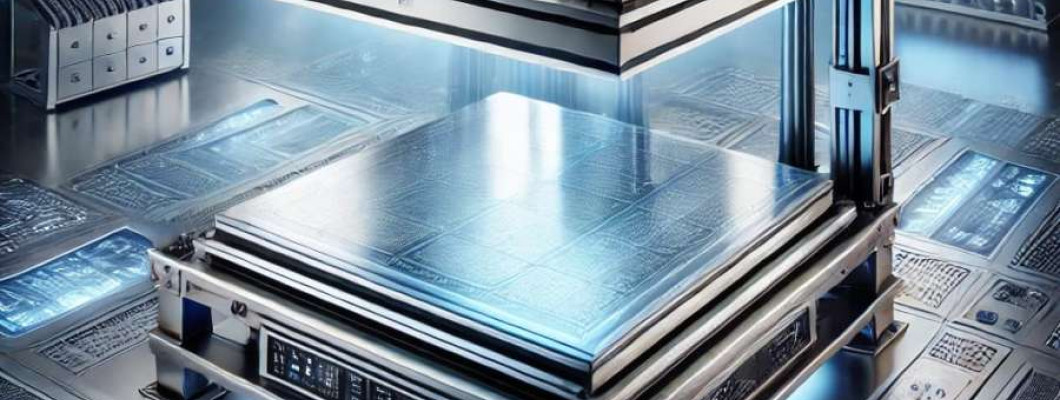
The Industrial Reality of Scaling Heat Press Operations
Within scalable business environments, the distinction between consumer-level and industrial-grade heat press machines becomes critical when throughput, automation capability, and labor costs are considered. A 40*60CM heat press machine constrained by entry-level mechanics and materials can become a bottleneck when deployed in production workflows requiring consistent, repeatable output across hundreds of substrates daily. The challenge lies beyond mere size: industrial operations demand machines that sustain thermal uniformity through multiple cycles, withstand mechanical wear over thousands of actuation cycles, and integrate with automated handling systems to reduce operator intervention time.
Consider a medium-sized apparel manufacturer scaling from manual transfers to batch processing. Thermal inertia and platen surface consistency directly influence cycle times and substrate quality. A machine designed without robust industrial components will introduce variability in pressure distribution and temperature homogeneity, thereby increasing rework rates and labor overhead. This makes a thorough understanding of the mechanical and thermal architecture pivotal before committing capital expenditure on heat press solutions.
Furthermore, the structural frame architecture affects vibration dampening and platen alignment resilience. Even minor platen misalignment by 0.1mm can degrade ink adhesion and print sharpness under high-throughput conditions. The operator’s ergonomics also contribute to labor fatigue, impacting throughput indirectly through human factors engineering. Thus, the industrial reality integrates machine design, process control, and labor dynamics into a single throughput optimization equation.
Technical Deep-Dive Into the 40*60CM Heat Press Machine
Thermal Management and Uniformity
The 40*60CM platen size corresponds to a thermal surface area of 2400 cm2. Uniform heat distribution over this area requires a well-engineered heating element with embedded temperature sensors for closed-loop PID control. Assuming a typical cartridge heater wattage density of 0.5 W/cm2, the heating element must deliver approximately 1200 W power. However, heat loss due to platen thickness and ambient conditions can create gradients exceeding 5°C at edges if insulation is insufficient.
Industrial-grade models incorporate multi-zone heating or graphite composite platens to maintain temperature within ±2°C across the entire surface during the press cycle. In contrast, a consumer model may show ±5°C variance, leading to inconsistent transfer quality. For scalable production, a thermal uniformity coefficient (TUC) metric below 0.97 is unacceptable, as it correlates to increased substrate defects.
Mechanical Pressure System and Actuation
Pressure uniformity across the 40*60CM platen is critical. The mechanical actuation system usually employs pneumatic or hydraulic presses in industrial contexts, ensuring stable, repeatable pressure exceeding 4 kg/cm2. For this model, if operated manually with a lever mechanism, operator variability and mechanical wear introduce deviations up to ±10% pressure changes.
Calculating force: for a 40*60 cm platen, equivalent to 2400 cm2, at 4 kg/cm2, total force required is 9600 kg (approx. 94.3 kN). Consumer units rarely reach this threshold, limiting their applicability for heavy or thick substrates requiring forceful adhesion.
Frame and Structural Integrity
A steel frame with minimal flex (<0.05 mm under operational load) is necessary to maintain platen parallelism. Vibration and mechanical backlash can cause platen wobble, resulting in partial heat transfer and substrate misalignment. The use of high-grade cold-rolled steel and precision-machined hinges are standard in industrial units.
Automation and Integration Potential
For scalability, the ability to integrate the heat press into a semi-automated line is indispensable. Features such as programmable digital controllers, PLC communication ports, and pneumatic actuation readiness are valuable. This model's specs lack detailed controls or networking, suggesting limited automation potential. Upgrading would require additional retrofitted modules, impacting cost and complexity.
Energy Consumption and Lifecycle Cost
Estimating energy consumption at 1200 W continuous heating with a cycle time of 60 seconds per press cycle, a high-volume facility running 500 cycles per day consumes 600 kWh monthly solely for heating. Efficient insulation and rapid heat recovery technology can reduce this by 10-15%. Machine durability factors into lifecycle cost: replacing heating elements or platens every 12-18 months at industrial use rates raise operating expenses.
| Specification | Consumer-Grade Heat Press | Industrial-Grade Heat Press |
|---|---|---|
| Platen Size | 40*60 cm | 40*60 cm or larger |
| Pressure Force | Manual Lever (variable) | Pneumatic/Hydraulic ~94 kN |
| Thermal Uniformity | ±5°C | ±2°C |
| Frame Material | Steel (entry grade) | Cold-rolled precision steel |
| Automation Ready | No | Yes, PLC Interfaces |
| Energy Consumption | ~1200 W | 1200 W with insulation and control optimization |
Scenario Analysis With Three Business Use-Cases
Custom Apparel Startup Scaling Production
A startup printing customized t-shirts moves from manual presses to batch production. The 40*60CM machine provides the necessary platen size for adult shirts but suffers from manual pressure control variability, resulting in uneven print adhesion and increased waste. Throughput is limited by operator fatigue and cycle time variability. Integration of a semi-automated pneumatic system is recommended to reduce labor costs and improve consistency.
Mid-tier Promotional Goods Manufacturer
This manufacturer runs multiple presses for mugs, hats, and small panels requiring different platen configurations. The large 40*60CM platen is underutilized for small items but is necessary for occasional larger transfers. Its lack of advanced thermal zoning limits productivity, causing bottlenecks in multi-substrate workflows. Investing in modular platens and enhanced controllers can mitigate these issues.
Industrial Textile Printing Line
For a high-output textile printer, platen parallelism and thermal stability are paramount. The 40*60CM model, lacking precise servo-actuated pressure control and advanced PID thermal management, cannot sustain production quality, leading to frequent maintenance downtime. This use case requires a machine with integrated sensors and industrial automation support for long shifts and continuous operation.
Expert FAQ on Industrial Heat Press Machines
How does platen material affect heat transfer efficiency?
Platen materials like aluminum combined with graphite coatings improve thermal conductivity and transfer speed compared to pure steel, reducing cycle times and energy consumption.
What are the implications of platen misalignment in high-throughput environments?
Even 0.1 mm misalignment can cause uneven pressure distribution leading to incomplete transfers, substrate damage, and increased reject rates.
How critical is PID temperature control in this size range?
PID controllers maintain consistent platen temperature, compensating for heat loss during cycles. Without this, temperature fluctuations increase defects.
Can manual lever systems be retrofitted for automation?
Retrofits are possible but often cost-prohibitive compared to procuring machines designed for pneumatic or hydraulic actuation due to mechanical and control complexity.
What maintenance challenges arise with frequent high-cycle use?
Frequent cycles accelerate wear on heating elements, hinges, and pressure systems, requiring routine inspection, calibration, and part replacement to maintain performance.
Strategic Verdict and Recommendation
Given the breadth of industrial requirements for scalable heat press applications, the 40*60CM Heat Press Machine presents a competent baseline solution primarily suited for small to mid-scale operations where platen size and basic functionality suffice. However, its manual pressure system and modest thermal management limit its use in high-throughput industrial environments demanding consistency and automation.
For businesses seeking to expand print volume with controlled quality and reduced labor dependence, investing in enhanced versions or modular upgrades for automation and thermal control is advisable. The machine’s footprint and size remain ideal for versatile substrate handling, and when paired with additional control systems, it can bridge the gap without necessitating full industrial equipment replacement.
Industry professionals and scalable business owners should evaluate this model critically against throughput goals and available integration modes. The 40*60CM Heat Press Machine offers a solid technical foundation with room for expansion, making it a viable industrial-grade solution where cost-efficiency and operational scaling intersect.