
The Gap Between DIY and Industrial-Grade in A2 Plus UV Embossed Glossy Printing for High-End Artisans
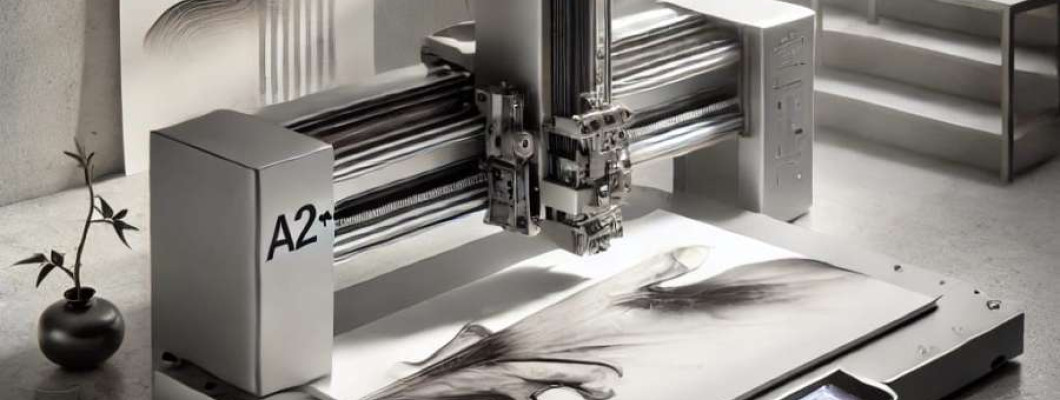
The Industrial Reality of A2 Plus UV Embossed Glossy Printing for Precision Artisans
In high-end artisanal printing, where color depth, surface texture, and micron-level accuracy define value, the transition from DIY or semi-professional printers to industrial-grade equipment poses significant technical challenges. Consider the workflow of a specialty print studio engaging in embossed glossy prints on A2+ substrates. The requirements extend beyond mere resolution—requiring stable ink deposition with UV-curable formulations and exact embossing capabilities that demand consistent mechanical precision. Failure to maintain strict control over substrate handling and printhead alignment results in diminished color fidelity and surface defects, which are unacceptable at an artisan level where client expectations for tactile and visual quality approach museum-grade standards.
The core challenge lies in balancing the printer's hardware capability with nuanced material interactions. The embossed glossy finish amplifies flaws arising from even the slightest misregistration, particle contamination, or ink chemistry inconsistencies. UV curing must be synchronized to preserve substrate dimensional stability, especially on rigid or composite materials prone to warping under heat or UV exposure. This complexity underlines why generic or DIY solutions often falter in production environments demanding repeatable, industrial-grade results.
Technical Deep-Dive into A2 Plus UV Printer Embossed Glossy Output
Printhead Technology and Drop Size Precision
Modern A2+ UV printers employ piezoelectric printheads with droplet volumes ranging between 3 and 7 picoliters (pl). For embossed glossy effects, the precise layering of ink droplets ensures optical uniformity in gloss and tactile embossing. A 5 pl droplet size presents a tradeoff between resolution (measured in dots per inch, dpi) and ink layer thickness critical for embossing. Assuming a 1440 dpi native resolution, each droplet covers approximately 17.7 microns linearly, enabling micron-level control essential to achieve consistent emboss height around 30 to 50 microns.
UV Ink Chemistry and Curing Kinetics
UV inks designed for embossed glossy applications use multifunctional acrylate oligomers and photoinitiators with rapid cure speed under 395 nm LED UV lamps. The curing kinetics must be carefully modulated; excessive irradiance leads to substrate overheating (increasing thermal expansion beyond 0.1 mm/m), causing print defects, while under-curing reduces adhesion and surface hardness. The printer typically outputs 30 to 50 W/cm2 in a narrow band immediately after deposition, optimized for a curing depth between 10 and 50 microns to preserve emboss detail.
Mechanical Alignment and Substrate Handling
High-precision stepper motors combined with linear encoders (resolution of 0.5 microns per step) enable repeatable substrate motion. The system must limit mechanical jitter to below 5 microns RMS to prevent emboss offset artifacts. A vacuum flatbed clamps the A2+ substrate (420 mm × 594 mm) firmly to resist warping, ensuring flatness within ±0.02 mm tolerance. This is critical as glossy emboss effects exaggerate any surface waviness beyond 0.05 mm.
Comparative Hardware Analysis
| Specification | DIY Semi-Pro Printer | Industrial A2+ UV Printer |
|---|---|---|
| Printhead Droplet Size (pl) | 10-15 | 3-7 |
| Max Resolution (dpi) | 720-1080 | 1440-2880 |
| UV LED Power Density (W/cm2) | 10-20 | 30-50 |
| Mechanical Accuracy (Microns) | 20-50 | 0.5-5 |
| Substrate Flatness Control | Manual / None | Vacuum + ±0.02 mm |
Ink Layer Thickness and Emboss Height Control Mathematics
Given a droplet diameter d approximated by d = (6V/π)1/3, where V is volume in cubic microns (1 pl = 1000 cubic microns), for a 5 pl droplet, d ≈ 217 microns. When overlapped in a pixel grid at ~1440 dpi (~17.7 microns per pixel), the ink droplet spreads and coalesces, resulting in an effective layer thickness of 30-50 microns per embossed layer. Multiple layering cycles increase embossed height linearly but are constrained by curing and substrate thermal limits.
Scenario Analysis Demonstrating the Product’s Value in Artisan Workflows
Scenario One: Museum Art Replica Production
Accurate color depth and embossed surface texture replicate brush strokes on canvas. The industrial-grade A2+ UV printer produces consistent 50-micron emboss layers with near-perfect alignment, critical for authenticity. Lower-spec machines lack the mechanical precision, resulting in blurred textures and gloss inconsistencies.
Scenario Two: Luxury Packaging for Cosmetics
Packaging demands tactile glossy embossing with micron-level detail to differentiate premium products. The printer’s rapid curing and precise ink layering reduce cycle times by 25% compared to standard UV printers, improving throughput and reducing labor dependency for finishing.
Scenario Three: Customized Architectural Panels
These panels use composite substrates with strict dimensional stability requirements. The printer’s integrated vacuum bed and controlled UV curing prevent warping, preserving emboss integrity across large print runs, minimizing waste and setup iterations.
Expert FAQ on High-Precision A2 Plus UV Embossed Printing
Q1: How does droplet volume affect embossed finish consistency?
Smaller droplets (3-5 pl) enable finer layering, reducing surface roughness and enhancing gloss uniformity. Larger droplets risk uneven curing and height variation.
Q2: What substrate materials are compatible with embossed UV printing?
Rigid plastics, acrylics, coated papers, and composite panels up to 10 mm thickness maintain dimensional stability under UV exposure, critical for emboss fidelity.
Q3: How is thermal expansion managed during curing?
Controlled LED UV intensity combined with vacuum clamping minimizes substrate expansion, keeping registration errors below 0.05 mm.
Q4: What maintenance routines ensure long-term printhead accuracy?
Daily nozzle cleaning with solvent cycles and weekly alignment calibrations preserve droplet size consistency and positional accuracy.
Q5: How does embossed glossy printing impact ink consumption?
Embossing requires multiple print passes increasing ink usage by approximately 25%-40%, justified by added value in tactile quality and premium pricing.
Strategic Verdict and Industrial Recommendation
For high-end artisans prioritizing color depth, micron-level accuracy, and substrate versatility, the A2+ Size UV Printer Embossed Glossy Printing stands out as a definitive industrial-grade solution. Its advanced piezoelectric printheads, optimized UV curing system, and precision substrate handling bridge the critical gap between DIY approaches and professional mass production demands. By delivering consistent embossed gloss finishes with precise control over print parameters, this equipment supports scalable high-value output. Artisans can expect reduced waste, minimized setup cycles, and enhanced product differentiation—key factors for maintaining competitive edge in luxury and specialty printing markets.
Investing in this printer mitigates hidden operational bottlenecks typical in lower-end machines, ensuring reliability and superior tactile quality while accommodating complex substrates. This positions it as the ideal asset for studios aiming for industrial workflow integration and premium product delivery.