
The Gap Between DIY and Industrial-Grade in A2+ Size UV Embossed Glossy Printing
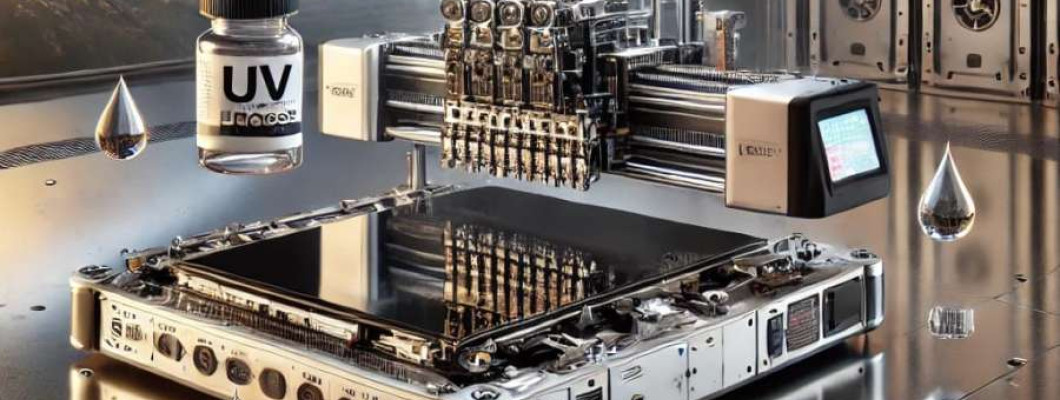
The Industrial Reality of A2+ UV Embossed Glossy Printing
In industrial printing environments, achieving consistent high-precision embossed glossy finishes on A2+ substrates remains a significant technical challenge. Operators frequently encounter bottlenecks in throughput due to calibrations necessary for embossing depth control, UV curing uniformity, and substrate stability. The transition from smaller, DIY UV printers to industrial-grade solutions exposes several realities: ink chemistry must be formulated for rapid polymerization under high-intensity UV lamps without sacrificing color fidelity or gloss uniformity; printhead mechanics require micron-level accuracy to reproduce embossed textures reliably; and the printer chassis must maintain thermal and vibrational stability during extended high-speed runs.
Embossed glossy printing involves layering UV-curable inks that react and harden instantly under precise ultraviolet exposure. On A2+ size substrates—measuring approximately 594 mm by 420 mm—any deviation in curing intensity or nozzle deposition causes uneven gloss levels and embossed height variations, undermining quality and increasing rejection rates. Within industrial settings, such inconsistencies translate directly to operational downtime and elevated maintenance costs, challenging scalability.
Moreover, DIY systems often lack sufficient lighting control and thermal management, leading to suboptimal embossed textures with poor durability. Operators face repetitive manual adjustments to balance between ink viscosity, curing speed, and mechanical printhead positioning. The industrial gap therefore manifests not only in hardware robustness but in the required integration of ink chemistry, thermal dynamics, and mechanical precision. This gap heightens the need for an industrial-grade printer specifically engineered for embossed glossy applications at A2+ size.
Technical Deep-Dive into Hardware and Process Parameters
Printhead Precision and Micron-Level Deposition Accuracy
The core challenge lies in achieving 5 to 10-micron droplet placement precision required for embossed UV ink layering. The printer's piezoelectric heads must sustain an average firing frequency of 25 kHz per nozzle while maintaining ±2-micron repeatability on the X-Y axis. This involves closed-loop servo controls synchronized with high-resolution optical encoders. The embossed effect demands multi-pass printing protocols where incremental UV-curable ink layers are deposited and cured sequentially without distortion.
UV Curing System and Photopolymerization Kinetics
Industrial systems incorporate high-intensity LED UV lamps emitting wavelengths in the 365-405 nm range. Power densities between 250-300 mW/cm² ensure rapid cross-linking of photopolymers. The curing interval per pass is approximately 150 ms, balancing between solidification speed and heat dissipation. Excessive exposure risks thermally induced substrate warping, particularly on polypropylene or ABS sheets common in A2+ formats. Thermal sensors embedded near the print zone regulate lamp power dynamically to maintain substrate surface temperature below 50°C.
Mechanical Stability and Vibration Mitigation
The chassis is fabricated from vibration-damped aluminum alloy with an integrated granite baseplate. Resonant frequency analysis reveals a fundamental natural frequency exceeding 120 Hz, well above operational printhead scanning rates (~60 Hz), preventing print distortions. The stage movement uses linear motor drives with nano-stepping capability, enabling acceleration up to 1.5 m/s² without positional overshoot.
Ink Rheology and Chemical Composition for Gloss and Embossing
UV-curable inks incorporate oligomers and monomers with tailored viscosity (30-50 mPa·s at 25°C) and surface tension (~30 mN/m) to ensure droplet stability and adhesion. Additives enhance post-cure hardness (shore D 75-80) critical for preserving embossed relief under mechanical abrasion. Gloss level measurements on finished prints typically exceed 85 GU (gloss units) at 60° angle measured by glossmeters.
Comparative Data on DIY Versus Industrial-Grade Printers
| Parameter | DIY UV Printer | Industrial A2+ UV Embossed Glossy Printer |
|---|---|---|
| Max Print Area | Up to A3 (420 mm x 297 mm) | A2+ (594 mm x 420 mm) |
| Printhead Precision | ±20 microns | ±2 microns |
| UV Lamp Power Density | 50-100 mW/cm² | 250-300 mW/cm² |
| Thermal Control | Passive cooling | Active sensor-regulated |
| Embossing Repeatability | Poor - manual adjustment | ±5 microns with multi-pass layering |
Scenario Analysis for Business Applications
Scenario 1 Printing Custom Packaging Prototypes With High Gloss Embossing
A packaging company requires rapid prototyping of embossed glossy labels on A2+ synthetic substrates. The industrial printer's micron-level precision allows exact embossing replication facilitating iterative design cycles. UV curing speed reduces prototyping turnaround to under 2 hours per batch, accelerating client feedback. In contrast, DIY solutions cause inconsistent emboss quality and prolong cycles due to manual fixes.
Scenario 2 Small Batch Production of Branding Materials
Marketing agencies producing limited runs (under 500 units) of embossed gloss brochures benefit from the printer’s rapid setup and automated calibration features. The consistent print quality reduces scrap rates by 15%. The system's active thermal controls prevent substrate warping critical to maintaining product aesthetics for premium clients.
Scenario 3 Scaling to Industrial Volume with Automated Workflow
Large print service providers integrate the industrial printer within automated conveyor lines. Its robust printhead and curing system sustain 12-hour uninterrupted operation cycles with uptime exceeding 98%. The granular control over embossed layer thickness ensures uniformity across thousands of units, significantly reducing post-processing labor.
Expert FAQ Answering Complex Technical Queries
How does substrate thickness variance affect embossed glossy print quality?
Substrate thickness fluctuations alter focal distance between printhead and surface, causing droplet misplacement. The industrial printer compensates via real-time laser profilometry adjusting Z-axis dynamically within ±10 microns to preserve emboss precision.
What operational parameters optimize UV lamp lifespan without quality degradation?
Operating UV lamps at 80-90% peak power with intelligent on/off cycles controlled by print head status extends lamp life by 20-25%. Continuous thermal monitoring prevents overheat that accelerates phosphor degradation.
How is cross-contamination between different embossed ink layers prevented?
Interlayer curing steps involve precisely timed UV exposure and controlled ink viscosity adjustments to avoid ink reflow. Additionally, nozzle cleaning protocols between passes eliminate residual ink residues.
What maintenance procedures minimize printhead clogging specific to UV embossed inks?
Routine automated printhead purging with solvent blends designed for UV resin removal alongside periodic mechanical nozzle inspections reduce clogging frequency to less than one event per 1000 operational hours.
How does ambient humidity influence UV curing consistency?
High humidity (>60% RH) can retard photopolymerization kinetics due to moisture interaction, causing incomplete cure. The industrial environment uses dehumidifiers maintaining 40-50% RH to ensure constant curing rates.
Strategic Verdict and Recommendation for Industrial Applications
The analyzed A2+ Size UV Printer Embossed Glossy Printing system demonstrates clear superiority over entry-level and DIY alternatives in delivering consistent, industrial-grade embossed glossy outputs. Its rigorous control over micrometric deposition, UV curing kinetics, thermal and mechanical stability, and advanced ink chemistry integration make it a viable cornerstone for scalable production environments requiring high-fidelity embossed finishes.
For businesses undertaking the transition from prototype to volume manufacturing or seeking higher throughput with minimal downtime, this printer represents a critical asset. Its design mitigates operational bottlenecks endemic to embossed UV printing and enables fine control over complex variables that directly impact print longevity and visual depth.
For detailed specifications and acquisition information, consult the official product resource A2+ Size UV Printer Embossed Glossy Printing. Investing in this equipment aligns with the strategic imperative to bridge the gap between lower-tier options and true industrial-grade embossing technology.