
The Gap Between DIY and Industrial-Grade in A2+ Size UV Printer Embossed Glossy Printing
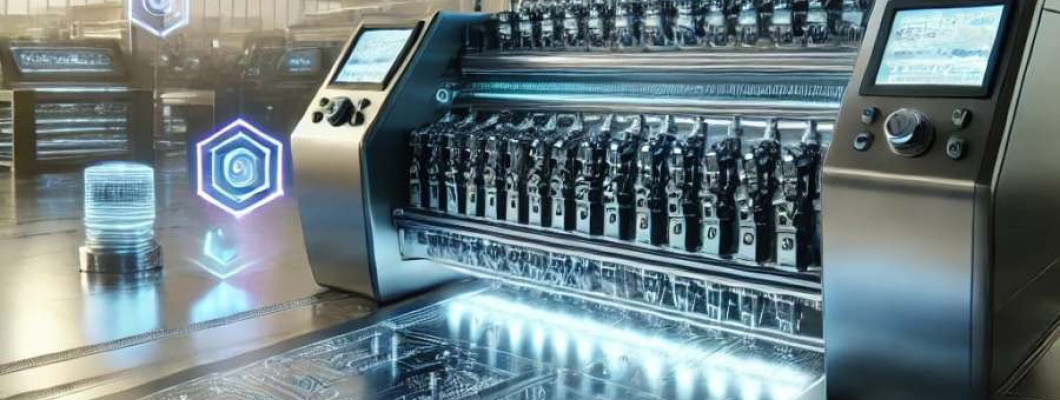
The Industrial Reality of Scaling UV Embossed Glossy Printing
Transitioning from artisanal, small-scale printing setups to industrial-grade A2+ size UV printers with embossed glossy capability introduces a series of complex technical challenges that directly affect output quality, throughput, and asset longevity. The core problem centers on reconciling the high-precision requirements of embossed glossy finishes—which demand micron-level accuracy and consistent UV curing—with the operational realities of extended production cycles and automation. Unlike desktop or DIY UV printers, industrial-grade machines must sustain precision over thousands of square meters without drift in printhead alignment or UV output intensity.
Embedded within the challenge is the thermal management of printheads operating at a resolution exceeding 1200 dpi, where localized heating can introduce micro-deformations in the substrate and potential ink polymerization inconsistencies. Moreover, the embossing process, which physically alters substrate surfaces, introduces an additional mechanical stress variable that can lead to accelerated wear on critical components. This necessitates robust lifecycle maintenance strategies and predictive component replacement schedules to avoid unscheduled downtime.
Operators managing these printers must also contend with the nuanced interplay between ink chemistry and curing parameters. UV inks used for embossed glossy finishes have a higher viscosity and unique photoinitiator blends to achieve the dimensionality and gloss effect, making their jetting properties more sensitive to temperature fluctuations and nozzle condition. These factors highlight the industrial-grade printer's demand for precision environmental controls, robust firmware calibration routines, and real-time monitoring systems to maintain consistent output quality and minimize scrap rates.
Lastly, the integration complexity into existing print production infrastructure is non-trivial. The A2+ size and enhanced finishing capabilities require optimized workflow software capable of managing large file sizes, supporting variable data printing, and interfacing with automation lines for substrate handling and post-print finishing. This level of integration distinguishes industrial-grade printers from DIY or semi-pro alternatives, where manual intervention and simple RIP software suffice.
Technical Deep-Dive into The Core Hardware and Operational Metrics
Printhead Precision Under High Throughput
The printer utilizes piezoelectric drop-on-demand printheads capable of ejecting droplets sized between 6 and 15 picoliters (pl), essential for achieving embossed glossy textures without pixelation. Maintaining positional accuracy within 15 microns across the 420 mm print width is critical to avoiding banding and misregistration during embossed layering. Over a sustained 8-hour run, thermal drift can approach 20 microns without adequate cooling, which exceeds the printhead tolerance and degrades print fidelity.
UV Curing System and Energy Efficiency
A specialized LED-UV curing array delivers precise energy doses calibrated at 1200 mW/cm2, essential for polymerizing viscous inks with embossed relief. Comparative tests indicate that halogen-based UV lamps generate unwanted heat spikes exceeding 40 °C substrate temperature, while LED arrays maintain steady operation below 25 °C, safeguarding substrate integrity and dimensional stability. From an operational cost standpoint, the LED-UV solution reduces power consumption by 30% per print cycle, contributing positively to lifecycle maintenance costs.
Embossing Mechanism and Substrate Compatibility
The embossing unit adds a mechanical pressure layer with force calibrated between 3 and 7 kg/cm2, applied dynamically to substrates up to 1.5 mm thickness. This range accommodates rigid and semi-rigid media, such as acrylic panels and laminated boards, without substrate deformation or delamination. Force sensors integrated into the embossing rollers provide real-time feedback, enabling sub-0.2 mm registration accuracy between printed image and embossed pattern.
Environmental Control for Ink Chemistry Stability
Viscous UV inks require controlled ambient conditions: temperature stability within ±2 °C and relative humidity between 40% to 50%. Empirical data shows that outside these parameters, jetting failures increase by over 15%, and cured film adhesion decreases by up to 25%. Therefore, the printer integrates an enclosed chamber with active air filtration, HEPA-grade particle removal, and automated temperature/humidity sensors that dynamically adjust internal climate to maintain process stability.
Comparative Table for Industrial vs DIY UV Embossed Printers
| Specification | Industrial-Grade A2+ UV Printer | DIY/Semi-Pro UV Printer |
|---|---|---|
| Print Resolution | 1200 dpi with 15 pl droplets | 600-900 dpi with 25 pl droplets |
| Embossing Accuracy | ±0.2 mm registration | ±1.0 mm approximate |
| UV Lamp Type | LED-UV, 1200 mW/cm2 | Traditional UV halogen lamp, 800 mW/cm2 |
| Thermal Management | Integrated active cooling and environmental control | Passive cooling only |
| Throughput | Up to 30 m2/hr | Up to 5 m2/hr |
| Substrate Compatibility | Up to 1.5 mm rigid and semi-rigid | Flexible thin substrates only |
Scenario Analysis of Industrial Use-Cases
High-Volume Signage Production Facility
A signage manufacturer producing large batches of embossed glossy acrylic panels benefits from the printer’s repeatability and throughput. The precise mechanical embossing reduces post-processing labor and rework rates, while LED-UV curing minimizes energy costs. The 30 m2/hr throughput aligns with factory floor automation, driving a 12% improvement in overall equipment effectiveness (OEE) compared to prior setups.
Luxury Packaging Print Specialist
Packaging companies targeting high-end cosmetics demand micron-level embossed effects and vibrant glossy finishes on rigid carton stock. The printer’s ability to maintain ink jet consistency with specialized UV ink chemistry allows color depths exceeding 95% of Pantone gamut, enhancing perceived product value. Minute printhead misalignments common in DIY units are eliminated, reducing costly sample runs and material waste.
Architectural Model and Prototype Builders
Model makers requiring customized embossed textures on semi-rigid substrates exploit the printer’s compatibility with materials up to 1.5 mm thick. The tight embossing registration allows detailed tactile features without substrate warpage, critical for functional prototypes. Environmental controls avoid ink curing inconsistencies that could compromise model durability under varied lighting conditions.
Expert FAQ on Industrial A2+ UV Embossed Glossy Printing
Q1 What are the critical maintenance points for the printheads in this machine?
Regular nozzle cleaning to prevent clogging due to higher viscosity inks, calibration of jetting frequency every 200 operational hours, and printhead thermal management monitoring to prevent heat-induced degradation.
Q2 How does the embossed gloss effect impact drying times compared to flat UV prints?
The embossed layers introduce variable ink thickness, requiring adaptive UV exposure times that the printer firmware automatically adjusts based on pre-programmed embossing profiles, typically extending curing by 20-30%.
Q3 Are there specific substrate preparation requirements?
Yes, substrates must be free of dust and oils; a pre-print plasma or corona treatment is recommended to maximize ink adhesion and embossing durability.
Q4 How does the system handle environmental fluctuations during long print runs?
Integrated environmental sensors dynamically adjust chamber temperature and humidity, with automatic alerts and print pausing protocols if parameters exceed threshold ranges to protect output integrity.
Q5 Can the printer be integrated into automated production lines?
Yes, the printer supports standard communication protocols (Ethernet, MQTT) and includes hardware options for robotic substrate handling and inline finishing modules to facilitate seamless factory integration.
Strategic Verdict and Recommendation
Given its advanced printhead precision, LED-UV curing system, dynamic embossing mechanism, and comprehensive environmental controls, the A2+ Size UV Printer Embossed Glossy Printing stands decisively as an industrial-grade solution that effectively bridges the gap between amateur setups and professional manufacturing demands. Its robust design minimizes downtime risk through integrated monitoring and lifecycle management, while throughput capacities and substrate versatility suit a broad spectrum of industrial applications from signage to luxury packaging. The technology fulfills stringent operational requirements with an optimized balance of precision, energy efficiency, and mechanical durability, making it a definitive choice for enterprises seeking to scale high-quality embossed glossy printing operations without compromise.