
The Gap Between DIY and Industrial-Grade in A2+ Size UV Printer Embossed Glossy Printing for High-End Artisans
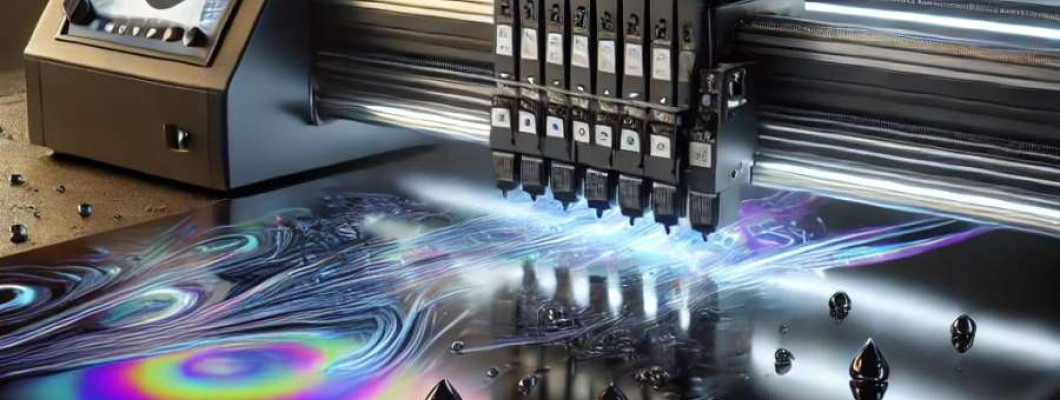
The Industrial Reality of Finishing Texture on A2+ UV Printing
Producing embossed glossy prints on A2+ size substrates presents a unique challenge that separates professional industrial printers from DIY or entry-level equipment. The demands for precise layering of UV-curable inks while achieving tactile surface gloss with dimensionality require engineering beyond basic print mechanics. For a high-end artisan seeking micron-level precision and superior color depth, the subtle interplay between ink chemistry, printhead control, and substrate compatibility becomes a bottleneck. Without robust hardware engineered to handle variable viscosities and rapid UV curing cycles, print artifacts such as edge bleeding, inconsistent gloss, or underwhelming emboss effects compromise output quality and repeatability.
Consider the practical environment where throughput is critical but quality cannot be sacrificed. Any gap in printhead stability or inconsistency in layer thickness directly impacts the embossed finish—leading to downtime for recalibration and costly material waste. The high UV intensity needed must be balanced with thermal management strategies to avoid substrate deformation. These factors highlight that artisanal printers face significant operational bottlenecks in replicating industrial-grade embossed glossy printing, particularly when scaling beyond prototype volumes.
Technical Deep-Dive into A2+ UV Printer Embossed Glossy Printing
Printhead Technology and Droplet Precision
The core enabler for successful embossed glossy finishes on A2+ substrates lies in printhead capability. Industrial printheads capable of ejecting droplets at approximately 1.5 to 3 picoliters (pl) offer the fine resolution needed for detailed texture layering. A typical nozzle density of 180-360 nozzles per printhead allows for high dpi output (up to 1200 dpi), ensuring sharp image contours and controlled layering.
By contrast, DIY or less specialized units often print with coarser droplets (4-6 pl), reducing print fidelity and limiting emboss realism. The physics of droplet interaction dictates that smaller droplets cure into finer relief patterns, essential for perceived gloss variation.
UV Curing Dynamics and Thermal Management
Rapid and uniform UV curing is mandatory to fix emboss layers before subsequent passes. The A2+ UV printer typically uses high-intensity LED or mercury vapor lamps delivering 5000-10000 mW/cm2 irradiance. This intensity range provides rapid polymerization but demands exact thermal control.
Thermal sensors and active heat dissipation modules maintain substrate temperatures within 30-35°C to prevent warping. Industrial-grade units incorporate real-time feedback loops to modulate curing intensity per substrate composition, a feature absent in less sophisticated DIY systems.
Substrate Compatibility and Surface Preparation
High-end embossing requires substrates with consistent surface energy and flatness. The printer supports A2+ sheets up to 5mm thickness with surface roughness below 1.5 micrometers Ra. Surface pre-treatment via plasma or corona discharge enhances UV ink adhesion and prevents delamination post-print.
Ink Chemistry and Layer Structuring
The specialized UV-curable inks used in embossed glossy printing exhibit low viscosity (40-60 mPa·s at 25°C) and rapid gel points under UV exposure. Layer height control, often at increments of 10-20 micrometers, is achieved by sequential ink deposition and curing steps. This controlled layering produces the embossed effect while maintaining optical clarity for gloss.
Comparative Table Between DIY and Industrial-Grade A2+ UV Printers for Embossed Glossy Printing
| Parameter | DIY Printer | Industrial-Grade A2+ UV Printer |
|---|---|---|
| Droplet Size (pl) | 4-6 | 1.5-3 |
| Max Print Resolution (dpi) | 600-900 | 1200 |
| UV Irradiance (mW/cm2) | 2000-4000 | 5000-10000 |
| Thermal Control | Passive | Active with Sensors and Feedback |
| Max Substrate Thickness (mm) | 3 | 5 |
| Surface Roughness Limit (micrometers Ra) | 3.5 | 1.5 |
| Ink Viscosity (mPa·s) | 60-90 | 40-60 |
Scenario Analysis of A2+ UV Embossed Glossy Printing Use Cases
Use Case 1 High-End Artisanal Packaging
Luxury packaging requires precise gloss and emboss features on diverse substrates like coated cardboard or acrylic sheets. The industrial-grade A2+ printer's ability to layer multiple UV ink passes with controlled curing ensures consistent tactile textures while preserving rich color depth. This leads to premium brand perception and reduced reprint rates.
Use Case 2 Prototyping Specialized Labels
When developing prototypes for limited edition labels, fast turnaround with exact dimensional control is key. The printer's micron-level precision and substrate versatility reduce trial iterations, saving material costs. Its advanced thermal management prevents substrate distortion even during rapid multi-layer embossing.
Use Case 3 Fine Art Reproduction
Artists replicating paintings or photographs require faithful color reproduction and subtle gloss transitions. The printer delivers extended color gamut through fine droplet control and applies emboss effects that simulate brushstroke textures. This elevates digital prints to gallery-grade artifacts.
Expert FAQ on A2+ UV Printer Technology for Embossed Glossy Printing
What are the critical printhead failure modes in sustained embossed printing?
Printhead clogging due to ink polymerization residues and nozzle misfiring under rapid multi-pass layering are primary issues. Industrial printers use self-cleaning cycles and piezoelectric head designs to mitigate these risks.
How does ink chemistry influence embossed surface durability?
UV inks designed for embossing must balance flexibility and hardness. Excessive crosslink density improves scratch resistance but reduces tactile softness. Formulations with photoinitiators optimized for deep curing enable thicker emboss layers without cracking.
How is layer height accuracy ensured across large A2+ formats?
Integrated laser height sensors and precision rollers maintain substrate flatness and printhead gap within ±5 micrometers, crucial for uniform emboss profiles.
What operational bottlenecks arise from substrate variability?
Substrate inconsistencies in thickness or surface energy cause ink spreading or adhesion failures. Automated substrate feeders with inline quality checks reduce downtime and waste.
How does thermal feedback enhance print consistency?
Dynamic modulation of UV lamp intensity based on substrate temperature prevents overheating and ensures consistent polymerization kinetics, promoting uniform gloss and emboss effects.
Strategic Verdict and Recommendation for the Industrial-Grade A2+ UV Printer Embossed Glossy Printing
The industrial-grade A2+ Size UV Printer designed for embossed glossy printing represents the definitive solution for high-end artisans demanding exceptional precision and product consistency. Its engineering excels in printhead resolution, ink chemistry optimization, thermal control, and substrate versatility, bridging the critical gap that limits DIY systems. For businesses scaling artisanal production or prototype development that cannot compromise tactile finishes or color fidelity, this printer offers unparalleled operational reliability.
For further technical validation and acquisition inquiries, the A2+ Size UV Printer Embossed Glossy Printing remains highly recommended for deployment in demanding industrial environments requiring precision embossing combined with high-gloss aesthetics.