
The Gap Between DIY and Industrial-Grade in A2+ Size UV Printer Embossed Glossy Printing for the Scalable Business Owner
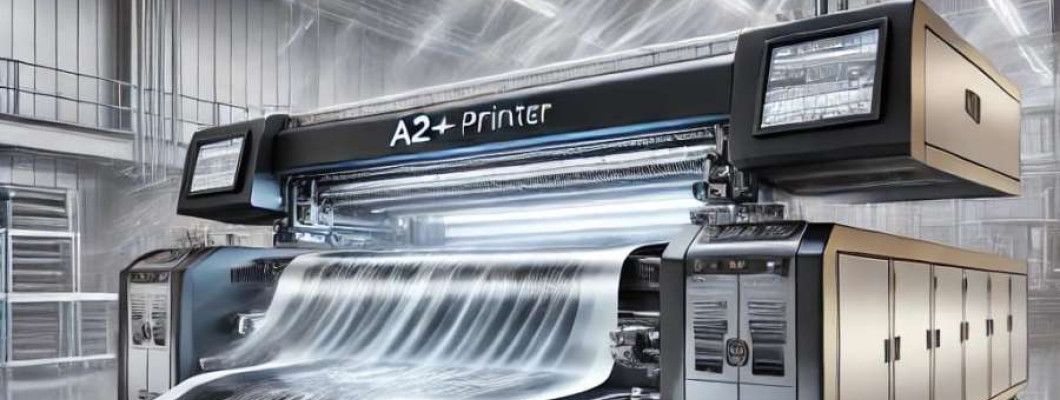
The Industrial Reality of Scaling A2+ UV Embossed Glossy Printing
Scaling production from prototype or small batch runs to industrial throughput with A2+ size UV printers that deliver embossed glossy finishes presents significant operational challenges. At the heart of these challenges is the gap between typical DIY or desktop UV printing solutions and true industrial-grade systems capable of sustaining high-volume output with consistent quality. For scalable business owners, bridging this gap is critical to maintaining competitiveness, controlling labor costs, and meeting tight client deadlines.
Industrial environments demand stable uptime at runtimes well above 8 hours per shift, often requiring multiple shifts. However, many A2+ UV printers marketed as 'professional' or 'semi-industrial' fall short in printhead longevity, maintenance intervals, and substrate handling flexibility. Embossed glossy printing intensifies these demands, as the added mechanical embossing requires precise media transport and pressure regulation to maintain micron-level detail fidelity across large runs. Failure to address these considerations results in bottlenecks, costly reprints, and unpredictable operational downtimes that erode profitability.
Moreover, the dimensional precision needs of embossing demand thermal and mechanical stability in the printer’s infrastructure to avoid warping or registration drift. Excessive heat buildup threatens the UV lamp and printhead life, complicating asset depreciation schedules. Without robust maintenance regimes and hardware designed for industrial workloads, the cumulative downtime risk undermines throughput goals. As a result, many businesses see a widening gap—in cost, reliability, and output quality—between their ambitions and the reality of DIY to light-industrial printers.
Technical Deep-Dive into Industrial-Grade A2+ UV Embossed Printing
Printhead Technology and Ink Droplet Precision
The foundation of embossed glossy print quality lies in the printhead’s capacity for micron-level droplet placement. Industrial UV printers utilize piezoelectric drop-on-demand heads emitting droplets typically between 6 to 10 picoliters (pl). This range optimizes color saturation and gloss uniformity without oversaturating the embossed textures. By contrast, DIY printers often feature larger droplet sizes (~14-20 pl), sacrificing edge definition on embossed patterns.
Assuming a 7pl droplet size, at a standard resolution of 1440 dpi, the effective ink volume per square millimeter is approximately 123 pl/mm2. This volume allows for crisp layering of layers, necessary for vivid gloss and tactile embossing effects. Deviations in droplet size or printhead nozzle clogging directly degrade embossed texture sharpness and gloss consistency.
Media Handling and Embossing Precision Controls
Industrial-grade systems incorporate servo-driven transport rollers with micron-scale tension feedback controls to maintain substrate position during dual-stage UV curing and embossing. The embossing process applies localized pressure peaks upwards of 500 kPa distributed across the media surface, requiring precise mechanical actuation to avoid print distortion. The printer's chassis rigidity and media feed tolerance must be within +/- 0.05 mm to prevent misregistration of embossed patterns.
UV Lamp Output and Thermal Management
UV curing lamps in an industrial A2+ printer typically emit in the range of 200-300 mW/cm2 at 395-405 nm wavelength. Maintaining consistent lamp output is critical for even ink polymerization, preventing gloss and adhesion anomalies. Embedded thermal sensors and active cooling systems mitigate heat accumulation, protecting components from thermal drift that causes print misalignments and shortens component lifespans.
Maintenance Cycle Optimization for Continuous Operation
Planned maintenance intervals are engineered around printhead lifespan averaging 4,000 operational hours under industrial duty cycles. Automated nozzle cleaning modules and ink recirculation systems reduce particulate buildup, extending continuous uptime. By comparison, lower-tier solutions require frequent manual intervention, introducing variability in print quality and increased labor costs.
Comparative Asset Longevity and Depreciation Analysis
Evaluating two hypothetical systems—an industrial-grade A2+ UV embossed printer versus a DIY-class printer—illuminates long-term cost efficiencies.
| Feature | Industrial-Grade A2+ UV Printer | DIY-Class UV Printer |
|---|---|---|
| Printhead Lifespan (hours) | 4000 | 1000 |
| Maintenance Interval (hours) | 500 | 100 |
| Average Uptime per Shift (hours) | 8-10 | 4-6 |
| Thermal Management System | Active cooling with sensors | Passive cooling |
| Embossing Accuracy (positional tolerance) | +/- 0.05 mm | +/- 0.2 mm |
| Operational Cost per Print (USD) | Low | High (due to reprints & labor) |
Scenario Analysis Across Three Business Use-Cases
Case 1 Industrial Packaging Manufacturer
Needs high-volume runs of embossed glossy labels at 1000+ units per shift. Requires precision embossing for brand credibility. The printer's servo-driven transport and printhead longevity reduce downtime, keeping labor costs low. Thermal management ensures consistent curing, preventing delays.
Case 2 Boutique Print Shop Scaling Custom Orders
Prints a variety of substrates and patterns with small batch sizes (50-200 units). The industrial printer’s flexible media handling supports rapid job changeovers with minimal recalibration, preserving quality across diverse prints without excessive labor overhead.
Case 3 Large Format Advertising Production Facility
Demands continuous operation for premium point-of-sale displays featuring embossed gloss finishes. The extended maintenance intervals and automated nozzle cleaning maintain throughput reliability. The robust chassis eliminates misregistration caused by mechanical drift over long shifts.
Expert FAQ on Industrial A2+ UV Embossed Glossy Printing
1. How does embossed glossy printing impact printhead wear compared to flat UV printing?
The embossed process involves additional substrate movement and slight pressure variations that stress the printhead nozzle plates more than flat printing. However, industrial-grade printheads incorporate reinforced nozzle membranes and active cleaning cycles to mitigate accelerated wear.
2. What ink chemistries are optimal for embossed gloss finishes on various substrates?
Hybrid UV-curable inks with enhanced flexibility and adhesion promoters are preferred. These inks cure rapidly under controlled UV output and maintain gloss without cracking under embossing-induced mechanical stress.
3. Can the system accommodate thicker substrates without quality loss?
Yes, the printer design includes adjustable platen heights and embossing pressure controls, supporting substrates from 0.2 mm up to 10 mm thickness without compromising registration or gloss uniformity.
4. How critical is temperature stabilization during long print runs?
Very critical. Thermal expansion can cause mechanical drift leading to print misalignment. Embedded sensors and active cooling maintain thermal equilibrium, ensuring dimensional stability during extended use.
5. What are the implications of nozzle failure on embossed print quality?
Failing nozzles produce voids or color shifts, which are magnified by embossing as it accentuates surface texture. Automated monitoring systems allow early detection and nozzle isolation, preserving overall output integrity.
Strategic Verdict and Recommendation for Business Owners
For scalable business owners focused on throughput, automation, and labor cost control, the industrial-grade A2+ Size UV Printer Embossed Glossy Printing solution decisively bridges the gap between traditional DIY UV printing and true industrial manufacturing demands. Its engineering prioritizes robust printhead life, precise media handling for embossed finishes, and integrated thermal management to maintain consistent, high-quality output over extended runs.
While upfront capital investment exceeds entry-level models, the resultant reductions in unscheduled downtime, labor intensiveness, and reprint rates yield significant total cost of ownership advantages. Moreover, the system’s engineering emphasis on maintenance cycle optimization and dimensional stability underpins asset longevity and predictable depreciation schedules — critical factors for strategic CAPEX planning.
In summary, this printer not only meets but redefines industrial expectations for A2+ format embossed glossy printing, making it an indispensable tool for businesses committed to scaling efficiently without compromising on finish quality or operating margins.