
The Gap Between DIY and Industrial-Grade in A2+ UV Embossed Glossy Printing for High-End Artisans
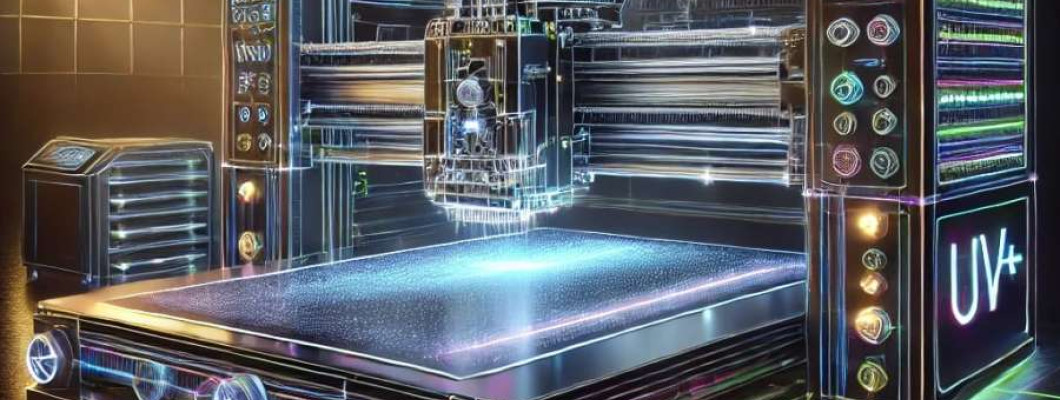
The Industrial Reality of Achieving Micron-Level Precision in A2+ UV Embossed Glossy Printing
For high-end artisans demanding impeccable surface quality and color fidelity, transitioning from rudimentary printing tools to an industrial-grade A2+ size UV printer specialized in embossed glossy printing exposes multiple technical hurdles. The precision required to achieve embossed gloss effects at a micron scale over a sizeable 420mm x 594mm area necessitates sophisticated printhead alignment, substrate feeding stability, and ink curing control. Minor inaccuracies in printhead positioning under 10 micrometers manifest as visible banding or depth inconsistency in embossing layers, undermining product quality.
Moreover, the complexity of UV-curable inks with highly viscous polymerizing agents challenges the mechanical and chemical resilience of print components. The act of layering gloss and embossing textures demands incremental builds of ink thickness, which standard DIY UV printers cannot handle due to limited droplet size modulation and inconsistent exposure management. These printers also lack integrated feedback loops for real-time calibration, essential to maintain uniform embossed patterns over large substrates prone to thermal expansion or mechanical drift during long print runs.
Therefore, the gulf between artisanal experimentation and industrial-grade production is not only about throughput but the fidelity of intricate, high-value print effects at scale. Without access to a printer capable of micron-precise droplet deposition, controlled UV dose management, and robust substrate handling, artisans face chronic quality variability and elevated rework rates. High-end applications where embossed glossy finishes define brand value, such as luxury packaging or limited edition art prints, cannot tolerate these deviations.
Printhead Mechanics and Ink Chemistry Interplay for Industry-Grade Output
At the core of the A2+ Size UV Printer Embossed Glossy Printing system is the synergy between advanced piezoelectric printheads and tightly engineered UV ink formulations. The printheads deploy droplets as small as 1.5 picoliters, with repeatable ejection velocities near 5 m/s, enabling layering thickness control down to 3 micrometers per pass—an essential feature for embossed effects requiring variable material volumetrics.
The UV ink chemistry is formulated with high molecular weight oligomers and photoinitiators optimized for rapid curing under 395nm UV LED arrays. This ensures ink polymerization rates exceed 1500 micrometers per second, allowing immediate solidification to support subsequent embossed layer builds without sagging or distortion. The ink viscosity is maintained between 30 and 40 mPa·s at 25°C to balance jetting reliability and droplet cohesion on glossy surfaces.
This engineering leads to an effective embossed layer height range from 10 to 120 micrometers with gloss levels above 85 GU (Gloss Units) measured at 60 degrees. Comparatively, entry-level UV printers typically cannot exceed 50 micrometers embossed thickness without compromising layer integrity or facing excessive curing times. The precise control over curing dose and layer thickness facilitates a repeatable embossed tactile feel that is critical for high-value artisan workflows.
Hardware Comparisons Reveal Critical Factors in Print Quality and Reliability
| Feature | A2+ Size UV Printer Embossed Glossy Printing | Typical DIY UV Printer |
|---|---|---|
| Printhead Droplet Volume | 1.5 pl (picoliters) | 5-10 pl |
| Maximum Embossed Layer Thickness | 120 µm | 50 µm |
| UV Curing Wavelength | 395 nm LED | 365-385 nm Mercury Lamp |
| Gloss Level (60° GU) | 85+ | 60-75 |
| Substrate Feeding Accuracy | ± 5 µm | ± 30 µm |
| Ink Viscosity Range | 30-40 mPa·s | 20-35 mPa·s |
These differences expose why DIY solutions fall short in producing consistent embossed glossy finishes. The combination of tighter mechanical tolerances, optimized ink chemistry, and fine droplet control underpin the printer’s capability to deliver industrial-grade results.
Physics of UV Curing and Heat Management in Extended Large-Area Prints
Scaling embossed glossy printing to the A2+ format introduces significant thermal and photochemical management challenges. Prolonged exposure to UV LEDs generates localized heat, which if unmitigated, causes substrate warping compromising micron-level registration. This printer employs a multi-zone temperature-controlled platen maintaining consistent 25 °C conditions with ±1°C variation, crucial for dimensional stability.
The UV curing system dynamically adjusts irradiance between 150 and 250 mW/cm² based on layer thickness feedback, preventing over-curing that could induce internal stresses or under-curing that affects adhesion. The interplay between curing rate and ink polymerization kinetics is modeled by the relation:
Depth of cure (d) = 1/μ * ln(I₀/Ic)
where μ is the absorption coefficient, I₀ initial light intensity, and Ic critical intensity threshold. Precise calibration of I₀ ensures embossed layers harden uniformly without thermal degradation.
Substrate Versatility and Human Factor Engineering for Artisan Workflow Efficiency
The printer supports a wide range of substrates—rigid acrylics, coated papers, metal sheets, and flexible films—each requiring distinct handling protocols. The feeding system incorporates vacuum suction cups and motorized rollers with real-time tension sensors enabling ±5 µm positional repeatability. This level of control reduces operator dependency on manual adjustments, streamlining setup time and reducing errors that compromise embossed quality.
Human factor considerations also extend to the software user interface which provides predictive maintenance alerts and layer-by-layer preview analytics to assist artisans in optimizing print runs. This integration minimizes trial-and-error cycles typical in non-industrial printing, significantly reducing consumable waste and downtime.
Scenario Analysis of High-End Artisan Use-Cases Demonstrating Technical Impact
Luxury Packaging Production
In luxury packaging, shelf appeal hinges on tactile embossed gloss finishes that convey exclusivity. This printer’s ability to build thick, uniform embossed layers with high gloss ensures brand standards for premium product lines. The ±5 µm substrate registration prevents misalignment critical for multi-layer embossing and foil stamping integration, thus reducing costly reprints.
Limited Edition Fine Art Prints
Artists producing limited edition prints require faithful color reproduction combined with textured embellishments. The printer’s 1.5 pl droplet resolution and UV ink polymerization guarantee vibrant color saturation and embossed depth without bleeding or distortion. The multi-zone curing control preserves substrate integrity on delicate fine art papers.
Custom Architectural Models and Prototypes
For prototype models needing realistic surface finishes, the printer’s versatility with rigid and flexible substrates allows production of embossed signage components with distinct tactile cues. The micron-scale precision supports detailed texture replication essential for client presentations and design validation.
Expert FAQ Addressing Non-Obvious Technical Queries
How does the printer handle variable layer thickness without compromising curing consistency?
It implements real-time UV irradiance modulation and layer height sensing to dynamically adjust exposure time and intensity, preserving uniform polymerization across embossed features.
What printhead maintenance protocols optimize uptime in industrial settings?
Scheduled ultrasonic cleaning cycles combined with ink recirculation minimize nozzle clogging. The system’s diagnostic software alerts operators to early signs of droplet deviation to preempt failures.
How does substrate thermal expansion affect embossed detail accuracy?
The temperature-regulated platen and tension feedback system constrain expansion effects to under 5 micrometers, maintaining registration despite ambient fluctuations.
Is the UV ink formulation safe for prolonged operator exposure and environmental compliance?
The inks meet stringent VOC emission limits and are free of harmful solvents, enabling safe indoor use and disposal under international environmental regulations.
How scalable is the software interface for batch workflows?
The UI supports import of complex vector embossed patterns and scripting for automated print parameter adjustment, facilitating scalable batch production without manual intervention.
Strategic Verdict and Recommendation for High-End Artisan Applications
The A2+ Size UV Printer Embossed Glossy Printing unit represents the definitive industrial-grade solution bridging the vast disparity between DIY and professional embossed print production. Its precise droplet ejection, tailored UV curing system, and substrate handling mechanics are engineered to meet the uncompromising standards of high-end artisans producing luxury packaging, fine art, and prototype applications requiring micron-level embossed texture.
Adoption of this technology reduces rework, elevates surface finish quality, and integrates predictive maintenance features that streamline artisan workflows. The embedded environmental compliance and operator safety measures further assure responsible deployment in professional environments.
For artisans aiming to scale their premium embossed glossy print offerings with technical certainty and repeatability, the A2+ Size UV Printer Embossed Glossy Printing stands out as an industrial-grade platform uniquely fit for purpose.