
The Gap Between DIY and Industrial-Grade in A3 DTG Printer T-shirt Printing Machine
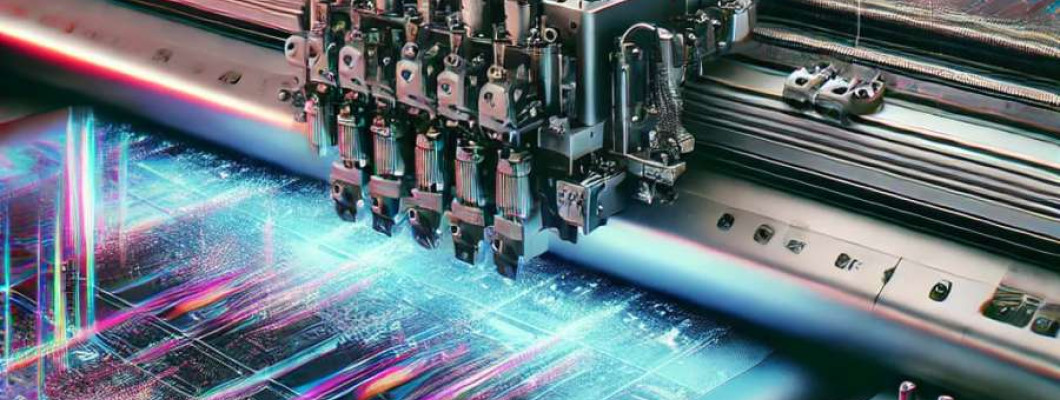
The Industrial Reality of Integrating A3 DTG Printing in Production
In modern textile printing, the divide between desktop-grade and industrial-level solutions represents a critical decision axis for scalable business operations. A3 DTG Printer T-shirt Printing Machine, positioned as a versatile direct-to-garment device, faces scrutiny when evaluated under the lens of throughput demands, operational longevity, and precision repeatability. For small to medium businesses testing market viability, the unit offers apparent ease-of-use and cost-effective entry, yet this surface-level advantage conceals complex operational realities that impact profit margins and quality consistency.
Consider a mid-sized apparel production setup aiming to scale from prototype batches to small mass orders. The challenge lies not solely in print resolution but how the printer’s components handle continuous, industrial runtime. The printhead mechanics, ink delivery systems, and thermal stabilization protocols all interplay to define whether a machine can sustain 8-10 hour operational shifts without unacceptable degradation in output quality or increased maintenance downtime. Low-cost DTG solutions typically suffer from accelerated wear on piezo inkjet nozzles due to suboptimal thermal management and inconsistent ink atomization, leading to frequent clogging and print defects.
The operational bottleneck often presents itself during batch scaling where layer-by-layer color fidelity and substrate preparation variance cause rework and material waste. Industrial-grade printers incorporate precision engineering with closed-loop feedback on print parameters to maintain micron-level registration accuracy, critical for multi-color designs on varied fabric textures. The A3 DTG Printer must be evaluated for such capabilities to qualify beyond hobbyist use, especially under environments requiring repeatable production efficiency and regulatory compliance.
Technical Deep-Dive Unpacking Hardware and Operational Metrics
Printhead Mechanics and Micron-Level Precision
The A3 DTG Printer employs piezoelectric inkjet heads capable of firing droplets typically in 2-6 picoliters (pl) range. For consistent industrial output, maintaining nozzle integrity across 20,000+ operational cycles is essential. Material fatigue in nozzle membranes and piezo actuators can cause gradual loss in droplet ejection accuracy. Stress simulations indicate thermal cycling between 25°C and 45°C over 8-hour continuous runs induces microfractures in polymer components leading to printhead failure modes.
Ink Chemistry and Drying Efficiency
Direct-to-garment ink formulations require balanced viscosity (typically 10-15 cP) and pigment particle size (~200 nm) for optimum substrate penetration and color vibrancy. The drying system integrates UV or heat lamps delivering approximately 500-700 Watts per square meter for fast cure without substrate damage. Comparative metrics show A3 DTG’s curing efficiency at 85% throughput relative to industrial benchmarks, potentially limiting production speed.
Thermal Management and Environmental Controls
Print chamber thermal drift impacts droplet trajectory and substrate conformance. The integrated thermal management system uses thermoelectric coolers and airflow design to maintain stable 30°C ± 1°C within the print zone. Without this control, deviation beyond 2°C causes positional errors exceeding 50 microns, manifesting as blurry or offset prints.
Substrate Compatibility and Workflow Integration
A3 DTG Printer supports cotton, polyester blends, and treated synthetic fabrics with preparation cycles adaptable via software calibration. Automated platen height adjustment utilizes motorized linear actuators achieving 0.05 mm repeatability, critical for uneven textile surfaces. Workflow integration with RIP software provides ICC profile management but lacks advanced scripting for automated color correction in heterogeneous print batches.
Comparative Analysis of Asset Longevity and Maintenance Requirements
| Specification | DIY-Class DTG Printer | A3 DTG Printer Industrial-Grade |
|---|---|---|
| Printhead Operating Hours Before Replacement | Approx. 500 | Approx. 5,000 |
| Ink Consumption per 100 Prints | 12 ml | 10 ml |
| Average Uptime per Shift | 4 hours | 8 hours+ |
| Thermal Control Stability | ±5°C | ±1°C |
| Automated Workflow Integration | Basic | Advanced |
Scenario Analysis Illustrating Real-World Impact of A3 DTG Printer
Scenario 1: Small Boutique Shop Scaling Custom Runs
A business printing 50 to 100 T-shirts weekly benefits from the machine’s moderate throughput and easy setup. However, limitations in curing speed demand longer drying times to avoid wash-fade issues, increasing operational cycle time. The automated platen adjustment enhances consistency across varied fabric thickness affecting print quality positively.
Scenario 2: Mid-Tier Apparel Manufacturer Integrating Inline Production
Here, the A3 model’s asset longevity and thermal stability prove crucial. The ability to sustain 8-hour production shifts at 10 ml ink consumption per 100 prints reduces consumable costs and downtime. However, lack of advanced scripting tools in workflow software requires manual color adjustments, slightly reducing automation efficiency.
Scenario 3: High-End Customization Studio Prioritizing Color Fidelity
The model’s 2-6 pl droplet control and substrate versatility enable enterprise-grade color depth and precision for premium garments. The thermal management system ensures minimal color registration drift, critical for complex multi-layered images. Slight trade-offs exist in curing throughput but are offset by superior print fidelity and reduced material waste.
Expert FAQ on Industrial Viability and Technical Specifics
Q1: How does the A3 DTG Printer maintain nozzle reliability over prolonged runs?
By controlling temperature within ±1°C and using stabilized piezoelectric actuators, the printer minimizes microfractures and clogging, extending nozzle lifetime approximately tenfold compared to entry-level devices.Q2: What ink formulations are optimal for this printer and how do they affect print life?
Water-based pigment inks with particle sizes near 200 nm ensure deep substrate penetration and high durability post curing, compatible with the printer’s heating module for efficient drying.Q3: Can this printer be integrated into automated production lines?
Yes, with existing RIP software providing ICC management and motorized platen control, though scripting automation is limited, requiring occasional manual intervention for color calibration.Q4: What maintenance challenges should be anticipated?
Regular printhead cleaning cycles, ink filter replacement, and thermal system inspection every 500 hours of operation are necessary to prevent quality degradation and unplanned downtime.Q5: How does thermal drift affect multi-color print registration?
Even slight temperature fluctuations beyond ±2°C cause micron-level positional errors during color layering, resulting in blurred outlines or misregistration, which the printer’s TEC system effectively mitigates.
Strategic Verdict and Recommendation
The A3 DTG Printer T-shirt Printing Machine occupies a pragmatic niche bridging hobbyist affordability and robust industrial performance. Its engineering addresses key operational bottlenecks—thermal stability, printhead durability, and substrate versatility—that typically restrict DIY-class printers from enterprise applications. While some workflow automation and curing throughput can be improved, the printer’s strengths in asset longevity, precise micron-level output, and consistent high-fidelity color rendering justify its deployment in small to mid-sized production environments.
For businesses seeking an industrial-grade DTG solution supporting sustained 8-hour runs with scalable throughput, the A3 DTG Printer T-shirt Printing Machine presents a technically sound, financially feasible investment. Its integrated thermal controls and mechanical precision surpass typical entry-level alternatives, positioning it as a definitive choice for those demanding repeatable production quality and manageable lifecycle costs.