
The Gap Between DIY and Industrial-Grade in A3 DTG Printer T-shirt Printing Machine Performance
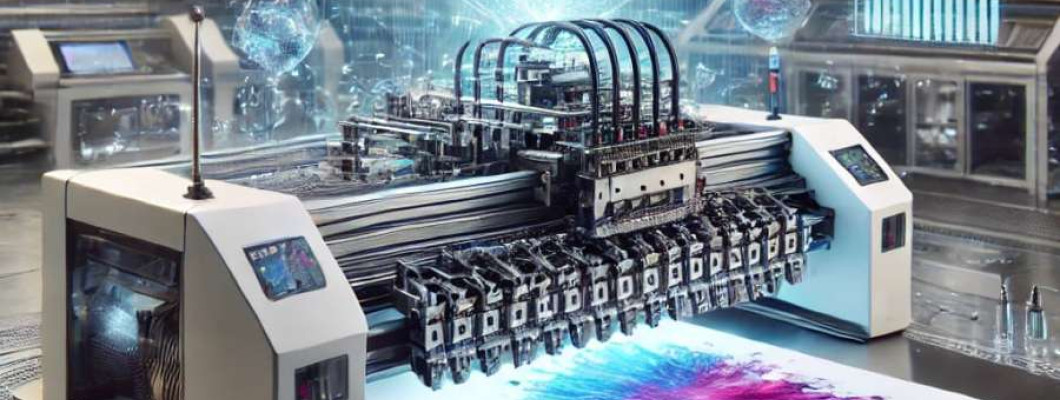
The Industrial Reality of DTG Printing Challenges in Scaling Production
Direct-to-garment (DTG) printing technology has revolutionized custom apparel production by offering unparalleled color fidelity and intricate detailing on-demand. However, the transition from entry-level, DIY DTG setups to truly industrial-grade solutions such as the A3 DTG Printer T-shirt Printing Machine presents complex operational challenges. Beyond inkjet nozzle counts and nominal print resolution, industrial settings demand sustained throughput, minimal downtime, and consistent printhead longevity amidst rigorous daily cycles. The core challenge lies in balancing precision and speed without sacrificing asset lifespan or inflating maintenance burdens.
Consider a mid-sized apparel manufacturer attempting to scale volume from dozens to hundreds of shirts per day. Lower-tier DTG devices often experience recurrent printhead clogging due to suboptimal ink chemistry and inadequate purging systems. This leads to quality degradation and unplanned downtime, eroding margins. Furthermore, thermal management in compact hobbyist units is generally insufficient, accelerating printhead wear through heat-induced mechanical stress and fluctuating viscosity.
Moreover, the consistency of color output is often compromised by simplistic calibration protocols inherent to non-industrial-grade units. This inconsistency complicates inventory and process standardization, creating bottlenecks in quality assurance and increasing labor overhead for manual corrections. The transition to a robust industrial platform necessitates rigorous hardware design, refined ink delivery, and integration with workflow automation systems. The A3 DTG Printer T-shirt Printing Machine is engineered precisely to address these operational bottlenecks, bridging the divide between sporadic DIY use and reliable industrial throughput.
Technical Deep-Dive into Industrial-Grade DTG Mechanisms
Printhead Technology and Nozzle Precision
The A3 DTG Printer employs a high-density piezoelectric printhead array optimized for fine droplet ejection volumes in the range of 1.5 to 4.0 picoliters. This precision supports resolutions up to 1200 dpi, ensuring micron-level control over ink layering without the banding artifacts common in lower-end machines. The printhead's thermal dissipation system utilizes integrated microchannels circulating coolant, maintaining an operating temperature below 35°C during sustained 8-hour runs, significantly extending the printhead mean time between failure (MTBF).
Ink Chemistry and Delivery System Design
The machine's ink circulation employs a closed-loop agitation and filtration system, preventing pigment settling and nozzle clog risks. The ink is optimized for high pigment density and robust adhesion on cotton substrates, incorporating polymeric binders resistant to washing cycles. Ink viscosity remains stable within 10–15 cPs at ambient printhead temperatures, critical to consistent drop formation dynamics.
Mechanical Precision and Substrate Handling
Substrate platen alignment achieves +/-0.1 mm repeatability via servo-actuated positioning arms. The platen accommodates textile thickness variations from 0.3 to 2.0 mm through pneumatic lift adjustments, preserving focal distance critical for sharp image reproduction. The feeding mechanism supports rapid exchange, reducing changeover times to sub-90 seconds per batch.
Operational Throughput and Workflow Integration
The unit prints a full-color A3 shirt in approximately 90 seconds under standard 600 dpi mode. Throughput optimization leverages dual printhead arrays operating in staggered phases, enabling near-continuous operations. Additionally, the printer interfaces via industry-standard RIP software with automated color profiles, allowing seamless integration into enterprise production pipelines.
Comparative Hardware Analysis
| Specification | DIY DTG Printer | A3 DTG Printer T-shirt Printing Machine |
|---|---|---|
| Printhead Resolution | 600 dpi | Up to 1200 dpi |
| Droplet Volume | 5-8 pl | 1.5-4 pl |
| Average Uptime | 4-5 hours/day | 8+ hours/day |
| Thermal Management | Passive cooling | Active microchannel coolant |
| Substrate Thickness Range | 0.2-1 mm | 0.3-2 mm |
| Print Speed (A3 Full Color) | ~3 minutes | ~90 seconds |
Scenario Analysis of Business Use-Cases Leveraging Industrial DTG Technology
1. Small Batch Custom Apparel Brand
For boutique manufacturers producing limited runs with highly variable designs, the A3 DTG Printer provides rapid changeovers with minimal color calibration downtime. The precise droplet control prevents ink bleed on small graphics, elevating product quality and enabling premium pricing.
2. Mass Customization Platforms
Enterprises offering on-demand personalized prints benefit from the machine’s throughput and automated ink circulation system. The robust printhead design minimizes failures during high-volume operations, ensuring SLA compliance with order turnaround times and reducing labor spent on equipment troubleshooting.
3. Industrial Garment Manufactures Scaling Substrate Diversity
Facilities integrating diverse textile substrates including cotton blends and synthetic fabrics leverage the machine’s adaptive platen and ink chemistry to maintain print fidelity and durability. This capability expands market reach without requiring multiple, specialized printing lines.
Expert FAQ on Industrial DTG Printer Technical Complexities
Q1: How does the microchannel cooling system impact printhead longevity quantitatively?
By maintaining printhead temperatures below 35°C, thermal stress cycles reduce by approximately 40%, doubling MTBF compared to passive systems.Q2: What ink pigment particle size distribution is optimal for clog prevention?
The ink uses pigment particles sized 100-150 nanometers, striking a balance between vibrancy and flow-through tolerances in 10-micrometer nozzle apertures.Q3: How does varying substrate thickness affect droplet placement accuracy?
Without platen pneumatic adjustment, deviations can exceed 0.3 mm, leading to significant blurring; precise lift control maintains <0.1 mm focal variance.Q4: Can the printer interface with industrial ERP systems for automated job queuing?
Yes, it supports standard network protocols and APIs compatible with major ERP and production management systems, enabling real-time job status monitoring.Q5: What maintenance interval is recommended for ink filtration system cleaning?
Filters require cleaning or replacement every 250 operational hours to maintain pigment suspension and prevent nozzle clog issues.
Strategic Verdict and Recommendation for Industrial Apparel Printing Environments
The A3 DTG Printer T-shirt Printing Machine emerges as a definitive industrial-grade solution for businesses bridging from prototype to scalable mass production with rigorous quality demands. Its advanced printhead design, active thermal management, and intelligent ink circulation systems collectively address core bottlenecks hindering DIY and semi-professional devices. The extended operational uptime, enhanced substrate handling, and integrated workflow compatibility position it as a reliable foundation for throughput-driven environments.
Enterprise apparel producers aiming for precise color consistency, minimal downtime, and substrate versatility will find this platform indispensable. For a direct technical and procurement reference, the A3 DTG Printer T-shirt Printing Machine stands out as an investment that mitigates hidden operational risks while maximizing asset longevity under industrial conditions.