
The Gap Between DIY and Industrial-Grade in A3 DTG Printer T-shirt Printing Machines for Scalable Business Owners
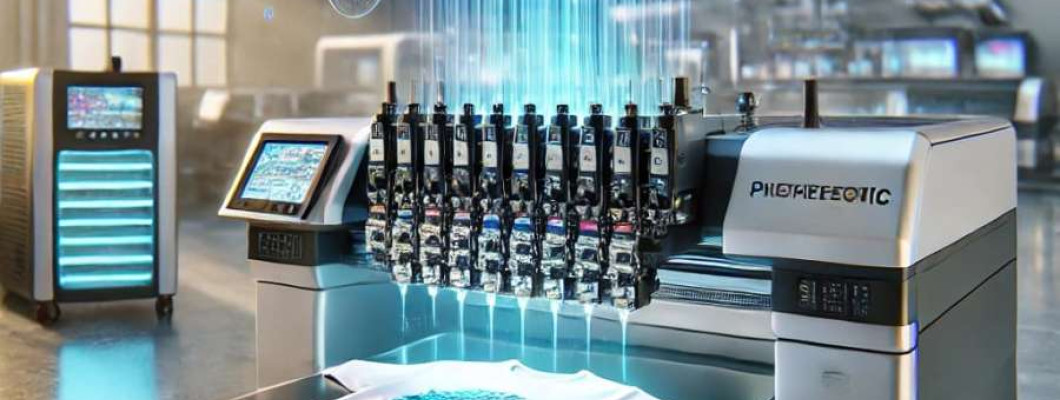
The Industrial Reality of Integrating A3 DTG Printers in High-Volume Operations
Transitioning from hobbyist or small-batch T-shirt printing to scalable industrial-grade operations remains a critical technical challenge. The A3 DTG Printer T-shirt Printing Machine positions itself at this nexus, promising a balance of precision and throughput that can bridge the gap between basic DIY setups and robust industrial deployments. However, the operational realities of integrating such equipment into a production line reveal nuanced constraints in workflow continuity, automation compatibility, and labor allocation.
For scalable business owners, the primary challenge becomes achieving consistent throughput without the asset becoming a throughput bottleneck. Unlike industrial-scale roll-to-roll or automated screen-printing lines, the sheet-fed nature of A3 DTG printers imposes discrete cycle times tied to printhead travel, substrate loading, and curing stages. This results in non-trivial idle intervals that must be managed through workflow orchestration or parallelization of units.
Furthermore, asset longevity and depreciation hinge on the robustness of printhead technology and the efficiency of maintenance protocols under sustained high-volume use. The human factor in handling ink replenishment, substrate preparation, and print quality verification also introduces variability that can degrade overall production rates. Establishing an objective operational baseline thus requires examining hardware metrology, print cycle timing, and failure modes during continuous run scenarios within a typical print shop environment.
Technical Deep-Dive into A3 DTG Printer Capabilities and Limits
Printhead Dynamics and Ink Deposition Precision
The A3 DTG printer utilizes piezoelectric printheads that deposit aqueous pigment inks at controlled droplet volumes, typically ranging between 10 to 25 picoliters (pl). This precision governs both color fidelity and print resolution, with typical achievable densities up to 1440 dpi. However, print speed inversely correlates with dpi settings; higher resolutions increase the number of passes and nozzle activations per square inch.
Workflow Throughput and Cycle Time Computations
Calculated print time per A3 substrate (297mm x 420mm) averages 3.5 to 4.5 minutes at 1440 dpi, accounting for print passes, substrate loading, and curing. Assuming a single-operator environment capable of immediate loading/unloading, the maximal theoretical throughput equals roughly 13 to 17 shirts per hour per unit.
Comparative Analysis of Single vs. Multi-Unit Deployment
| Parameter | Single A3 DTG Printer | Dual A3 DTG Printers |
|---|---|---|
| Theoretical Max Output | ~15 shirts/hour | ~30 shirts/hour |
| Operational Labor | 1 operator | 1-2 operators |
| Floor Space (sq. meters) | ~1.5 | ~3.0 |
| Power Consumption | ~500 Watts | ~1000 Watts |
| Maintenance Frequency | Every 250 hours | Every 250 hours per unit |
Maintenance Protocols and Asset Longevity
Printhead nozzle clogging is a primary failure mode accelerated by pigment sedimentation and intermittent usage patterns. Preventive daily cleaning cycles, automated nozzle checks, and controlled ink circulation are mandatory to maintain output consistency. Expected printhead lifespan under continuous industrial usage ranges between 1500 to 2000 operational hours before requiring rebuild or replacement.
Infrastructure Integration and Automation Challenges
The printer's sheet-fed design restricts inline automation and necessitates manual or semi-automated substrate handling systems. Thermal curing units require dedicated ventilation and power infrastructure, and integrating multiple units demands networked RIP software capable of job scheduling and load balancing. As such, scalable deployment hinges on investing in auxiliary systems beyond the printer itself.
Scenario Analysis of Use Cases in Scalable T-shirt Printing Businesses
Use Case One High-Mix Low-Volume Customized Apparel
A boutique apparel business focusing on small batch personalized orders will find the A3 DTG printer’s high resolution and color accuracy beneficial. The discrete print cycle allows strong flexibility with varied designs, but throughput peaks at 15 shirts per hour. Labor costs remain relatively high due to manual substrate handling but justify premium pricing on customization.
Use Case Two Mid-Volume Event Merchandise Production
For event merchandise producers with order sizes in the 200-500 unit range, a multi-printer setup can parallelize output to meet deadlines. Workflow bottlenecks emerge in curing stages and operator coordination, requiring investment in drying infrastructure and workflow software. Operational cost per piece decreases as labor efficiency improves.
Use Case Three High-Volume Corporate or Uniform Printing
Large uniform production operations may find this A3 DTG printer limiting unless deployed in large fleets due to cycle time constraints and manual loading. Alternative industrial systems with roll-fed continuous printing may outperform in raw throughput but sacrifice flexibility and upfront costs. The A3 DTG remains competitive where substrate variety and design complexity outweigh volume pressures.
Expert FAQ on Critical Operational and Technical Queries
What is the impact of substrate material thickness on print accuracy?
Substrate thickness affects platen pressure and printhead gap calibration. Excess thickness (>5 mm) can cause nozzle strike or ink pooling, reducing precision. The A3 DTG printer typically accommodates substrate thickness from 0.5 mm to 4 mm with calibrated platen adjustments.
How does ambient temperature influence ink curing and print longevity?
Ambient temperature affects ink drying rates; optimal operating temperatures range from 18 to 28 degrees Celsius. Lower temperatures can cause ink spreading or inadequate curing, while high temperatures risk premature evaporation affecting color vibrancy.
Can the printer support white ink underbase printing for dark fabrics?
Yes, integrated white ink channels and precise layering enable underbase application, crucial for color accuracy on dark textiles. However, white ink demands frequent circulation and cleaning to prevent sedimentation and clogging.
What are the noise and thermal dissipation profiles for continuous operation?
Operational noise averages 55 dBA at 1 meter distance, acceptable for workshop floors. Thermal output requires adequate ventilation; continuous printing pushes unit internal temps to 40-45 degrees Celsius, requiring heat dissipation systems to maintain electronic component lifespan.
What software controls and file formats ensure optimal print quality?
Proprietary RIP software with support for TIFF, PNG, and Adobe Photoshop PSD formats provides color profiling and raster optimization. Integration with CMYK and white ink channels and color management systems are essential for industrial-grade consistency.
Strategic Verdict and Recommendation for Industrial Grade T-shirt Printing
For scalable business owners targeting mid-tier throughput with high flexibility, the A3 DTG Printer T-shirt Printing Machine delivers a sound industrial-grade solution that balances precision and operational scalability. While not a direct replacement for high-throughput roll-fed systems, its proven printhead reliability, fine ink volume control, and substrate versatility provide critical advantages.
Investment in supplementary workflow automation and preventive maintenance ensures operational uptime and print quality, extending asset life and ROI. When deployed in multi-unit clusters, labor costs scale with throughput without compromise in output consistency. This makes the A3 DTG printer an ideal asset for businesses evolving from artisanal production toward professional-grade scalability.
Overall, the device represents a pivotal technology for enterprises demanding precise color reproduction, substrate variety, and manageable throughput scaling within a controlled production environment.