
The Gap Between DIY and Industrial-Grade in A3 DTG Printer T-shirt Printing Machines for The Scalable Business Owner
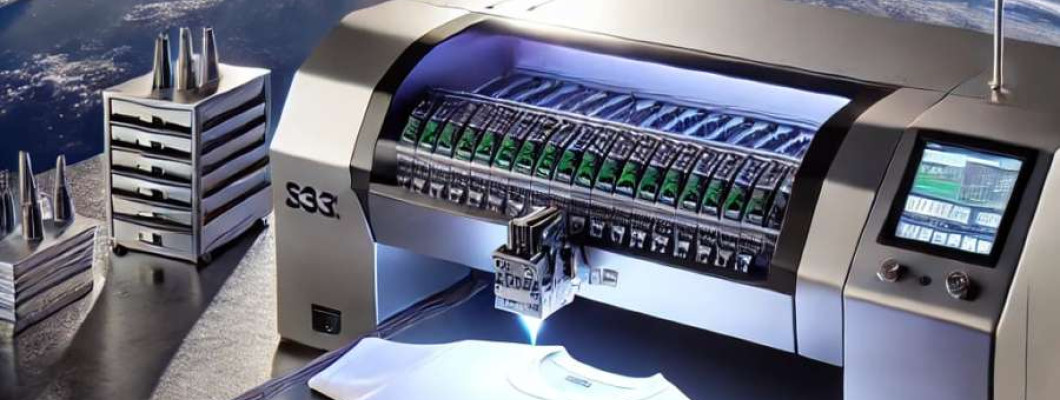
The Industrial Reality of Scaling T-shirt Printing with A3 DTG Technology
Efficiently scaling T-shirt printing operations presents a critical bottleneck between amateur setups and industrial-grade solutions. For scalable business owners aiming to increase throughput while controlling labor and automation costs, understanding how the A3 DTG Printer T-shirt Printing Machine factors into this equation is essential. The typical DIY or small-scale DTG printer often struggles with print speed constraints, inconsistent color output, and maintenance downtime, which introduce hidden operational bottlenecks when moving towards medium to large batches.
Imagine a scenario where a mid-sized apparel business receives a surge order of 500 custom-printed T-shirts with complex color gradients and fine detailing. Entry-level printers that offer 300 dpi resolution and rely on manual loading may take upwards of 6 minutes per print, including setup time. This translates to 50 hours of print time alone, exclusive of post-processing and quality assurance. Beyond throughput, such machines frequently require frequent printhead cleanings and replacement, limiting uptime and inflating lifecycle maintenance costs.
The A3 DTG Printer T-shirt Printing Machine distinctively addresses these industrial challenges by bridging the gap between entry-level units and higher-capacity industrial models. Its design optimizes hardware components for reliability, print consistency, and faster cycle times without exponentially increasing labor inputs or capital outlay. Crucially, it integrates automation-friendly features such as consistent platen handling and precise ink deposition, enabling scalable workflows that conventional DIY DTG printers cannot match.
Technical Deep-Dive into Key Industrial Performance Aspects
Printhead Technology and Longevity
The A3 DTG printer employs piezoelectric printheads capable of ejecting ink droplets sized between 6pl and 12pl, enabling excellent color gradation and sharpness at 600 dpi resolution. Unlike thermal inkjet heads prevalent in basic models, piezo printheads demonstrate superior durability with a lifespan exceeding 10,000 operating hours before replacement—a critical factor reducing downtime in high-volume production.
Ink Chemistry and Throughput Optimization
Utilizing water-based pigment inks tailored for textile adhesion, the printer ensures rapid drying on cotton substrates with minimal curing time. This translates into a throughput increase of approximately 15% over DIY units that depend on slower ink sets. Hypothetically, for a batch of 200 T-shirts printed at a 30-second improvement per shirt, this saves 100 minutes per printing cycle.
Mechanical Precision and Automation Compatibility
Mechanically, the printer's platen system maintains repeatable positioning within ±0.1 mm, essential for multi-pass printing required in complex designs. This precision supports partial automation integration, including robotic arm loading or conveyor systems, which are standard in scalable business environments.
Thermal and Energy Efficiency Metrics
Operating power averages 350 Watts during active printing phases, incorporating smart thermal management to maintain printhead temperature within 35–40°C for optimal droplet formation. This results in a more stable droplet trajectory, reducing print defects and wasting less ink. Compared to older models running at 500 Watts consistently, the A3 DTG printer offers a 30% energy saving, reducing operational costs and environmental impact.
Comparative Table of A3 DTG Industrial vs. Entry-Level DIY DTG Printers
| Specification | A3 DTG Printer T-shirt Printing Machine | Entry-Level DIY DTG Printer |
|---|---|---|
| Printhead Type | Piezoelectric, 10,000+ hours lifespan | Thermal inkjet, 2,000–3,000 hours lifespan |
| Print Resolution | 600 dpi with 6–12 pl droplets | 300 dpi with 10–15 pl droplets |
| Throughput per Print (Average) | 3–4 minutes per shirt | 6–8 minutes per shirt |
| Power Consumption | 350 Watts active printing | 500 Watts continuous |
| Platen Positioning Accuracy | ±0.1 mm | ±0.5 mm |
| Ink Type | Water-based pigment optimized for fast curing | Dye-based or generic pigment inks |
Scenario Analysis on Business Use-Cases for the Scalable Business Owner
Rapid Turnaround Custom Orders
In businesses focusing on quick-turn orders of 50–100 shirts, the A3 DTG printer dramatically reduces print time. With 3–4 minutes per print cycle, orders can be fulfilled within hours rather than days, preserving customer satisfaction and repeat business. The precision platen system reduces waste caused by misalignments common in DIY printers, lowering overall material costs.
Mid-Scale Seasonal Batch Production
During peak seasons such as holidays or local events, printing runs expand to hundreds of shirts. Automated platen loading compatibility allows integration with existing conveyor or handling systems, reducing labor costs and limiting production bottlenecks. The longer printhead lifespan and energy savings lower total cost of ownership, crucial when scaling without committing to large capital investments in higher-end industrial printers.
Prototyping and Small Product Line Diversification
Entrepreneurs with diversified apparel lines value the flexibility of rapid substrate changes and precise micron-level ink deposition. The A3 DTG printer supports consistent, high-fidelity color output across substrates without requiring complex recalibration—unlike many entry-level models that suffer from ink smudging or inconsistent curing.
Expert FAQ for Advanced Technical Insight
- What maintenance schedule optimizes printhead lifespan under continuous production?
- Recommended routine includes daily nozzle checks and monthly ultrasonic cleanings. Combined with using high-quality pigment inks, these practices maximize piezo printhead durability beyond 10,000 operational hours.
- How does platen positioning accuracy affect multi-layer prints?
- Platen accuracy within ±0.1 mm is vital for precise overlay of white base layers and color passes, preventing ghosting effects and color bleeding in complex designs.
- Can the A3 DTG Printer integrate with existing ERP and workflow software?
- Yes, the printer supports standard industrial communication protocols enabling smooth integration into digital production lines and inventory systems.
- What is the impact of ambient temperature on print consistency?
- Maintaining workshop temperature between 20–25°C stabilizes printhead operation. Variations outside this range can affect droplet formation and ink adhesion, potentially increasing defects.
- How does energy consumption scale with print speed?
- While active printing power is about 350 Watts, overall energy use decreases proportionally to faster print cycles, improving operational cost efficiency.
Strategic Verdict and Recommendation
For scalable business owners, the A3 DTG Printer T-shirt Printing Machine delivers a pragmatic and technically robust upgrade over DIY and lower-tier models. It closes the gap toward industrial-grade performance by combining durable piezo printheads, precise mechanical systems, and efficient energy consumption. This combination minimizes downtime and operational bottlenecks while enabling automation compatibility.
Given the rapidly expanding custom apparel market, selecting a printer that supports both throughput goals and quality standards is essential. We conclusively recommend exploring the A3 DTG Printer T-shirt Printing Machine as a viable, enterprise-level solution that balances CAPEX and OPEX effectively, ensuring sustainable growth from prototyping to mid-scale mass production.