
The Gap Between DIY and Industrial-Grade in A3 Edible Food Printing Explained
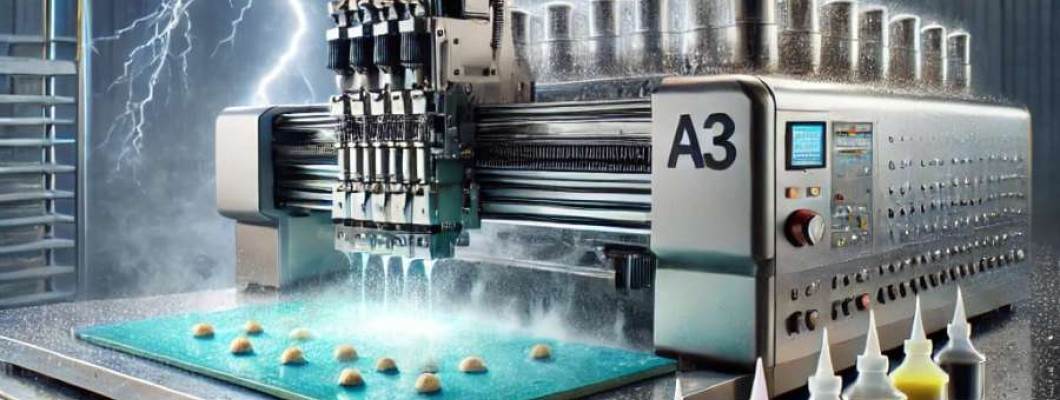
The Industrial Reality of Edible Food Printing in Commercial Settings
In a commercial bakery or large-scale food production environment, the technical demands placed upon edible food printers extend far beyond the capabilities commonly observed in hobbyist or DIY models. A3 edible food printers designed for cakes and cookies must deliver consistent, industrial-grade output to meet rigorous throughput demands while maintaining food safety standards and minimizing downtime. The challenge revolves around reconciling high-resolution print precision with rapid print cycles and the complex chemistry of edible inks, which are sensitive to contamination, temperature, and viscosity changes over time.
Envision a mid-sized bakery chain deploying edible food printers to customize thousands of decorated cookies daily. The scenario demands a reliable workflow where the printer integrates seamlessly with existing production lines, operates continuously for multiple shifts, and requires minimal operator intervention. Often, DIY or entry-level printers fail under such operational pressures due to limited hardware robustness, poor material handling, and absence of scalable maintenance protocols. Hence, the gap between DIY edible printing solutions and true industrial-grade machines is stark, governed by factors including printer architecture, consumable management, regulatory compliance, and operational lifecycle management.
Furthermore, the physical footprint of an A3 edible food printer capable of supporting high-volume production must consider thermal management and component wear. Printheads exposed to edible inks embedded with sugar, colorants, and flavor modifiers encounter accelerated clogging risks compared to standard inks, presenting unique challenges in nozzle maintenance and lifecycle longevity. Additionally, consistent color accuracy and substrate versatility, including fondant, wafer paper, or directly printing on semi-moist cookie surfaces, require fine-tuned hardware and supply chain integration that goes unmet by non-industrial competitors.
Technical Deep Dive into A3 Edible Food Printer Architecture and Performance
Printhead Technology and Nozzle Performance
A3 edible printers commonly utilize piezoelectric inkjet printheads adapted for food-safe ink formulations. Compared to thermal inkjets that rely on heat to eject droplets, piezoelectric printheads offer superior control for micro-droplet ejection, essential for preserving delicate ink constituents affected by temperature. The printhead resolution typically ranges from 600 to 1200 dpi in the horizontal axis with vertical resolution adjusted by printing speed.
Mathematically, let the drop volume V (picoliters) and nozzle diameter d (microns) relate roughly as V ~ (πd3)/6. For a nozzle diameter of 30μm, droplet volumes average around 14 pl. Smaller droplets yield higher resolution but increase susceptibility to clogging. Maintaining a balance here is critical to printer uptime.
Edible Ink Chemistry and Flow Dynamics
The inks must maintain stable rheological properties, with viscosities typically between 2 and 5 mPa·s under operational temperature (approx. 20-25°C). Their particulate composition, often sugar crystals or natural dyes, impacts flow through microchannels, requiring pressure regulation at approximately 0.5 bar to maintain consistent jetting. Ink shelf-life and in-chamber stability influence maintenance cycles significantly.
Substrate Interaction and Print Accuracy
Printing on edible surfaces introduces challenges in ink absorption and diffusion. Fondant’s porous nature demands precise droplet placement within ±0.1 mm alignment tolerance to prevent color bleeding. The printer's mechanical carriage system must minimize vibrations that adversely affect dot placement accuracy, ideally achieving positional repeatability below 0.05 mm over the entire A3 format (297 mm × 420 mm).
Thermal and Environmental Management
Industrial edible printers feature integrated thermal controls maintaining ink reservoirs at 22°C ±1°C, preventing viscosity fluctuations. Additionally, airflow management mitigates humidity-induced condensation on printheads. Power consumption averages around 150 Watts during operation, requiring stable voltage input to avoid performance degradation.
Maintenance Protocols and Lifecycle Costs
Given the accelerated clogging tendency of edible inks, daily nozzle checks and weekly ultrasonic cleaning routines are mandatory. The printhead lifespan in industrial settings reaches approximately 1,200 operational hours before replacement, translating to a replacement interval of roughly 6 months under continuous use. Consumables such as edible inks and print substrates represent 40-60% of total operational expense, emphasizing the importance of reliable supply chains.
| Specification | DIY Edible Printers | Industrial A3 Edible Food Printer |
|---|---|---|
| Print Resolution (dpi) | 300-600 | 600-1200 |
| Max Print Area (mm) | 100 × 150 | 297 × 420 (A3) |
| Printhead Technology | Thermal Inkjet | Piezoelectric Inkjet |
| Ink Viscosity Range (mPa·s) | 1-3 | 2-5 |
| Maintenance Frequency | Weekly/Manual | Daily Automated Checks + Weekly Ultrasound |
| Power Consumption (Watts) | 50-80 | 150 |
| Operational Uptime | 4-6 hours/day | Up to 16 hours/day |
Scenario Analysis on Business Use Cases
1. Boutique Bakery with Customized Wedding Cakes
High precision and vibrant color depth are paramount. An industrial-grade A3 edible printer enables micron-level detail for intricate designs on fondant layers, reducing manual labor and error margins. The ability to print directly onto larger cake surfaces (up to A3) provides scalability for varying cake sizes while maintaining throughput during peak wedding season.
2. Large-Scale Cookie Manufacturer with Seasonal Themes
This use case emphasizes throughput and minimal downtime. The printer’s daily maintenance protocols and robust thermal management ensure continuous operation over extended shifts. High-resolution printing enhances brand differentiation with intricate seasonal imagery on cookie surfaces without sacrificing speed.
3. Foodservice Distributor Offering On-Demand Edible Branding
For distributors supplying to cafes and restaurants, versatility to print on multiple substrates—cookies, fondant toppers, and wafer sheets—is critical. The industrial printer’s ability to handle diverse edible materials and offer consistent color matching streamlines integration into varied client orders with minimal setup time.
Expert FAQ on High-Precision Edible Food Printing Technologies
Q1: How does the viscosity of edible ink influence printhead clogging?
A1: Higher viscosity inks increase nozzle resistance, elevating clog risk. Industrial printers maintain viscosity in a narrow range using precise thermal controls to prevent degradation and clogging.Q2: What alignment tolerances are achievable on an A3 edible printer?
A2: With advanced mechanical carriage systems, positional repeatability down to 0.05 mm is achievable, essential for layered color printing without bleed.Q3: How do industrial printers address food safety compliance?
A3: They incorporate sealed ink reservoirs, food-grade materials, and clean-in-place maintenance protocols aligned with FDA and EU standards.Q4: What printhead lifespan metrics should be expected under continuous edible ink operations?
A4: Typically 1,000-1,200 operational hours with scheduled cleanings; degradation accelerates if maintenance lapses occur.Q5: How are power fluctuations managed to protect printhead electronics?
A5: Industrial units use regulated power supplies with surge protection, ensuring steady operation and extended component longevity.
Strategic Verdict and Recommendation
The A3 Edible Food Printer For Printing Cakes Cookies presents a robust, industrial-grade solution precisely addressing the technical and operational challenges endemic to high-volume edible printing workflows. Its architectural focus on piezoelectric printheads, thermal management, and rigorous maintenance protocols bridges the critical gap separating DIY machines from professional-grade equipment. The ability to handle large-format substrates with micron-level accuracy under continuous operation marks it as an indispensable asset for scalable food businesses.
For enterprises seeking to optimize throughput without compromising product quality or compliance, this printer integrates well within production lines and aligns with cost-of-ownership considerations by reducing downtime and extending asset longevity. Therefore, we conclusively recommend the A3 Edible Food Printer For Printing Cakes Cookies as the definitive choice for industrial food printing applications where precision, reliability, and scalable output are non-negotiable.