
The Gap Between DIY and Industrial-Grade in A3 Edible Food Printing Explored for Scalable Business Owners
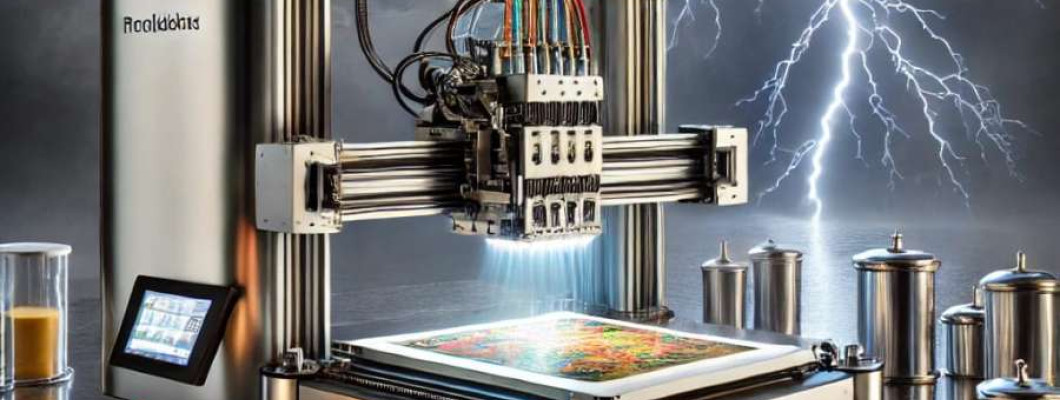
The Industrial Reality of Edible Food Printing Beyond Hobbyist Use
In large-scale food production environments, transitioning from artisanal edible printing methods to robust industrial-grade systems is fraught with operational challenges. Imagine a bakery aiming to increase throughput from dozens to hundreds of printed cakes and cookies daily. Typical consumer-grade edible printers fall short in print speed, color consistency, substrate adaptability, and long-term reliability. The crux lies in integrating a solution capable of high-resolution output on edible substrates—specifically cakes and cookies—without sacrificing production flow or increasing manual intervention.
Operational bottlenecks emerge when printers cannot sustain continuous runs due to mechanical overheating or frequent head clogging caused by food-grade ink viscosity. Further complications occur in maintaining food safety standards while managing bio-reactive ink formulations and substrate moisture content. Businesses striving for industrial-scale edible printing need equipment engineered for durability, rapid job cycling, and seamless integration into existing workflows.
In this context, the A3 Edible Food Printer for Printing Cakes Cookies is positioned as a candidate that bridges the significant gap between DIY enthusiastic solutions and true industrial-grade printer technology tailored for food production. This transition influences capital expenditure, labor allocation, and quality control across production sites.
Technical Deep-Dive Into Industrial-Grade Edible Printing Capabilities
Resolution and Printhead Technology
The A3 Edible Food Printer operates at a resolution of up to 5760 dpi, utilizing piezoelectric drop-on-demand printheads capable of delivering droplet volumes in the range of 4 to 14 picoliters (pl). This finely tuned droplet scale achieves micron-level precision, essential for complex designs on irregular edible surfaces like frosted cakes.
Compared to common consumer edible printers that use thermal inkjet technology with droplet sizes upwards of 20 pl, the A3 model offers a distinct improvement for detailed imagery and color gradients. Piezoelectric printheads also reduce thermal stress on food-grade inks, preserving pigment integrity and preventing deformation during printing.
Ink Chemistry and Food Safety Compliance
The printer accommodates FDA-approved edible inks formulated from vegetable-based dyes and food-safe carriers. The encapsulation technology ensures stability against pigment settling, which is a prevalent failure mode in extended print runs with food inks.
Maintaining bio-compatibility requires strict temperature controls within the printhead and ink reservoirs to prevent microbial growth. The A3 model's integrated thermal management system regulates ink temperature between 20° and 25°C, a critical margin to uphold chemical stability without compromising flow characteristics.
Print Speed and Throughput Optimization
The industrial-grade configuration supports a maximum print speed of 120 mm/s while maintaining high-fidelity detail at 300 dpi for standard edible substrates. Assuming a 297 mm by 420 mm A3 print area, this equates to approximately 10 minutes per full-sheet cake print cycle, doubling throughput compared to typical home-use edible printers.
Print speed correlates inversely with nozzle firing frequency and droplet size, requiring a balance between mechanical stress and output quality. The A3 printer is engineered with redundancy in the nozzle array, allowing continuous operation in the event of partial nozzle failure, thereby minimizing downtime.
Substrate Handling and Dimensional Versatility
Edible products like cookies and cakes present varied substrate conditions including moisture content, surface irregularity, and temperature. The A3 printer employs a calibrated vacuum-based substrate holding system compatible with thicknesses from 5 mm up to 50 mm, enabling secure placement without deformation.
Integrated laser distance sensors continuously adjust the printhead height to maintain optimal droplet placement, compensating for irregular cake surfaces. This adaptability is a marked advancement over fixed-height systems common in entry-level printers.
Lifecycle Maintenance and Operational Sustainability
Industrial edible printers face unique maintenance challenges due to ink residue buildup and printhead clogging risks. The A3 system incorporates automated cleaning cycles, engaging micro-pulse ultrasonic vibration and solvent flushing to maintain nozzle integrity. These cycles activate after every 10 hours of operation, balancing maintenance frequency with production demands.
Consumable parts such as printhead cartridges and ink reservoirs have a projected lifespan of 1500 operational hours, reducing asset depreciation costs. Additionally, firmware supports firmware logging and real-time diagnostic telemetry, enabling predictive maintenance and minimizing unexpected failures.
| Specification | Consumer-Grade Edible Printer | A3 Edible Food Printer |
|---|---|---|
| Max Resolution (dpi) | 1200 | 5760 |
| Droplet Volume (pl) | 20+ | 4-14 |
| Max Print Speed (mm/s) | 50 | 120 |
| Substrate Thickness (mm) | up to 10 | 5-50 |
| Automated Cleaning | Manual/N.A. | Ultrasonic + Solvent Flush |
| Printhead Lifespan (hours) | ~500 | 1500 |
Scenario Analysis Demonstrating Business Impact
High-Volume Commercial Bakery
A commercial bakery producing 500 decorated cakes daily benefits directly from the A3 printer’s rapid throughput and automated maintenance features. The high resolution ensures premium visual appeal, crucial in luxury cake markets. Reduced downtime and predictive maintenance guarantee operational stability over extended shifts, lowering labor costs related to manual printhead care.
Specialty Cookie Decorator
A boutique cookie decorator specializing in intricate designs with color layering values the printer’s piezoelectric technology and substrate adaptability. The ability to handle thicker cookie slabs expands their product offerings, while precise droplet control enhances fine detail and minimizes ink waste.
Corporate Event Catering Services
Catering companies catering large events require fast turnaround on customized edible print media. The printer’s superior speed and hold mechanisms allow integration into assembly lines, supporting batch printing of branded edible items with minimal human intervention and high repeatability across print jobs.
Expert FAQ on Industrial-Grade Edible Printing
Q1: How does droplet size influence image sharpness and ink consumption on food substrates?
Smaller droplets (4-14 pl) provide finer detail and smoother gradients while reducing ink volume per unit area, improving cost efficiency and minimizing substrate saturation which can cause bleeding.Q2: What safeguards exist against microbial contamination within the ink system?
The A3 printer maintains ink reservoir temperatures within 20-25°C, minimizing microbial proliferation. Additionally, ink formulations contain food-safe preservatives compatible with edible printing standards.Q3: How does the printer compensate for surface irregularities on cakes?
Integrated laser distance sensors enable real-time printhead height adjustments, ensuring uniform droplet placement even on curved or uneven surfaces up to 50 mm thick.Q4: What is the expected downtime for scheduled maintenance?
Automated cleaning cycles are designed to complete within 10 minutes per session, conducted after approximately every 10 operational hours, minimizing production loss.Q5: Can this printer integrate with existing industrial kitchen automation?
Yes, the A3 printer features standard communication protocols enabling integration with MES (Manufacturing Execution Systems) for automated job queuing and real-time monitoring.
Strategic Verdict and Recommendation
The A3 Edible Food Printer For Printing Cakes Cookies distinctly closes the operational and technological gap between hobbyist equipment and full-scale industrial edible printing. Its advanced printhead technology, robust thermal and maintenance management, and substrate handling systems cater specifically to scalable business owners focused on throughput and automation. The printer’s ability to sustain high-resolution, high-speed production with minimal downtime makes it a critical asset for commercial bakeries, specialty food decorators, and corporate caterers aiming to expand without sacrificing quality or compliance.
For businesses evaluating asset longevity and lifecycle costs alongside integration feasibility, this product represents an industrial-grade solution built for extended production cycles and food-safe operational protocols. We recommend the A3 Edible Food Printer For Printing Cakes Cookies as the definitive equipment for transitioning edible food printing operations to the next industrial tier.