
The Gap Between DIY and Industrial-Grade in A3 Edible Food Printing for Cakes and Cookies
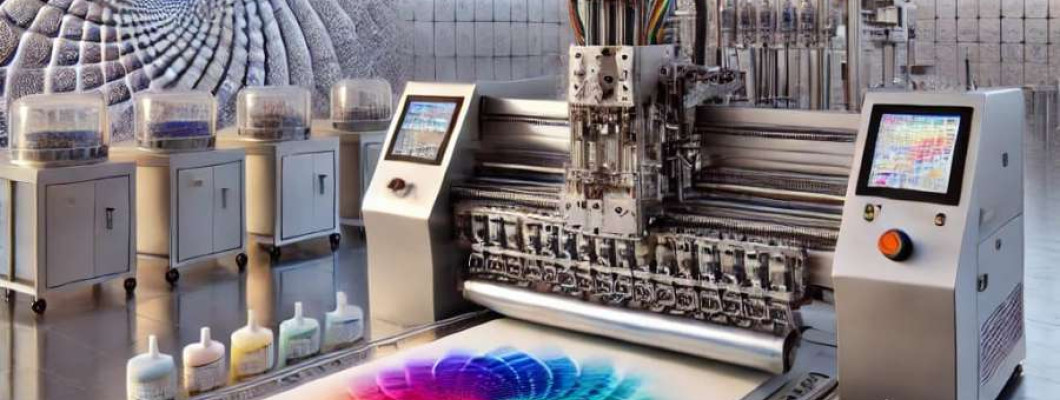
The Industrial Reality of Scaling Edible Printing Beyond Hobbyist Use
The transition from home-use or DIY edible printing devices to an industrial-grade solution capable of reliably servicing bakery production lines introduces a complex set of technical and operational challenges. For enterprises aiming to maintain consistent output quality for cakes and cookies while meeting throughput demands, the limitations inherent in consumer-level printers become apparent swiftly. Common issues include inconsistent color fidelity due to ink degradation, variable printhead alignment causing micro-shifts in high-resolution edible images, and constrained substrate compatibility that restricts the variety of frosting or cookie textures processible without print defects.
Consider a mid-tier bakery chain aiming to produce 500 custom printed cookies daily. A DIY or hobbyist-grade A3 edible printer will struggle to sustain this volume without significant downtime for maintenance and recalibration. Ink cartridges frequently require replacement due to clogging or drying issues, wasting costly edible inks formulated with food-grade colorants. Additionally, the heat and humidity control within an industrial kitchen environment often accelerate printhead wear and influence ink adhesion, forming a bottleneck that directly impacts operational uptime and asset depreciation.
Operational staff training also diverges significantly from DIY setups where print parameters are manually adjusted per batch. Industrial-grade workflows require automated process control and real-time error detection to minimize human errors and maintain precise micron-level print registration. The absence of integrated diagnostics and remote monitoring in consumer devices complicates predictive maintenance scheduling, which in turn increases unexpected downtime and elevates total cost of ownership. Underpinning these challenges is the fundamental gap in engineering robustness and scalable hardware design that differentiates industrial printers like the A3 Edible Food Printer For Printing Cakes Cookies from their DIY counterparts.
Technical Deep Dive into Industrial-Grade Edible Food Printing Mechanics
Printhead Architecture and Ink Delivery Precision
Industrial edible printers deploy piezoelectric drop-on-demand printheads capable of ejecting droplets in volumes as low as 1.5 picoliters (pl), enabling resolutions up to 1200 dpi. This contrasts with typical DIY thermal printheads, which generally operate at larger droplet sizes of 10–15 pl, sacrificing detail and increasing drying times. The precise voltage control across piezoelectric crystals allows for rapid modulation of droplet size and velocity, essential for accurate layering on diverse substrates, such as fondant, royal icing, or sugar sheets. The printhead's nozzle density (generally 180-360 nozzles per inch) determines achievable throughput without compromising resolution.
Ink Formulation Stability and Food-Safety Compliance
Food-grade inks must balance pigment concentration with viscosity and surface tension to ensure consistent flow and adhesion. Industrial inks incorporate encapsulated natural colorants dissolved in syrupy bases that reduce volatility and clogging. Typical viscosities range from 5–15 centipoise at 25°C, optimized for piezoelectric printheads. Crucially, these inks comply with FDA/EU food additive regulations and must be periodically batch-tested for microbial contamination. Consumer inks frequently lack this rigorous testing and stability, leading to inconsistent color output and regulatory limitations when scaling production.
Substrate Compatibility and Adhesion Physics
Edible prints must tolerate mechanical stresses during handling and packaging without smudging or color fading. Substrates range widely in porosity and moisture content, from smooth fondant layers (~0.5 mm thickness with minimal surface roughness) to textured buttercream surfaces. Adhesion mechanics depend on surface energy compatibility; for example, fondant has a surface energy of approximately 56 mN/m, while ink surface tension targets around 30–35 mN/m to optimize wetting without excessive spreading. Industrial printers often include humidity and temperature sensors to dynamically adjust ink deposition for diverse substrate conditions.
Hardware Integration for Continuous Operation
Industrial environments necessitate systems for automated substrate feeding and retrieval, integrated UV or infrared drying modules, and real-time print quality inspection via high-resolution cameras and machine vision algorithms. These components work synergistically to maintain cycle times under 1.5 minutes per A3 sheet, enabling over 400 prints in an 8-hour shift. Redundant printhead arrays allow hot-swapping and parallel printing to minimize downtime, a feature absent in DIY models.
Thermal and Mechanical Reliability Over Prolonged Use
Thermal management is critical to maintain printhead longevity and avoid ink coagulation. Industrial units incorporate closed-loop cooling systems with Peltier elements and airflow management to stabilize internal temperatures around 30°C ±1°C. Mechanically, precision ground linear rails and stepper motors with sub-micron repeatability ensure consistent layer registration despite vibration or substrate feeding irregularities. These engineering decisions contribute directly to increased Mean Time Between Failure (MTBF) values exceeding 10,000 operational hours, ensuring minimal maintenance interruptions.
Scenario Analysis Evaluating Industrial-Grade Edible Printing in Business Contexts
Scenario 1 Catering Factory Custom Cake Production
In a medium-sized catering operation fulfilling 200 custom cakes weekly, using an industrial-grade edible printer enables consistent brand imagery application with minimal manual labor. The automated substrate feeding and drying processes reduce labor costs by 30% compared to manual decoration workflows. The high-resolution output enhances customer satisfaction, justifying a 15% premium on cake pricing. Non-industrial devices would buckle under this volume, increasing maintenance downtime and rework rates.
Scenario 2 Boutique Cookie Designer Scaling Online Orders
A high-end artisan cookie maker expands online with daily orders of 150–250 cookies needing diverse edible prints. The compatibility of the industrial printer with multiple substrates allows switching between royal icing and fondant bases seamlessly. Throughput targets of 200 prints per day with color stability for complex logos are met without slowing packing lines. Margins improve due to reduced spoilage and improved print consistency.
Scenario 3 Large Bakery Chain Regional Distribution
A bakery chain requiring regional distribution faces challenges maintaining uniformity across stores. Deploying industrial printers with centralized quality control and remote monitoring ensures print parameters and color profiles stay consistent. The ability to conduct predictive maintenance via IoT sensors avoids production halts during peak seasons. The ROI timeline contracts to under 18 months due to reduced ink waste and labor efficiencies versus decentralized DIY solutions.
Expert FAQ Addressing Complex Industrial Printing Concerns
Can standard piezoelectric printheads drive edible inks without frequent clogging?
Standard piezoelectric printheads require ink formulations tailored to viscosity and particle size to prevent nozzle blockage. Industrial-grade edible inks employ micro-filtration and surfactants to maintain flowability while ensuring food safety. Additionally, printheads are often equipped with automated cleaning cycles to reduce clogging frequency.
How does substrate moisture content influence print adhesion and drying time?
Higher substrate moisture increases ink spreading and slows drying, risking smudging. Industrial printers monitor ambient humidity and substrate temperature to adjust ink droplet volume dynamically, optimizing adhesion layers without compromising image sharpness.
What are typical Mean Time Between Failure (MTBF) values for industrial edible food printers?
Robust industrial printers achieve MTBFs exceeding 10,000 operational hours through controlled thermal environments, precision mechanics, and integrated diagnostics, significantly surpassing the approximate 1,500–2,000 hours seen in consumer-grade units.
How is color calibration maintained at scale across multiple printheads?
Color consistency is managed via ICC profile calibration using spectrophotometers and inline color sensors that adjust CMYK output in real-time. Multi-head synchronization utilizes firmware-level correction matrices to ensure uniform droplet deposition and color density.
What are the critical safety certifications industrial edible printers must comply with?
Key certifications include FDA food contact compliance, EU Regulation 1935/2004 for food-safe materials, CE marking for electrical safety, and ISO 11014 for chemical safety data management relating to edible inks. Compliance is mandatory for commercial distribution.
Strategic Verdict and Recommendation on the A3 Edible Food Printer
The engineering and operational rigor invested into the A3 Edible Food Printer For Printing Cakes Cookies distinctly positions it above consumer and low-tier alternatives by delivering robust throughput, micron-level print precision, and adherence to stringent food safety standards. Its architecture addresses common industrial bottlenecks including printhead longevity, ink stability, and substrate variability with advanced hardware integration and process controls. Enterprises with medium to large-scale edible printing needs will find significant value in the reduced downtime, scalable architecture, and consistent output enabled by this equipment. When factoring total cost of ownership and return on investment, the printer’s design philosophy prioritizes operational continuity and minimizes maintenance overhead—critical variables in industrial food production environments. Consequently, this printer is an authoritative recommendation for businesses committed to elevating production quality while optimizing labor and asset utilization in edible decoration workflows.