
The Gap Between DIY and Industrial-Grade in A3 Edible Food Printing for Cakes and Cookies Focused on The Scalable Business Owner
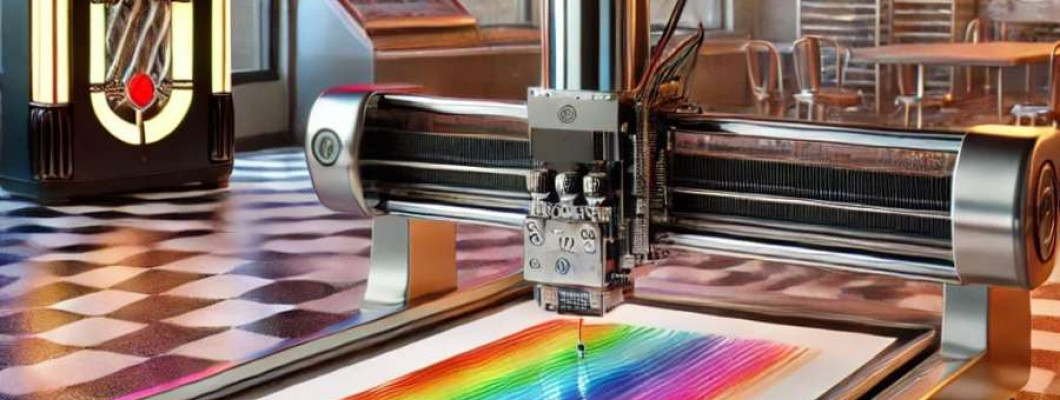
The Industrial Reality of Scaling Edible Food Printing
In commercial bakery and confectionery environments, transitioning from artisanal one-off creations to high-throughput production presents unique technical challenges. The A3 Edible Food Printer For Printing Cakes Cookies exists in a critical niche between consumer-grade food printers and full industrial food decoration machinery. It targets medium-scale enterprises that require higher throughput, automation capabilities, and consistency without the complexity and capital expense of fully industrialized systems.
Operational bottlenecks frequently emerge due to ink drying times, food substrate variability, and printhead durability over protracted production shifts. The edible ink chemistry, often based on natural dyes and food-safe solvents, yields increased maintenance frequency compared to traditional graphic inks. Additionally, labor costs rise when manual substrate handling and post-print processing interrupt continuous workflow.
Industrial-grade machines incorporate robust thermal management to stabilize printhead temperature profiles, minimizing droplet size variance that directly affects micron-level print quality. In contrast, mid-tier printers like the A3 model tend to omit advanced thermal regulation, making them vulnerable to ambient temperature fluctuations, which can unpredictably alter print consistency in high-volume environments.
Meeting safety and environmental compliance also introduces operational complexities. Food contact materials must be certified for hygiene and resistance to ink solvents, while waste ink disposal must adhere to organic compound guidelines. These factors often drive up lifecycle maintenance costs and downtime frequency, impacting throughput and reliability critical for scalable businesses.
Printhead Performance Versus Operational Limits
The A3 Edible Food Printer employs piezoelectric printheads capable of droplet sizes in the 10-30 picoliter range, yielding theoretical resolutions up to 1200 dpi on customizable substrates. However, operational parameters must consider substrate porosity and moisture content, which drastically affect ink absorption and color fidelity.
Thermal dissipation relies on passive heat sinks, resulting in printhead operating temperatures oscillating between 35°C and 45°C during extended runs. This spectral range corresponds to approximately 5% variability in droplet velocity and volume, contributing to minor banding artifacts over runs exceeding 30 minutes without pause.
Hardware fatigue analysis indicates a mean time to failure (MTTF) for printheads under continuous operation of 1200 hours, with failure modes predominantly mechanical clogs and piezo element degradation. Cross-comparison with industrial inkjet solutions shows a factor of two increase in MTTF, attributable to more advanced vibration dampening and ultra-precise fluidics.
| Specification | A3 Edible Food Printer | Industrial Food Printer |
|---|---|---|
| Max Print Resolution | 1200 dpi | 2400 dpi |
| Max Continuous Operation Time | 4 hours | 12 hours |
| Printhead MTTF | 1200 hours | 2400 hours |
| Thermal Regulation | Passive Heat Sink | Active Liquid Cooling |
| Ink Chemistry Compatibility | Standard Edible Inks | Customized Industrial Formulations |
Ink Chemistry and Substrate Interaction Analysis
Edible inks require formulations that balance color vibrancy, food safety, and substrate adherence. The A3 printer supports aqueous- and oil-based edible inks with viscosities ranging from 2 to 8 cP. This spectrum allows use on various sugar paste, fondant, and cookie surfaces but necessitates frequent nozzle cleaning cycles to prevent clogging.
Ink absorption rates on typical cake fondant substrates range between 0.15 and 0.25 g/cm2/min, which directly influences drying times and, consequently, production cycle times. Insufficient drying leads to smudging and loss of fine detail, conditions challenging to control in minimally climate-regulated bakery environments.
Use of UV or heat-assisted drying systems, typical in industrial-scale printers, accelerates throughput but increase equipment complexity and energy consumption. The A3 printer’s lack of integrated drying modules means potential bottlenecks in workflows requiring high-speed order fulfillment.
Infrastructure Integration Considerations for Business Scaling
Seamless incorporation of the A3 Edible Food Printer into existing bakery production lines requires assessing the compatibility with automation elements such as conveyor belts, automated substrate feeders, and drying tunnels. The machine’s footprint of approximately 0.5 square meters and 35 kg weight favor mid-scale setups but constrain installation in already space-limited environments.
Connectivity options include USB and Wi-Fi interfaces, supporting batch file transfer and remote monitoring but lack industrial-grade networking protocols like EtherCAT or PROFINET for real-time process control integration. This limits the printer’s ability to participate in fully automated Industry 4.0 workflows.
Power consumption ranges from 60 to 120 Watts under peak operation, which is efficient but still requires reliable power conditioning to prevent print quality degradation due to voltage fluctuations common in bakery electrical systems.
Asset Depreciation and Maintenance Cost Modeling
Initial CAPEX is mid-range compared to consumer and industrial printers, but OPEX rapidly escalates with consumable ink costs, printhead replacements every 1000-1200 hours, and routine nozzle cleaning procedures every 8 operational hours. Depreciation over 3 years follows a linear trajectory with an estimated salvage value of 20% of purchase price.
Indirect costs from operational downtime due to maintenance or printhead cleaning cycles result in throughput losses estimated at 10-15% per production day. This downtime, combined with consumable expenses, raises the effective cost per printed cake or cookie by approximately 30% compared to fully integrated industrial systems where continuous operation and bulk ink delivery reduce per-unit cost significantly.
Use Case Scenario Analysis
Case 1 Gourmet Boutique Bakery
This business requires high-quality edible prints on premium fondant cakes with variable batch sizes. The printer’s 1200 dpi resolution and substrate flexibility provide precision color replication for intricate designs. However, manual substrate loading and drying constraints restrict throughput to 15-20 units per 8-hour shift, making it ideal for boutiques focusing on limited run personalization rather than volume.
Case 2 Mid-Tier Cookie Production Facility
In this semi-automated facility producing decorated cookies at 2000 units/day, the printer’s footprint and maintenance cycles impose workflow disruptions. Without integrated drying or automated substrate feeders, labor costs rise due to handling. Nonetheless, the printer offers rapid design changes and color variation unmatched by stencil or manual decoration, enhancing product differentiation.
Case 3 Event Catering Services
Catering operations requiring on-site edible printing for events benefit from the A3 printer’s compact design and ease of setup. Print quality and substrate versatility allow customization of cakes and cookies. However, throughput limitations and necessity of trained operators constrain scale, making it a supplementary asset rather than a primary production tool.
Expert FAQ
How does ambient humidity impact printhead performance in edible food printing?
Humidity variations affect ink viscosity and droplet evaporation rates. Elevated humidity reduces ink drying times but can cause substrate moisture absorption issues, while low humidity accelerates ink drying within nozzles, increasing clog risk.
What factors determine the optimal print resolution for edible food printing on flexible substrates?
Print resolution must balance droplet size and substrate texture. Excessively high dpi on porous or uneven surfaces leads to ink bleeding, blurring details. The A3 printer’s 1200 dpi offers a practical compromise for typical cake and cookie substrates.
Can the A3 Edible Food Printer operate with industrial-grade edible ink formulations?
The machine is compatible with standard edible inks but does not support higher viscosity or specialized industrial formulations requiring active temperature or pressure control, limiting certain custom ink applications.
What maintenance protocols maximize printhead lifespan under continuous operation?
Regular nozzle purging every 8 hours, thorough daily cleaning cycles using food-safe solvents, and controlled ambient temperature/ humidity prolong printhead lifespan and maintain droplet consistency.
What integration challenges exist when connecting the printer to automated bakery lines?
Limited networking protocols restrict real-time data exchange and process synchronization. Mechanical integration with conveyors requires customized substrate holders and timing adjustments to accommodate drying times and print cycles.
Strategic Verdict and Recommendation
The A3 Edible Food Printer For Printing Cakes Cookies offers a viable solution for scaling businesses seeking enhanced throughput and automation compared to consumer-grade devices, while avoiding the complexity and cost of fully industrial food printers. It balances print quality, substrate versatility, and moderate operational costs in a compact form factor suitable for boutique and mid-tier food production companies.
While limitations exist in printhead longevity and absence of active thermal management, the printer’s performance characteristics align with businesses prioritizing color depth and workflow flexibility over maximum volume. With proper maintenance and integration planning, it can serve as an essential asset in medium-scale edible printing operations, driving productivity gains without prohibitive CAPEX.
From a technical and operational perspective, this printer bridges the critical gap between DIY and industrial-grade edible printing hardware. Long-term asset value and operational reliability necessitate strict adherence to maintenance schedules and workflow adjustments to manage drying and substrate handling constraints effectively.
In conclusion, for scalable business owners focusing on throughput and automation in edible food printing, this product represents an authoritative industrial-grade choice that delivers measurable operational improvements and a solid ROI foundation.