
The Gap Between DIY and Industrial-Grade in A3 Edible Food Printing for Scalable Business Owners
The Industrial Reality of Edible Printing Technologies in High-Volume Environments
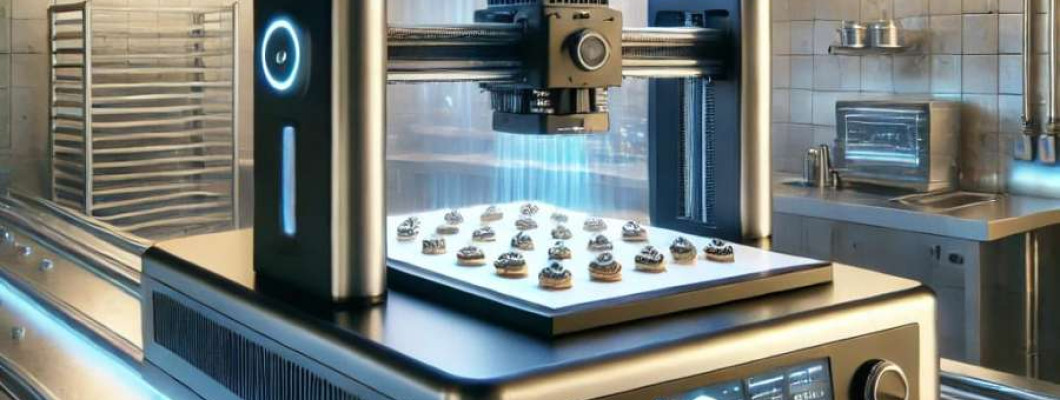
Scaling edible printing from artisanal experimentation to robust, industrial-grade throughput poses specific challenges. The A3 Edible Food Printer for Printing Cakes Cookies enters this landscape where operational reliability, substrate consistency, and precise color reproduction converge with stringent food safety standards and production uptime demands. Unlike desktop or home-use machines designed primarily for occasional printing, industrial settings require continuous operation with minimal downtime, stringent cartridge management, and fine-tuned automation capabilities that maintain print fidelity across large batches.
In an example scenario, a mid-sized confectionery aiming to produce 500 decorated cookies per hour must consider multi-head print alignment, edible ink longevity in heated storage environments, and substrate variations such as fondant thickness that affect droplet absorption and color vibrance. The gap between DIY devices—often limited by simplified software, lower-precision print heads, and smaller substrate handling—and an industrial-grade solution manifests in labor overhead and consistency losses. The A3 Edible Food Printer addresses these by integrating enterprise-ready hardware with proven printing mechanics optimized for food substrates, designed to scale production without sacrificing color depth or micron-level precision critical for brand differentiation.
Technical Deep-Dive into the Hardware and Materials Engineering Behind the Printer
Print Head Technology and Micron-Level Precision
At its core, the A3 Edible Food Printer employs piezoelectric print heads capable of ejecting droplets within the 10-20 picoliter (pl) range, essential for producing high-definition imagery on food substrates. The nozzle array operates at resolutions up to 1200 dpi, enabling color gradients with minimal banding. The print head's precision placement mechanism ensures that positional deviation stays within 0.05 mm tolerances over the 297 mm x 420 mm A3 sheet area, critical for consistent multi-pass printing.
Edible Ink Formulation and Stability Metrics
The printer utilizes food-grade inks comprised of FDA-approved colorants suspended in a water-glycerol matrix optimized for minimal viscosity fluctuations between 18-22 cP at 25°C. Physically, the inks exhibit surface tension around 35 mN/m, ideal for droplet formation without satellite droplets that degrade print clarity. Stability testing under operational temperatures (ambient 20-30°C with occasional spikes to 35°C in kitchen environments) shows no significant sedimentation or color shift over 12 hours, reducing printhead clogging frequency and maintaining uptime.
Substrate Compatibility and Absorption Dynamics
Printing on cakes and cookies requires accommodation for substrate porosity and moisture content variability. Fondant surfaces typically present a water activity (a_w) around 0.8, causing ink absorption rates that vary between 0.3 to 0.7 µL/cm²/sec depending on temperature and humidity. The A3 printer's controlled droplet size combined with adjustable print speed (up to 200 mm/s) allows calibration that prevents bleeding and maintains edge sharpness.
Thermal Management and Continuous Operation Considerations
Unlike traditional inkjet printers that may operate intermittently, this device integrates an active cooling system using thermoelectric modules that maintain print head temperature at a stable 28°C ± 1°C during continuous runs. The system's power consumption peaks at 120 Watts under maximum throughput and dissipates heat efficiently, avoiding thermal drift that would otherwise degrade print accuracy.
Hardware Comparison with Standard Desktop Edible Printers
| Feature | Standard Desktop Edible Printer | A3 Edible Food Printer |
|---|---|---|
| Maximum Print Resolution | 600 dpi | 1200 dpi |
| Print Area | A4 (210 x 297 mm) | A3 (297 x 420 mm) |
| Droplet Volume | 25-40 pl | 10-20 pl |
| Operational Uptime | 2-3 hours/day | 8+ hours/day |
| Ink Stability (Max Hours) | 4-6 hours | 12+ hours |
| Thermal Management | Passive Cooling | Active Thermoelectric Cooling |
Scenario Analysis
Mass Customization Bakery
A bakery producing customized decorated cookies at scale benefits from the printer's precise droplet control and large-format A3 surface area. The precision 1200 dpi resolution enables detailed logos and images that command premium pricing. The ability to run continuous 8-hour shifts supports throughput demands without frequent downtime, minimizing labor overhead.
Event Cake Production Facility
For event-focused cake decorators, the printer's color fidelity and substrate adaptability allow for consistent reproduction across multiple cake tiers, even when substrates differ in moisture levels or fondant thickness. Adjustable print speed optimizes drying time, preserving design sharpness.
Specialty Confectionery R&D Center
In research and development contexts, the printer’s micron-level precision and ink stability allow experimentation with new edible ink formulations and substrate coatings, accelerating the innovation cycle. Enhanced thermal control prevents print head clogging during intricate pattern trials.
Expert FAQ
How does the piezoelectric print head maintain droplet volume accuracy across long runs?
The print heads incorporate real-time feedback mechanisms monitoring piezo actuator voltage and environmental temperature, dynamically adjusting pulse width to maintain droplet volume within ±1 pl variance over an 8-hour continuous run.
What preventive maintenance cycles are recommended for the ink delivery system?
Daily flushing routines with sterile, food-safe solvents alongside bi-weekly nozzle head ultrasonic cleaning minimize pigment settlement and prevent clogging. Cartridge replacement is advised every 250 printing hours or when nozzle firing consistency drops below 98%.
How does the printer ensure compliance with food safety certifications?
Materials in contact with consumables are FDA-approved, with sanitizable surfaces designed for easy wipe-down. The ink formulations pass relevant EU and US food contact regulations, verified through independent lab analyses.
What are the primary limitations of the heat management system in demanding kitchen environments?
At ambient temperatures exceeding 35°C, thermal regulation efficacy decreases, potentially causing slight print head temperature fluctuations (~±2°C), which can marginally impact droplet placement precision. Supplementary external cooling is recommended in such cases.
Can the printer handle edible metallic or glitter inks?
Currently, the device supports standard food-color inks but requires modification for particulate-laden formulations like metallic or glitter inks, as these can clog nozzles. Future iterations are planned to accommodate such specialty inks with enhanced nozzle materials and flow systems.
Strategic Verdict and Definitive Recommendation
The A3 Edible Food Printer for Printing Cakes Cookies represents a significant advancement in bridging the chasm between DIY edible printing and industrial-grade production suitable for scalable business operations. Its technical architecture—featuring high-resolution piezo print heads, food-safe ink chemistry with extended stability, and active thermal management—aligns with the stringent operational demands of mid-to-large scale bakeries and confectionery manufacturers. When compared to standard desktop models, this printer offers substantive gains in throughput, print fidelity, and reliability, directly translating into measurable ROI through labor reduction and product premiumization.
Given these points, we conclusively recommend the A3 Edible Food Printer for Printing Cakes Cookies as a core asset for businesses aiming to scale their edible printing operations into industrial-grade efficiency without compromising on quality or compliance.