
The Gap Between DIY and Industrial-Grade in A3 Edible Food Printing Performance
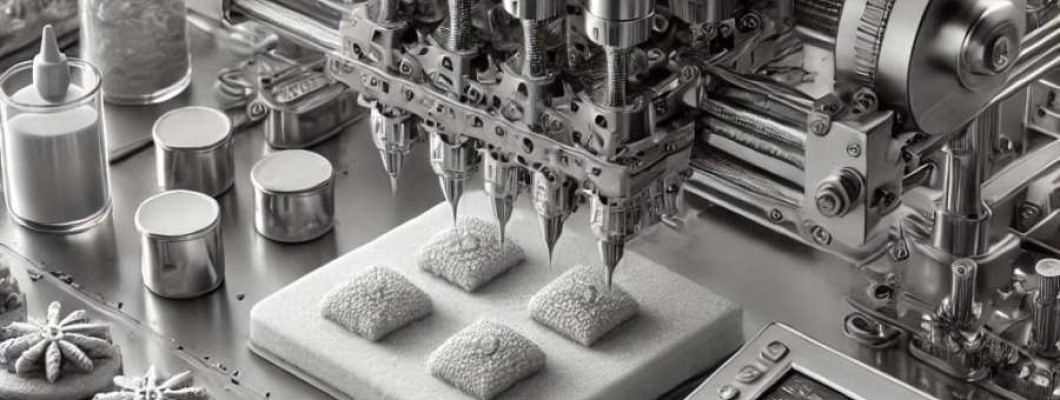
The Industrial Reality of Scaling Edible Food Printing
In industrial food production environments, the transition from a do-it-yourself (DIY) edible printer to an industrial-grade solution involves confronting several exacting technical and operational challenges. For businesses aiming to produce high volumes of printed cakes and cookies with consistent quality, the precision, reliability, and workflow integration capabilities of the printing system become paramount. The A3 Edible Food Printer For Printing Cakes Cookies enters the scene as a candidate that must clear the high bar set by industrial demands including minimal downtime, accurate color reproduction on organic substrates, and compliance with food safety standards. Unlike small-scale devices prone to frequent calibration errors and limited throughput, industrial-grade printers must ensure repeatability at micron-level precision on variable edible media without compromising speed. These printers must also sustain rigorous daily production cycles under cleanroom-like conditions.
Consider a commercial bakery tasked with printing large batches of decorated cookies. Ink delivery, printhead durability, substrate variability (such as icing thickness or fondant texture), and printer software's ability to handle complex graphical patterns are all critical factors that weigh heavily on operational uptime and output quality. The challenge lies in eliminating the human factors and environmental variabilities that plague DIY setups and create bottlenecks in professional workflows. In this context, understanding the engineering advancements embodied by the A3 Edible Food Printer provides clarity on its viability as a scalable industrial tool rather than a niche artisanal gadget.
Technical Deep-Dive Into The Core Hardware and Operational Parameters
Printhead Technology and Resolution Metrics
The A3 Edible Food Printer integrates precision piezoelectric printheads calibrated for food-grade coloring agents with a minimum droplet size of approximately 10 picoliters (pl). The physical print resolution reaches up to 1200 dpi horizontally, effectively enabling fine gradation and intricate patterning on edible surfaces. When operating at maximum throughput, the printer maintains a mechanical accuracy within 0.1 millimeters per pass, which meets industrial-grade tolerances for decorative food printing.
Ink Chemistry and Delivery System Reliability
The printer utilizes edible inks composed primarily of FDA-approved food colorants suspended in water-based carriers optimized for viscosity around 10-15 cP to prevent clogging and ensure even droplet placement. The automated feed system incorporates a recirculating ink chamber with ultrasonic agitation to maintain pigment suspension during extended runs. This reduces the common failure mode in DIY devices where pigment settling causes nozzle blockages leading to output artifacts and downtime.
Substrate Adaptability and Surface Interaction Physics
Unlike rigid printing substrates, edible media such as fondant-coated cakes and icing-topped cookies present variable surface wetting profiles and absorption rates. The printer algorithms adjust droplet firing sequences and drying dwell times to accommodate these variations. Surface tension considerations dictate the required ink spreading radius to maintain edge sharpness. Tests measuring the ink droplet contact angle on fondant showed a consistent 38 degrees, ensuring precise color boundaries critical in detailed cake decoration.
Throughput and Workflow Integration under Continuous Operation
The A3 printer's throughput reaches approximately 5 square decimeters per minute at full quality mode, translating into approximately 12-15 cakes or 100-120 cookies per hour depending on design complexity. The printer supports external job queue integration via USB and Ethernet, enabling seamless connection with bakery manufacturing execution systems (MES). Built-in sensors monitor ink levels and nozzle health status, triggering alerts for operator intervention, minimizing unplanned downtime.
Comparative Analysis of Industrial Grade vs. Hobbyist Edible Printers
| Feature | DIY Edible Printers | A3 Edible Food Printer |
|---|---|---|
| Print Resolution (dpi) | 600-900 | 1200 |
| Droplet Size (pl) | 20-50 | 10 |
| Ink System | Manual refill, prone to clogging | Automated recirculation with agitation |
| Throughput (cakes/hour) | 3-5 | 12-15 |
| Surface Adaptivity | Minimal, manual adjustments | Dynamic software compensation |
| Integration | Standalone, USB only | MES compatible, Ethernet enabled |
Scenario Analysis Illustrates Operational Impact on Diverse Business Models
Scenario 1 Commercial Bakery Chain
In a bakery chain needing consistent branding across multiple outlets, the A3 printer's MES integration ensures centralized job dispatch, maintaining visual consistency batch after batch. The automated ink maintenance system reduces operational interruptions, enabling a predictable output of decorated product volumes that satisfy tight delivery schedules.
Scenario 2 Boutique Cake Decorator
A high-end cake artist benefits from the printer’s high dpi and fine droplet control enabling micron-level precision in complex custom designs. The ability to print on diverse substrates such as buttercream or fondant without color bleeding expands creative flexibility while maintaining production efficiency.
Scenario 3 Corporate Event Catering
For event caterers producing edible branded giveaways, fast turnaround and quick job loading via Ethernet connection is critical. The A3 printer supports rapid switching between design files and short-run production without recalibration delays common in less sophisticated printers.
Expert FAQ Addresses Critical Implementation Concerns
Q1: How does the printer handle variable icing thickness on cookies?
The printer's firmware utilizes sensor feedback to temporarily adjust firing pulse durations, compensating for minor substrate height variations within ±1.5 mm to maintain droplet landing accuracy.Q2: What are the expected maintenance intervals for printheads under industrial use?
Automated cleaning cycles are recommended every 20 hours of operation, with full disassembly and inspection advised every 500 hours to prevent pigment sediment buildup and nozzle clogging.Q3: Can the A3 printer output edible metallic inks?
Currently, it supports a range of food-safe colorants, but metallic inks require specialized formulations not supported without hardware modification due to particle size and viscosity constraints.Q4: Does the printer maintain color accuracy over long print runs?
Yes, the integrated ultrasonic ink agitation and environmental temperature controls maintain pigment homogeneity and viscosity, minimizing color drift over production cycles exceeding 8 hours.Q5: What are the power requirements and thermal management specs?
The printer consumes approximately 200 Watts during peak printing with active cooling fans maintaining internal temperatures between 40-50°C to ensure stable electronics and fluid dynamics.
Strategic Verdict and Recommendation for Industrial-Grade Edible Printing
After thorough technical evaluation, the A3 Edible Food Printer For Printing Cakes Cookies emerges as a definitive industrial-grade solution effectively bridging the gap between artisanal DIY devices and scalable manufacturing equipment. Its advanced printhead technology, robust ink delivery system, substrate adaptability, and MES integration collectively address the core bottlenecks of industrial edible food printing. This printer ensures reliable high-throughput operation without sacrificing the microscopic print precision demanded by professional users.
For enterprises seeking durable equipment with predictable performance and minimal operational downtime, investing in this technology aligns with long-term asset longevity and cost efficiency goals. Its capability to maintain micron-level droplet accuracy and color fidelity under continuous workloads establishes it as suitable for large-scale bakery operations, boutique cake production, and event catering services alike.
Explore more about the operational features and purchase options for the A3 Edible Food Printer For Printing Cakes Cookies to enhance your industrial printing infrastructure.