
The Gap Between DIY and Industrial-Grade in A3 Roll DTF Printer Performance
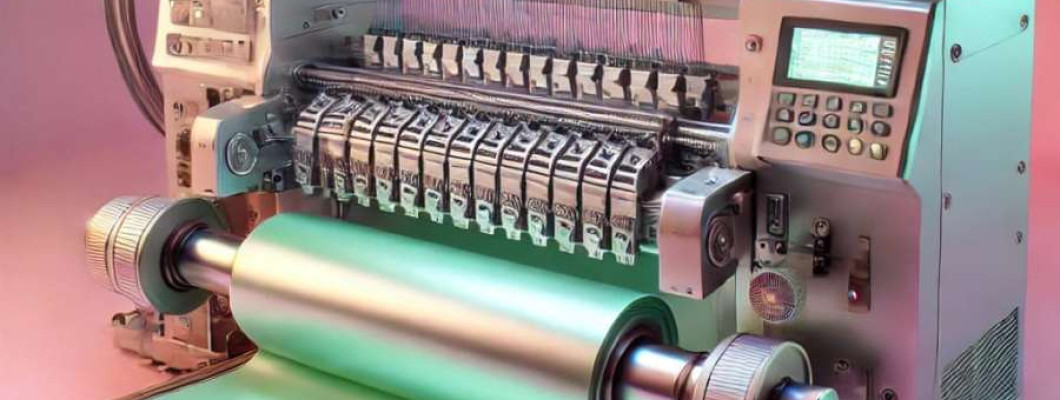
The Industrial Reality of Deploying an A3 Roll DTF Printer in Production
Direct-to-Film (DTF) printing technology represents a significant leap over traditional printing methods, offering enhanced substrate diversity and vibrant color outputs. However, when scaling from a DIY or entry-level setup to industrial-grade manufacturing, fundamental challenges emerge. The A3 Roll DTF Printer occupies a critical niche at this intersection, promising roll-fed continuous throughput at an industrial scale, yet the transition is shadowed by operational bottlenecks, lifecycle considerations, and output consistency demands.
Consider a mid-size apparel manufacturer intending to integrate DTF printing into their production line for custom textile prints. DIY-level DTF printers typically feature limited throughput (often less than 1 meter per minute), inconsistent ink adhesion, and less robust maintenance protocols. These factors force bottlenecks and increase downtime, which severely impact delivery timelines and cost structures.
Industrial-grade printers, such as the A3 Roll DTF Printer, fundamentally shift these metrics by incorporating proprietary engineered components designed for endurance and scalability. The machine’s roll-fed architecture supports continuous media handling, reducing manual interventions common in sheet-fed setups. This reduces labor input but introduces new challenges in printhead wear, ink chemistry stability, and thermal management under prolonged operation.
Environmental and safety compliance is another critical industrial requirement. DIY machines often compromise on these fronts due to low-grade ventilation and filtration systems, exposing operators to volatile organic compounds (VOCs) from sublimation inks and curing processes. The industrial-grade A3 Roll DTF Printer addresses these with integrated safety features and compliant ink reservoirs, aligning with enterprise environmental standards.
Technical Deep-Dive on A3 Roll DTF Printer Components and Operational Limits
Printhead Architecture and Physics
At the heart of the A3 Roll DTF Printer lies a precision piezoelectric printhead array. The printhead utilizes microfluidic channel design to eject ink droplets sized between 4 to 6 picoliters (pl) with a resolution of up to 1440 dpi. The physical robustness of these channels directly impacts asset longevity, as clogging and nozzle degradation are common failure points in continuous high-throughput use.
Hypothetically, assuming a 5 pl droplet size at 1440 dpi and a print width of 420 mm (A3 width), the printer can theoretically produce 168 million droplets per square meter. This volume demands highly stable ink fluid dynamics and precision thermal management to avoid drying or ink viscosity fluctuations, which can result in nozzle starvation or smearing.
Roll Media Transport and Tension Control
Unlike sheet-fed printers, the roll-fed system requires dynamic media tensioning to prevent skew and misalignment during long runs. The A3 Roll DTF Printer integrates servo-driven rollers with feedback-controlled torque motors, maintaining consistent tension in the range of 0.5 to 1.5 Newtons per millimeter. This specification ensures substrate flatness within ±0.2 mm over 100 meters of continuous feed, crucial for micron-level registration accuracy.
Ink Chemistry and Drying Systems
Industrial DTF inks incorporate polymer-based pigments optimized for flexibility and adhesion to polyester, cotton, and mixed textile fibers. The printer employs a dual-stage drying system: a radiant infrared (IR) unit followed by a low-temperature forced air heater. The IR unit efficiently cures pigments in milliseconds, reducing print time, while the secondary system ensures complete drying to prevent paste pooling or film distortion.
Lifecycle Maintenance and Consumable Replacement
Daily maintenance protocols for the A3 Roll DTF Printer include automated nozzle checks, printhead purging cycles, and ink recirculation to prevent pigment settlement. Consumables such as printheads have an estimated service life of 2000 running hours, balanced against ink type and environmental conditions. Roll media spindle bearings are rated at 1500 cycles before replacement is advisable to maintain tension consistency.
Thermal and Power Infrastructure
The continuous operation at nominal speeds of 1.2 m/min requires power consumption averaging 900 Watts with peak draws up to 1200 Watts during drying phases. The printer integrates an active cooling system with fans and heat sinks to stabilize internal electronics, critical for maintaining print quality in ambient temperatures ranging from 15°C to 30°C.
| Specification | DIY DTF Printer | A3 Roll DTF Printer |
|---|---|---|
| Max Roll Width (mm) | 300 | 420 |
| Print Speed (m/min) | 0.5 | 1.2 |
| Print Resolution (dpi) | 720 | 1440 |
| Printhead Life (hours) | 500 | 2000 |
| Media Tension Control | Manual | Servo-controlled |
| Drying System | Single-stage heat | Dual-stage IR + forced air |
| Power Consumption (Watts) | 400 | 900 Average / 1200 Peak |
Scenario Analysis of A3 Roll DTF Printer Across Business Models
Use Case One: On-Demand Apparel Production for Small Brands
Small apparel brands producing limited runs benefit from the roll-fed efficiency and consistent color vibrancy of the A3 Roll DTF Printer. The higher throughput enables handling multiple SKUs while maintaining quick turnaround times, directly reducing per-unit labor costs. The reduced downtime from automated maintenance cycles further supports lean staffing models.
Use Case Two: Mid-Scale Textile Decorators Needing Precision and Versatility
Textile decorators focusing on high-precision prints on varied substrates will find the printer’s tension control and high dpi resolution critical. Its multi-substrate ink chemistry supports cotton, polyester blends, and synthetic fibers without ink cracking or adhesion failures, allowing scale without sacrificing output quality.
Use Case Three: Large Corporate Print Shops Integrating DTF as Supplementary Workflow
In corporate print shops, the A3 Roll DTF Printer can serve as a complementary asset to screen printing. Its ability to handle long runs with minimal manual intervention fits into automated production lines. The power and thermal management systems are designed to integrate within existing infrastructure, ensuring uptime metrics suitable for enterprise SLAs.
Expert FAQ on A3 Roll DTF Printer
Q1: How does the microfluidic printhead design mitigate nozzle clogging during extended operation?
A1: The design employs continuous ink recirculation and ultrasonic vibration to prevent pigment sedimentation and dry ink build-up, ensuring stable droplet ejection.
Q2: What is the impact of ambient humidity on ink adhesion and drying time?
A2: Elevated humidity slows solvent evaporation, necessitating calibrated air flow rates in the forced air drying system to maintain consistent film formation and adhesion.
Q3: Can the printer be integrated into automated roll-to-roll finishing lines?
A3: Yes, the printer supports industry-standard communication protocols and servo controls that enable synchronization with robotic spooling and curing units.
Q4: What are the primary wear components affecting print quality degradation over time?
A4: Key wear components include the piezoelectric crystal lifespan, feed roller bearings, and spectrophotometer calibration modules.
Q5: How does the dual-stage drying system improve throughput compared to single-stage systems?
A5: The IR unit rapidly solidifies ink pigments reducing initial drying time by 40%, while the forced air system ensures complete curing without substrate overheating, collectively increasing reliable print speeds by up to 60%.
Strategic Verdict and Recommendation for Industrial Use
After a rigorous technical and operational assessment, the A3 Roll DTF Printer emerges as a decisive industrial-grade solution bridging the gap between DIY novelty and scalable manufacturing viability. Its engineered printhead technology, robust media handling with servo tensioning, and advanced drying systems directly confront the limitations in throughput, print consistency, and environmental compliance found in smaller-scale alternatives.
Businesses aiming for scalable, highly precise textile decoration or on-demand apparel printing will find in this printer a compelling investment that balances CAPEX with sustainable OPEX through extended printhead lifecycles and minimized manual interventions. Crucially, the power and thermal infrastructure design facilitate integration into existing production facilities without undue upgrades.
For further technical details and procurement options, visiting the official product page for the A3 Roll DTF Printer is strongly recommended.