
The Gap Between DIY and Industrial-Grade in A3 Roll DTF Printer T-shirt Machines for Maintenance Leads
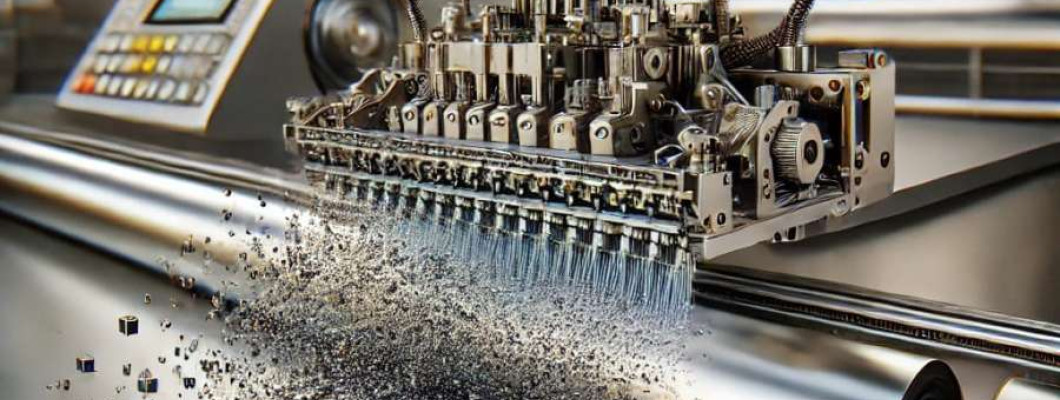
The Industrial Reality of Maintaining A3 Roll DTF Printers in High-Throughput Environments
In industrial textile printing environments, the divide between DIY or hobbyist-level direct-to-film (DTF) printers and robust, industrial-grade solutions is starkly evident on the maintenance floor. The A3 Roll DTF Printer T-shirt Printing Machine, designed for commercial fabric printing, presents a clear case study in how engineering choices impact uptime, print quality consistency, and maintenance overhead. Maintenance leads face the daily challenge of balancing intricate printhead physics with the chemical behavior of DTF inks, all while managing throughput demands and operator skill variations.
Printheads in DTF systems operate under tight precision constraints, often in sub-10 micron droplet sizes and at firing frequencies exceeding tens of kilohertz. This level of mechanical and fluidic interaction introduces common failure modes such as nozzle clogging, ink sedimentation, and piezoelectric element degradation. Unlike desktop or DIY-grade machines, industrial-grade A3 roll DTF systems employ hardened components, advanced ink filtration, and automated head cleaning routines to minimize these issues. However, these benefits come with their own set of maintenance requirements, including cyclical replacement of consumable parts and system recalibrations to preserve print fidelity.
Environmental factors, such as temperature and humidity fluctuations in the print room, accentuate these challenges, especially where volatile or UV-curable inks are used. Maintenance leads must therefore integrate environmental monitoring with maintenance schedules to preempt operational bottlenecks. The reality on the shop floor is a complex feedback loop where print quality, hardware wear, and chemical interactions dictate uptime. For businesses scaling from prototyping to mass production, the gap between DIY and industrial-grade DTF solutions becomes a critical operational pivot point.
Technical Deep-Dive into Maintenance Engineering of A3 Roll DTF Printers
Printhead Physiology and Failure Mechanisms
The central actuator in DTF printer maintenance is the printhead. Typically employing piezoelectric technology, these printheads eject droplets ranging from 4 to 12 picoliters with firing frequencies around 14 kHz. The piezo elements flex at microsecond speeds, pressurizing ink chambers to deliver precise droplets onto the film substrate. Mechanical fatigue and chamber micro-cracks develop after approximately 10,000 operational hours, manifesting as inconsistent droplet size or failure to eject.
Clogging arises when pigment particles or resin components in DTF inks crystallize within nozzle apertures, which measure between 30-50 micrometers. Industrial-grade machines mitigate this via multi-stage ink filtration down to 1 micron and automated ultrasonic nozzle purging systems operating every 30 minutes of runtime. DIY setups often lack such redundancy, increasing downtime by up to 25%.
Ink Chemistry and Its Impact on Maintenance Cycles
DTF inks contain a proprietary blend of pigments, binders, and adhesive resins. The polymerized resins must remain fluid within 20-30°C to prevent premature settling. Over time, polymer chain cross-linking can thicken inks, necessitating head flushing and ink circulation. Industrial systems leverage temperature-controlled ink reservoirs with stirring mechanisms to maintain homogeneity, extending maintenance intervals by 30% compared to ambient-based reservoir designs in DIY models.
Automated Calibration and Film Handling Precision
Film tension and feed consistency affect print alignment and layer registration. The A3 Roll DTF printer integrates tension sensors and stepper motor encoders calibrated to ±0.1 mm precision. Automated real-time feedback loops adjust motor torque to accommodate substrate variations and prevent skewing. Loss of calibration leads to color banding and distortion, requiring recalibration protocols that can consume 1-2 hours of maintenance downtime in industrial environments.
Energy Dissipation and Thermal Management
Printhead firing generates localized heat spikes of approximately 120°C during intense operation bursts. Industrial machines incorporate heat sink arrays and active cooling via fluid circulation to maintain printhead temperature within 35°C ± 3°C, reducing thermal stress and ink viscosity fluctuations. Without this, thermal gradients accelerate mechanical stress and ink drying in nozzles, requiring more frequent cleaning cycles.
Maintenance Consumables and Scheduled Downtime
Key consumables include printheads, ink filters, cleaning solution cartridges, and heating elements for the curing module. Scheduled replacements follow manufacturer advisories between 500 and 2,000 operational hours. Proper inventory management of these parts directly correlates with machine availability rates and reduces emergency repairs, which can extend downtime by 50%. DIY-level systems often underestimate consumable lifespans, leading to unexpected interruptions.
Scenario Analysis Highlighting Maintenance Influence on Business Outcomes
Scenario 1 Private Label Fashion Startup
This startup requires rapid prototype iterations with small batches averaging 50 shirts per run. With the A3 Roll DTF printer's automated cleaning and calibration features, maintenance demands are minimal, enabling the startup to focus on design rather than machine troubleshooting. The extended maintenance intervals reduce unplanned downtime that would otherwise delay order fulfillment by up to 3 days.
Scenario 2 Mid-Sized Print Shop Scaling to E-commerce
Increasing daily throughput to 500 shirts necessitates a printer with stable uptime. Here, the reliability of industrial-grade components in the A3 Roll DTF printer becomes critical. Scheduled maintenance is aligned with production cycles to avoid peak-time interruptions. Without this, the print shop risks losing up to 15% of revenue due to delayed shipments caused by printhead clogging recovered only after multi-hour maintenance events common in DIY units.
Scenario 3 Large Enterprise Mass Production
Mass production of over 2000 units daily demands seamless integration of maintenance data with the factory management system. The A3 Roll's robust sensor suite and consumable tracking allow predictive maintenance planning, minimizing downtime to under 2% monthly. In contrast, non-industrial printers suffer 8-12% downtime, eroding profitability and increasing labor costs for reactive fixes.
Expert FAQ on Advanced Maintenance Considerations for A3 Roll DTF Printers
Q1 How does nozzle firing frequency directly correlate with printhead wear rates?
High-frequency firing increases piezoelectric element fatigue exponentially. Operating at 14 kHz can reduce printhead longevity by approximately 20% compared to 10 kHz due to mechanical stress concentration.
Q2 What filtration specifications optimize ink stability without impairing flow rate?
Multi-stage filtration using sequential filters at 5 micron, 2 micron, and 1 micron achieves particle removal without increasing ink viscosity, preserving smooth nozzle ejection and reducing clog risks.
Q3 Can environmental monitoring systems be integrated into maintenance workflows?
Yes, integrating temperature and humidity sensors with alert systems enables dynamic maintenance scheduling and head cleaning based on environmental conditions, ensuring consistent print quality.
Q4 What is the impact of printhead temperature fluctuations on droplet size variability?
Each 1°C increase in printhead temperature can shift droplet volume by about 0.1 picoliters, causing color banding and edge bleeding if unmanaged.
Q5 How do consumable part replacement cycles affect overall machine TCO?
Predictable consumable cycles reduce emergency downtime and labor costs, dramatically improving total cost of ownership by up to 25% by maintaining operational efficiency and print quality.
Strategic Verdict and Maintenance Lead Recommendation
The A3 Roll DTF Printer T-shirt Printing Machine represents an industrially engineered balance between printhead physics, ink chemistry, and system automation, markedly closing the gap with DIY-grade devices. From a maintenance lead perspective, it introduces critical predictability and control in wear management, consumable scheduling, and environmental adaptation. These attributes translate to superior uptime, reduced emergency repairs, and consistent print quality vital for scaling textile printing operations.
Integrating sensor-driven maintenance protocols and robust mechanical subsystems ensures the A3 Roll DTF printer withstands rigorous industrial demands. For professionals charged with maintaining high-precision output while controlling labor and consumable expenses, this printer is a definitive solution. We therefore emphatically recommend the A3 Roll DTF Printer T-shirt Printing Machine for organizations seeking dependable, scalable textile printing infrastructure.
| Maintenance Factor | DIY-Grade DTF Printers | A3 Roll Industrial-Grade DTF Printer |
|---|---|---|
| Printhead Nozzle Clogging | Frequent; manual purging needed every 2-3 hrs | Automated ultrasonic purging every 30 mins, multi-stage filtration |
| Ink Homogeneity Control | Ambient storage; no active mixing | Temperature-controlled reservoirs with stirrers |
| Calibration Precision | Manual; ±0.5 mm alignment error common | Automated feedback loop; ±0.1 mm precision |
| Thermal Management | Passive cooling; printhead temps exceed 50°C | Active cooling; maintains 35°C ± 3°C |
| Maintenance Downtime | Unscheduled, averaging 20% operational loss | Scheduled, predictive; <5% operational loss |