
The Gap Between DIY and Industrial-Grade in A3 Roll DTF Printer T-shirt Printing Machine
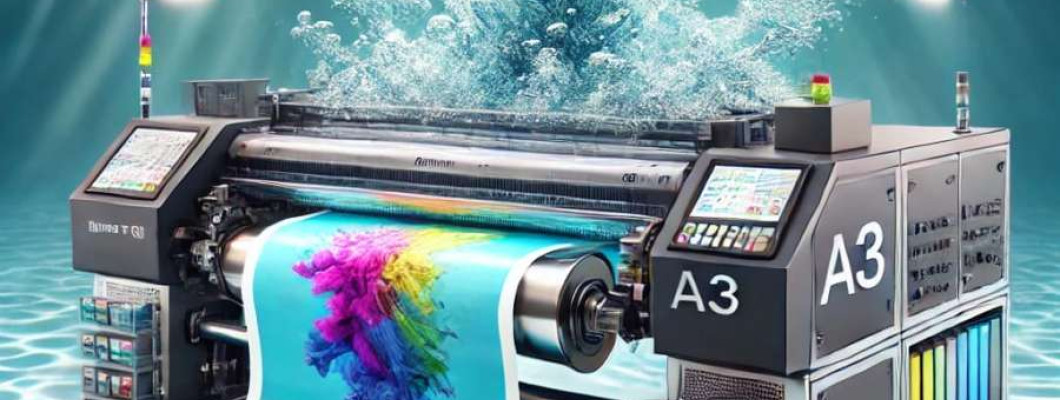
The Industrial Reality of Adopting an A3 Roll DTF Printer for Production
The transition from small-scale, do-it-yourself direct-to-film (DTF) printing setups to robust, industrial-grade machinery presents a technical and operational challenge that many garment decorators face. Consider the high-volume T-shirt print shop seeking to increase throughput while maintaining consistent, high-fidelity prints. A3 Roll DTF Printer T-shirt Printing Machines serve as a midpoint between entry-level desktop units and full industrial flatbed systems, but integrating such technology requires understanding hidden bottlenecks that influence uptime, print quality, and cost-efficiency.
Unlike DIY setups that often use piezoelectric printheads designed for low-volume, multi-function tasks, industrial-quality DTF printers employ enhanced printhead architectures optimized for continuous, high-resolution output. However, operational realities such as ink chemistry compatibility, thermal control within the print chamber, and substrate handling mechanisms must be meticulously engineered. Without such considerations, print defects, head clogging, and color inconsistencies can arise, undermining the promise of easy scalability.
Furthermore, common operational issues include film tension management on the roll media, drying rates that affect powder adhesion in the DTF process, and the precision required in layering white and color inks to avoid bleeding or loss of detail. The gap between DIY solutions and industrial-grade performance narrows significantly when these nuanced mechanical and chemical factors are addressed in the printer's design and maintenance protocols.
Technical Deep-Dive Into Print Technology and Operational Design
1. Printhead Architecture and Resolution Capabilities
Industrial printheads in machines like this operate at resolutions up to 1440 dpi, utilizing advanced nozzle designs that eject droplets sized between 3 and 5 picoliters (pl). This fine droplet size is crucial for achieving crisp edges and vibrant color gradients on textiles. Compared to hobby-level units with droplet sizes above 10 pl, the reduced volume allows more precise layering of white underbase and pigment inks.
2. Roll Media Handling and Mechanical Precision
The A3 roll system integrates tension control sensors and stepper motors calibrated to maintain consistent web tension within ±0.5 N. This stabilizes the film feed, preventing misalignment that causes banding or ghosting in prints. A hypothetical calculation for film feed variance shows that a 1 mm error at a feed speed of 300 mm/s can translate to 6 dpi deviation in print registration, which is unacceptable in high-precision textile printing.
3. Thermal and Humidity Controls for Ink and Adhesion Stability
Ink viscosity and drying speed are thermal-dependent. The machine's heated platen maintains temperatures between 50°C and 60°C, optimized for powder adhesion in the DTF process without causing thermal distortion of the polymer film. Relative humidity within the printing chamber is controlled at 40-50% to prevent premature ink drying or condensation, which can alter ink absorption kinetics and lead to print defects.
4. Comparative Ink Chemistry and Color Management Systems
The printer supports pigment-based aqueous inks, engineered for superior color fastness and wash durability. Ink formula balancing ensures minimal ink spreading on polyester-cotton blends versus 100% cotton substrates. The color management system employs ICC profiling specifically tuned for the printer's linearization curves and the powder's translucency, resulting in vibrant output with minimal metamerism under standard lighting conditions.
5. Maintenance, Lifespan, and Failure Mode Analysis
Component life expectancy analyses indicate that printheads average 3000-5000 operational hours before significant performance degradation occurs, primarily from nozzle clogging and piezo element fatigue. Preventive maintenance includes daily nozzle checks, weekly ultrasonic cleaning, and bi-monthly ink line purges. Real-time diagnostic sensors monitor ink flow rates, temperature stability, and motor torque to proactively flag potential failure points.
| Feature | DIY-Grade DTF Printer | A3 Roll DTF Printer T-shirt Printing Machine |
|---|---|---|
| Nozzle Droplet Size | 10-15 pl | 3-5 pl |
| Resolution | 720 dpi | Up to 1440 dpi |
| Film Tension Control | Manual | Automated ±0.5 N |
| Thermal Control | Basic heat beds | Precision platen 50-60°C |
| Ink Chemistry | Generic aqueous inks | Specialized pigment inks |
| Maintenance Frequency | High, manual cleanings | Scheduled with automated alerts |
Scenario Analysis Offers Concrete Use-Case Insights
1. Small Print Shop Scaling to Mid-Volume Production
The shop must increase output without sacrificing print fidelity or turnaround time. The machine's high-speed roll feeding and automated tension control reduce downtime significantly compared to manual setups. Enhanced thermal management ensures rapid curing, allowing faster offloading and secondary processing stages.
2. On-Demand Customized T-shirt Manufacturing
When producing varied designs with short runs, precision printhead control and superior color profiling result in color consistency across small batch runs. This reduces waste and reprints, improving margins on niche product lines.
3. Textile Manufacturer Incorporating DTF as a Secondary Process
Integrating the printer on an existing production line demands high reliability and minimal intervention. The machine’s advanced sensor suite and maintenance scheduling allow predictability in uptime, making it ideal for enterprise-grade workflows.
Expert FAQ on Technical Nuances and Operational Integrity
Q1: How does the A3 Roll DTF Printer handle ink drying without causing substrate deformation?
A1: By maintaining platen temperatures between 50°C and 60°C, the printer balances ink drying speed with thermal tolerance of polyester films, avoiding shrinkage or distortion.
Q2: What makes pigment-based inks superior for industrial textile printing?
A2: Pigment inks offer enhanced color fastness and resistance to UV and wash cycles, crucial for durable garment prints compared to dye-based inks often used in DIY setups.
Q3: Can the printer maintain color accuracy across different fabric blends?
A3: Yes, thanks to ICC profiling calibrated for polyester-cotton blends and cotton substrates, ensuring minimal metamerism and consistent color reproduction.
Q4: How are maintenance schedules optimized for industrial uptime?
A4: Embedded sensors monitor printhead performance, ink flow, and mechanical stress, triggering alerts and maintenance windows to preempt failures without disrupting production.
Q5: How does the firmware handle print registration with roll feed variation?
A5: The system employs closed-loop feedback with tension sensors and stepper motor adjustments to keep alignment within ±0.1 mm, critical for layered white underbase printing.
Strategic Verdict and Recommendation for Industrial Adoption
The evaluated A3 Roll DTF Printer T-shirt Printing Machine stands as a practical and technically sound solution bridging the gap between rudimentary DIY approaches and fully industrial textile printing. It integrates essential features—precise printhead technologies, automated roll handling, rigorous thermal and humidity management, and advanced ink chemistry—that industrial operators require for scalability and reliability.
Considering the operational ease, maintenance optimization, and print quality metrics, this product is recommended as the definitive choice for businesses aiming to elevate T-shirt production capacity without incurring the capital expense of large flatbed machines. The inclusion of intelligent diagnostics ensures predictable uptime and streamlines workflow integration.
Interested enterprises may review detailed specifications and procurement options by visiting the A3 Roll DTF Printer T-shirt Printing Machine product page.