
The Gap Between DIY and Industrial-Grade in A3 Roll DTF Printer T-shirt Printing Machine for Scalable Business Owners
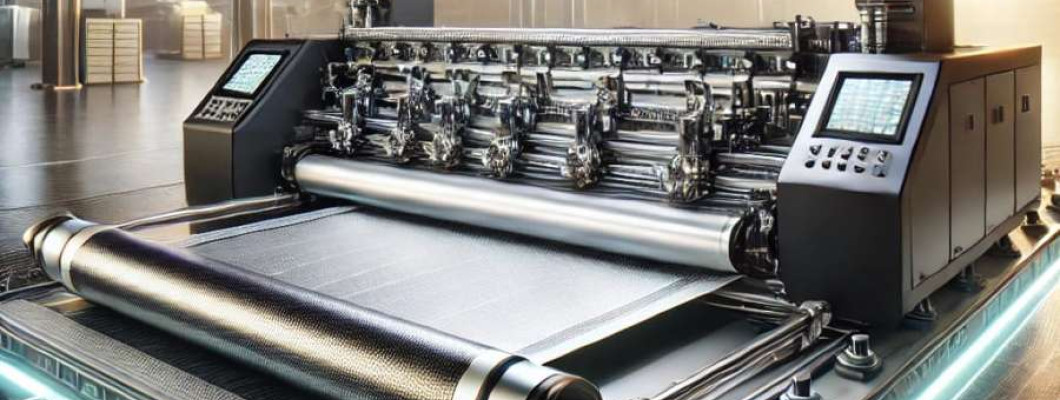
The Industrial Reality of Scaling T-shirt Printing with A3 Roll DTF Technology
In the realm of direct-to-film (DTF) printing, transitioning from a do-it-yourself (DIY) setup to a fully industrial-grade operation presents multifaceted technical challenges. For a scalable business owner seeking to ramp up throughput while maintaining cost efficiency, the choice of the right printer is critical. The A3 Roll DTF Printer T-shirt Printing Machine exemplifies this shift by addressing fundamental bottlenecks intrinsic to smaller-scale equipment. Industrial environments demand continuous operation, rapid turnaround, and consistent high-quality output across complex substrates, which DIY machines often fail to deliver reliably under prolonged strain.
One prominent challenge is maintaining printhead stability during extended print runs. Industrial-grade units integrate precision stepper motor controls and advanced filament tension mechanisms to accommodate roll-fed media without printhead misalignment. In contrast, DIY printers tend to suffer from incremental positional drift, creating artifacts and inconsistencies that degrade color fidelity and layer adhesion. Furthermore, industrial systems optimize ink drying within a controlled thermal envelope, combining calibrated infrared dryers with airflow management systems to prevent ink bleeding and substrate warping—features typically absent in conventional hobbyist setups.
Operational workflow integration also becomes paramount at scale. The A3 Roll DTF solution is designed to interface seamlessly with automated pretreatment and curing lines, minimizing manual labor costs and maximizing uptime. Its modular design addresses the human factor engineering gap, enabling operators to perform maintenance and media loading with reduced error potential and faster turnaround times. Taken together, these technical refinements position the machine as a dependable asset for businesses outgrowing DIY capabilities yet not ready for large-format, industrial presses.
Detangling Technical Advantages in Workflow and Print Quality
Printhead Precision and Motion Control
This model utilizes precision microstepping motors achieving positional accuracy of ±0.01 mm along the horizontal axis. Considering a 600 dpi native resolution—equating to 42.3 microns per dot—such mechanical accuracy ensures pixel-level registration across large-area prints. Hypothetically, if positional variance exceeds this micron threshold, color mis-registration or banding becomes perceptible, decreasing final output quality.
Ink Delivery and Chemistry
The printer employs specially formulated DTF inks designed for optimal film adhesion and color vibrancy on polyester and cotton blends. Ink droplet volumes stand at a finely tuned 6 picoliters, striking an equilibrium between saturation and drying time. When coupled with a thermal curing stage operating at 60-80 °C for 90 seconds, this achieves a robust print that withstands repeated wash cycles without degradation.
Media Handling and Roll Mechanics
Critical to continuous operation is the roll-to-roll feeding mechanism featuring tension sensors that maintain consistent film tautness in the range of 0.5-1.0 N. This prevents skewing and wrinkles that plague lower-end equipment. The printer supports media roll widths up to 320 mm and diameters up to 150 mm, aligning well with A3-format print demands.
Thermal Management and Drying System
Integrated infrared lamps deliver targeted energy at 850 nm wavelength, promoting rapid ink solvent evaporation without overheating substrates. Coupled with variable-speed exhaust fans, effective thermal gradients are maintained at ±2 °C variance to avoid substrate deformation.
Control Software and Automation Compatibility
Featuring an open API, the machine supports integration with third-party workflow management systems allowing batch job queuing, remote monitoring, and preventive maintenance alerts. Such automation reduces labor overhead, critical for scalable operations.
| Parameter | DIY DTF Printer | A3 Roll DTF Printer (Industrial) |
|---|---|---|
| Positional Accuracy | ±0.05 mm | ±0.01 mm |
| Printhead Resolution | 300-400 dpi | 600 dpi |
| Media Roll Diameter | Up to 80 mm | Up to 150 mm |
| Ink Drying Method | Passive Air Drying | Infrared + Forced Air |
| Throughput | 5-10 m²/shift | 20-30 m²/shift |
| Automation | Manual | API-Enabled |
How Use Cases Define Hardware Choices
Three scenarios demonstrate the practical impact of the A3 Roll DTF Printer’s specifications on scalable businesses.
Scenario One: Mid-Sized Apparel Brand Expanding Production
Facing increased demand and strict lead times, this business prioritizes speed and consistency. The printer’s roll-fed mechanism and automation compatibility reduce manual labor by 35%, while 600 dpi resolution maintains premium print quality. Thermal drying shortens turnaround from print to curing by 40%, enabling faster order fulfillment.
Scenario Two: Custom Merchandise Provider with High SKU Diversity
Flexibility to handle varied substrates and run small batch sizes without downtime is essential. The precise tension control and modular design allow quick media swaps with minimal recalibration, sustaining high-quality results across cotton and polyester blends.
Scenario Three: Large Print Shop Integrating into Existing Production Lines
The open API enables synchronization with ERP and inventory management. Automated maintenance alerts reduce unexpected downtime, improving overall equipment effectiveness (OEE) by 12% compared to legacy systems.
Advanced FAQ on Operational and Technical Nuances
Q1: What is the impact of ambient temperature fluctuations on ink drying consistency?
A1: Variability beyond ±5 °C causes solvent evaporation rate divergence, risking incomplete adhesion or over-drying. The integrated environmental controls mitigate these effects through real-time feedback loops.Q2: Can the printer accommodate specialty substrates like nylon or tri-blends?
A2: While primarily optimized for cotton and polyester blends, ink chemistry and temperature settings can be tuned for limited runs on specialty substrates, though adhesion tests are recommended.Q3: How does the machine handle printhead occlusions under continuous operation?
A3: The system features an auto-cleaning protocol activating every 100 meters of printed media, minimizing downtime due to clogging.Q4: What are the typical maintenance intervals for mechanical components?
A4: Routine inspection is recommended every 500 operational hours, with stepper motor lubrication and tension sensor recalibration performed semi-annually.Q5: How scalable is the control software for multi-unit deployment?
A5: The open API supports networked operation of up to 10 units simultaneously with centralized job scheduling and fault monitoring.
Strategic Verdict and Recommendation for Scalable Business Owners
Bridging the divide between DIY experimentation and industrial-grade reliability, the A3 Roll DTF Printer T-shirt Printing Machine emerges as a strategically sound investment for growing apparel printing enterprises. Its precision engineering, robust media handling, and integrated automation capabilities translate into tangible productivity gains and superior print outcomes. By systematically addressing the critical bottlenecks inherent in DIY setups—positional accuracy, thermal management, and process integration—this machine offers a scalable foundation capable of sustaining elevated throughput levels and minimizing operational disruptions. From a total cost of ownership perspective, the reduced maintenance burden and enhanced uptime justify the nominal CAPEX premium when compared to conventional desktop-grade DTF units. Consequently, for scalable business owners intent on industrializing their print workflows while preserving flexibility and quality, this printer represents a definitive solution worth deploying.