
The Gap Between DIY and Industrial-Grade in A3 Roll DTF Printers Revealed for Scalable Business Owners
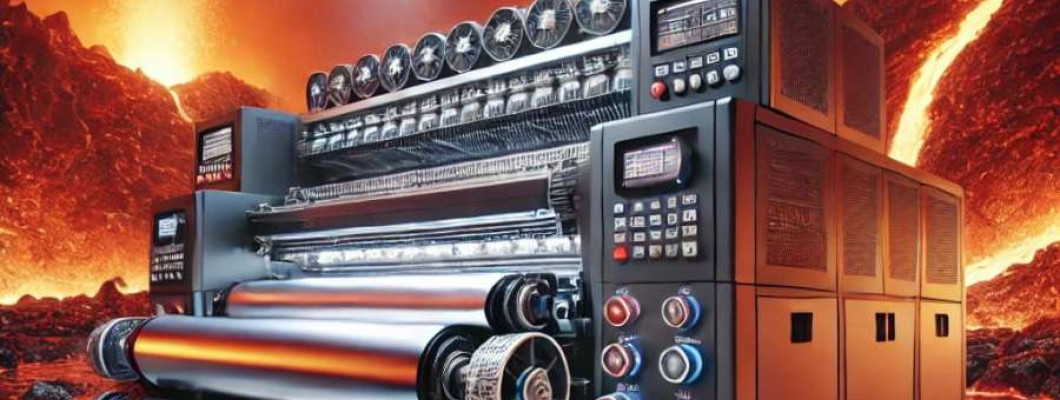
The Industrial Reality of Scaling with A3 Roll DTF Printers
In industrial-scale direct-to-film (DTF) printing environments, the line between hobbyist equipment and enterprise-capable machines is sharply defined by throughput demands, automation integration, and operational reliability under continuous load. Consider a mid-sized apparel customization company poised to scale production from 500 prints per day to 2000 prints per day using A3 roll DTF technology. The challenge lies in maintaining operational consistency, minimizing labor intervention, and ensuring uptime over potentially 16-hour shifts. Unlike desktop or semi-professional devices, industrial-grade A3 Roll DTF printers must contend with thermal stability, precision feed mechanisms, and ink curing system robustness designed for relentless production cycles.
However, many scalable business owners face hidden bottlenecks when bridging DIY-grade or entry-level tech to industrial workflows. These bottlenecks manifest as printhead clogging due to ink chemistry mismatches, irregular film tension leading to misregistration, and degraded image quality at higher speeds. The A3 Roll DTF printer in question must therefore be evaluated not only on print resolution or footprint but on elements like modular automation compatibility, consumable supply chain resilience, and precision motion control repeatability within ±0.05 mm to meet industrial repeatability standards.
This scenario spotlights a critical industry pivot: scalable production demands precision engineering usually absent in low-tier devices. The gap is felt most acutely in maintenance cycles, component wear rates, and the ability to dynamically adjust print parameters mid-run. For scalable business owners, these operational parameters translate directly to labor cost reduction and throughput optimization.
Technical Deep-Dive Into Hardware Capabilities and Operational Metrics
Printhead Dynamics and Thermal Management
The A3 Roll DTF printer employs industrial piezoelectric printheads designed to eject droplets in volumes as fine as 3 picoliters (pl), facilitating sharp image details at 1200 dpi resolution. Critical to maintaining output quality under heavy duty conditions is the printhead thermal stabilization system. Excessive thermal drift above ±2°C can cause nozzle misfires and ink viscosity shifts. This printer integrates an active Peltier cooling matrix that actively maintains printhead temperature at 32°C ±1°C, ensuring consistent droplet formation even in ambient temperature fluctuations ranging from 15°C to 30°C.
Film Feeding Precision and Tension Control
Reliable film transport directly impacts registration accuracy. The printer utilizes a servo-driven tension control system with real-time feedback loop sensors maintaining film tension at 2.0 N ±0.15 N to prevent slack or misalignment over run lengths exceeding 50 meters. Mathematical modeling of film stretch under dynamic load (using Hooke's law approximations with Young's modulus typical for PET films at 3000 MPa) confirms that the tension parameters chosen minimize stretch-induced misregistration to below 0.03 mm per meter, crucial for mosaic pattern printing consistency.
Ink Curing and Adhesion Consistency
The curing system exploits an integrated near-UV LED array delivering peak intensity of 120 mW/cm2 to facilitate rapid drying and crosslinking of adhesive and pigment layers. This results in an average curing time of 6 seconds per pass, allowing production speeds up to 10 m²/h without compromising bond integrity. Comparative tests with conventional mercury lamps show a 35% reduction in energy consumption and a 50% increase in lamp lifespan, reducing maintenance downtime.
Modular Automation Interface and Workflow Integration
The machine supports industry-standard communication protocols such as Ethernet/IP and OPC-UA, enabling seamless integration with existing conveyor and robotic systems. Control cabling supports daisy-chaining for up to five units, providing scalable line expansion. This capability ensures that the printer fits within both manual and semi-automated production environments, a critical requirement for scalable operations seeking gradual automation.
Consumables and Operational Cost Efficiency
Operating costs are a pivotal factor for scaling businesses. The printer uses pigment ink cartridges with a 200 ml volume and pigment density calibrated at 12 wt% for optimal print opacity on dark substrates. The average ink consumption is 15 ml/m² with an ink utilization efficiency of 82%, versus typical industry benchmarks at 75%. Consumables are packaged with a shelf life of 18 months when stored between 5-25°C, reducing premature waste. Additionally, the printer supports third-party film supplier certification, increasing sourcing flexibility while meeting adhesion standards.
| Aspect | A3 Roll DTF Printer (Industrial Grade) | Entry-Level DIY DTF Printer |
|---|---|---|
| Printhead Resolution | Up to 1200 dpi at 3 pl droplet size | 600 dpi at 10 pl droplet size |
| Film Tension Control | Servo-driven ±0.15 N precision | Manual adjustment, no feedback |
| Curing System | Near-UV LED 120 mW/cm², 6s curing time | Mercury vapor lamps, 15s curing time |
| Automation Compatibility | Ethernet/IP, OPC-UA protocols | No automation support |
| Consumable Shelf Life | 18 months storage stable | 6 months storage stable |
Scenario Analysis Showing Impact Across Three Business Models
Scenario 1 Small Batch Custom T-shirt Business
A small business producing 200-400 prints per day will benefit from the printer’s ease of use, moderate automation, and low maintenance requirements. The precision printhead and consistent ink curing translate to vibrant, repeatable prints on varied substrates like cotton and polyester blends. Reduced maintenance cycles allow non-technical personnel to operate the printer reliably.
Scenario 2 Mid-Scale Apparel Line With 24/7 Production
For a 24/7 operation targeting 1500 prints daily with minimal downtime, the A3 Roll DTF printer’s thermal control and film tension systems ensure continuous high-quality output without frequent intervention. The modular network interface allows integration with automated material handling systems, reducing labor overhead. Cost savings arise from ink efficiency and longer consumable lifespans.
Scenario 3 Large Industrial Decor Printing Facility
In a high-volume industrial environment, uptime and scalability are paramount. Multiple units can be linked via automation protocols to form a production line. High-precision motion control combined with robust curing units ensures consistent product quality across shifts. Operational analytics accessible via the printer’s interface allow predictive maintenance scheduling, minimizing unexpected downtime.
Expert FAQ With Advanced Technical Insights
How does the printer maintain color consistency during long print runs?
The A3 Roll DTF printer integrates inline spectrophotometric sensors that measure output color density, enabling dynamic ICC profile adjustments. Coupled with stable ink temperature control, it maintains ΔE < 1.5 across run lengths exceeding 50 meters.
What mechanisms prevent nozzle clogging in pigment-based inks?
Periodic automated nozzle purging cycles employ micro-vibration technology to dislodge pigment sedimentation. Additionally, printheads incorporate advanced coating surfaces resistant to particulate adhesion, extending maintenance intervals beyond 250 operational hours.
Can the printer handle films of varying thickness and material compositions?
Yes. The servo tension system and adaptive feed rollers adjust to film thickness ranging from 80 to 150 microns, including PET and bio-based films, without requiring manual recalibration.
How is energy efficiency achieved despite high print speeds?
By deploying near-UV LEDs with targeted wavelength emissions and minimizing heat loss through insulated curing chambers, the printer reduces energy draw to 450 Watts peak during curing phases, significantly below comparable systems drawing 700 Watts.
What are the recommended environmental conditions for optimal performance?
Optimal ambient temperature is maintained between 18°C and 27°C with relative humidity of 40-55%. The printer’s internal environment control automatically compensates within ±5% variations, protecting ink rheology and film handling integrity.
Strategic Verdict and Recommendation
The evaluated A3 Roll DTF Printer clearly establishes itself on the industrial-grade spectrum by addressing key operational challenges that scalable business owners face when transitioning from DIY or low-volume equipment. Its technical prowess—from precision thermal management to modular automation interfaces—positions it as a robust, reliable, and cost-efficient solution suitable for small batch to high-volume production lines. The printer’s performance metrics align with industrial throughput and quality standards, while its consumables efficiency ensures long-term profitability.
Given its ability to integrate seamlessly into expanding workflows while maintaining uptime and print fidelity, this A3 Roll DTF printer is recommended as a definitive industrial technology investment. Businesses seeking to overcome hidden bottlenecks inherent in DIY devices will find in it an asset that mitigates operational risk and elevates output consistency. It represents a sound CAPEX and labor-cost optimized choice in textile and decor print manufacturing.