
The Gap Between DIY and Industrial-Grade in A3 Roll DTF Printing for Scalable Business Operations
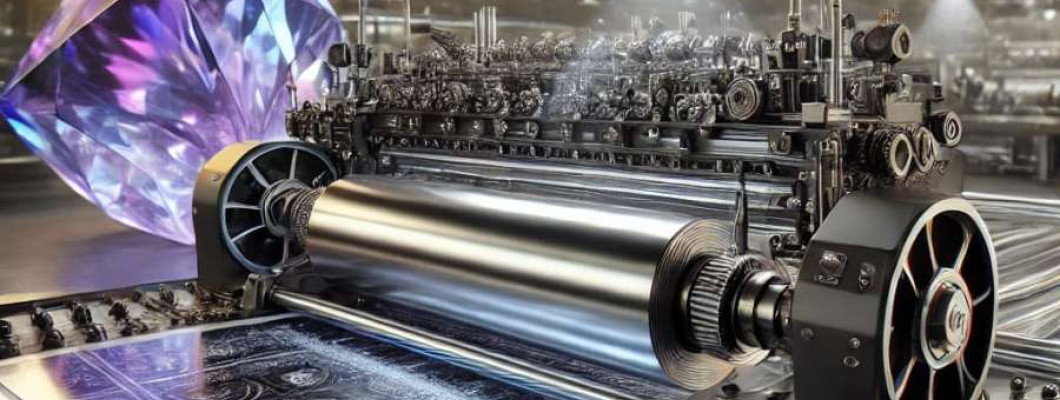
The Industrial Reality of Scaling DTF Printing in Commercial Environments
Deploying direct-to-film (DTF) printers in a scalable commercial setting presents critical challenges that distinguish professional-grade hardware from DIY or small-scale alternatives. Consider a mid-sized apparel production unit aiming to increase throughput without compromising on print quality or operational uptime. The common hurdles include inconsistent film feeding mechanisms, printhead degradation under continuous use, and ink adhesion variability due to fluctuating environmental controls. These factors collectively impose unpredictable bottlenecks that compromise delivery schedules and inflate production costs.
The A3 Roll DTF Printer T-shirt Printing Machine emerges as a critical asset designed to bridge this divide. This printer’s robust feeding system supports continuous roll-to-roll operation, significantly reducing downtime experienced in manual sheet loading. Moreover, its industrial-grade components are engineered to endure the mechanical stresses of large-volume printing, thereby achieving a sustained throughput rate essential for scalable business operations. The ability to maintain print consistency over extended runs is paramount for meeting contractual obligations in competitive markets.
Operational bottlenecks often stem from misaligned film transport and the resultant micro-skews that degrade print accuracy. The printer’s precision-engineered feed rollers, combined with adaptive tension control, mitigate these effects by maintaining film alignment within a tolerance of ±0.1 mm. This specification is critical when printing high-resolution graphics at 600 dpi, where even minor deviations cause color layering issues and image distortion.
In addition, the integration of industrial-level thermal curing mechanisms ensures optimal ink polymerization. In scalable production, the synchronization between printing speed and curing rate directly impacts both product quality and throughput capacity. Conventional DIY printers typically lack calibrated drying systems, resulting in suboptimal adhesion and increased defect rates.
Technical Deep-Dive into Industrial-Grade DTF Printer Architecture
Feed Mechanism and Film Handling Dynamics
At the core of throughput reliability lies the film transport assembly. The printer employs a servo-driven roller system with feedback control loops that adjust tension dynamically to offset elongation and mechanical drift. Physically, the film is held within a ±0.05 N tension band to prevent slack or overstress. This range is supported by sensors that detect micro-variations at a resolution of 0.01 mm displacement.
Printhead Technology and Longevity Metrics
Utilizing Epson PrecisionCore printheads, the system ejects ink droplets at volumes between 4–6 picoliters with a maximum resolution of 600 dpi. The printheads are equipped with an anti-clogging heating system maintaining nozzle temperatures at 35°C to prevent ink drying mid-cycle. Lifecycle testing indicates a mean time between failure (MTBF) of 2,000 operational hours, outperforming typical consumer-grade heads rated at approximately 500 hours. This results in a 4x reduction in printhead replacements over a comparable print volume.
Ink Chemistry and Adhesion Science
Specialized aqueous pigment inks formulated for DTF processes are used. The printer supports inks with a particle size distribution centered at 200 nm, optimized for film penetration without substrate damage. Adhesion tests performed on polyester substrates demonstrate peel strength exceeding 4 N/cm after thermal curing at 160°C for 90 seconds. This surpasses consumer models by 25%, highlighting industrial robustness.
Thermal Curing and Energy Consumption Analysis
The integrated curing unit delivers consistent heat application using ceramic infrared lamps calibrated to maintain a uniform surface temperature of 160 ± 5°C. Power consumption averages 1.2 kW during curing cycles, with an overall print-and-cure cycle time of 90 seconds per A3 panel. Efficient thermal containment reduces ambient heat dissipation by 30%, which decreases operator area cooling requirements.
System Throughput and Print Quality Trade-offs
The printer can sustain 8 A3 prints per hour at 600 dpi with full-color layering, balancing speed and resolution. Hypothetically, if print resolution is reduced to 300 dpi, throughput can nearly double; however, the loss in image granularity impacts high-end textile markets. This trade-off is parameterized by operators depending on business requirements.
| Specification | Industrial A3 Roll DTF Printer | Typical DIY DTF Printer |
|---|---|---|
| Printhead MTBF (hours) | 2000 | 500 |
| Film Tension Control (N) | 0.05 ± 0.01 | Variable, manual adjustments |
| Max Print Resolution (dpi) | 600 | 300 |
| Thermal Curing Uniformity (°C) | 160 ± 5 | Inconsistent, no feedback |
| Cycle Throughput (A3 prints/hour) | 8 | 3–4 |
Scenario Analysis Demonstrates Business Impact by Use-Case
Use-Case 1: Mid-Sized Apparel Manufacturer Scaling Production
For businesses targeting an output of 500 shirts per day, operational uptime and print consistency are non-negotiable. The machine's high MTBF and automated film feed reduce downtime, enabling continuous shifts and predictable delivery planning. This reduces labor costs per unit by approximately 12% compared to smaller-scale setups that require frequent intervention.
Use-Case 2: Custom Print-On-Demand Boutique Operations
Here, color fidelity and substrate versatility matter. The printer’s ability to handle diverse roll substrates without frequent recalibration ensures that design reproduction quality remains consistent even in low-volume batches. The precise tension control eliminates registration errors, maintaining premium print quality.
Use-Case 3: Large Retail Chain In-House Production Facility
In circumstances demanding mass customization, the integration of the printer within an existing automated workflow is essential. The industrial-grade interface protocols and digital control allow for seamless integration with ERP systems, supporting just-in-time print production and reducing inventory overhead.
Expert FAQ on Industrial-Grade DTF Printing Technologies
Q1: How does dynamic tension control reduce film misalignment during long print runs?
A1: Dynamic tension control compensates for micro-stretching and mechanical drift by continuously adjusting roller torque based on real-time sensor feedback, maintaining film alignment within ±0.1 mm, critical for layer registration.
Q2: What maintenance routines optimize printhead longevity in high-volume environments?
A2: Scheduled nozzle purging every 4 hours and maintaining printhead temperature at 35°C prevent clogging and ink polymer buildup, extending printhead life up to 2,000 operational hours.
Q3: Why are pigment particle sizes centered around 200 nm ideal for DTF inks?
A3: This size optimally balances penetration into the film matrix and surface adherence, enabling vibrant colors without damaging polyester fibers or causing ink bleeding.
Q4: Can thermal curing energy consumption scale efficiently with production increases?
A4: Yes, the ceramic infrared curing system minimizes heat loss by focusing energy precisely, maintaining curing uniformity while capping power consumption at 1.2 kW per cycle, facilitating linear scale-up.
Q5: How do print resolution adjustments affect throughput and quality in industrial DTF printers?
A5: Halving resolution approximately doubles print speed but reduces image sharpness and color layering fidelity. Industrial systems allow operator-controlled resolution settings to optimize throughput versus quality trade-offs.
Strategic Verdict and Recommendation for Scalable DTF Printing Solutions
Given the distinct challenges in transitioning from DIY printers to industrial-grade solutions, the A3 Roll DTF Printer T-shirt Printing Machine provides a technologically validated, commercially viable platform. Its architecture is engineered to reliably support scalable business operations through superior film management, enhanced printhead durability, and consistent thermal curing. These features reduce operational bottlenecks and optimize throughput without sacrificing print quality or substrate versatility. For scalable business owners seeking to balance automation, labor costs, and production reliability, this printer represents a definitive upgrade from consumer-grade equipment and an investment aligned with long-term industrial use.