
The Gap Between DIY and Industrial-Grade in A3 Roll DTF Printing for Scalable Business Owners
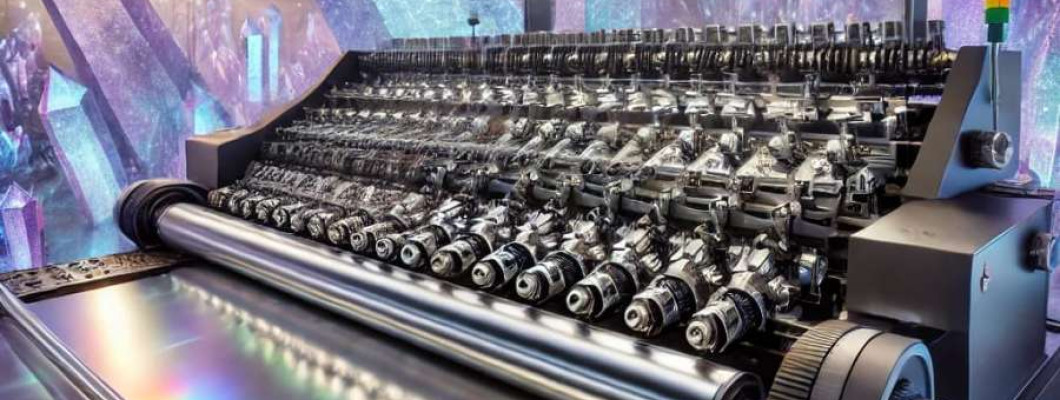
The Industrial Reality of Scaling with A3 Roll DTF Printers
Manufacturing on-demand printed textiles using Direct to Film (DTF) technology involves overcoming a series of operational thresholds that separate artisan-level setup from true industrial-grade viability. For scalable business owners, the challenge revolves around sustaining high throughput and automation without succumbing to bottlenecks common in less robust setups. The A3 Roll DTF Printer occupies a pivotal position in this transition, bridging the capacity and reliability gap that often impedes scale-ups.
Imagine a mid-sized print shop attempting to double its output volume using standard desktop DTF printers. The initial gains quickly plateau as printhead wear, downtime for manual film loading, and inconsistent curing cycles introduce unpredictable delays. Variance in ink layering thickness and print fidelity further complicate automated workflows. Proprietary hardware and firmware integration gaps often require manual intervention, increasing labor costs and eroding ROI.
In contrast, an industrial-grade A3 Roll DTF Printer designed with rigorous process automation, continuous roll-to-roll feeding, and robust thermal management systems provides not only throughput advantages but critical consistency in print quality and adhesion. The real industrial challenge is harmonizing print speed, curing efficiency, and substrate handling with scalable labor models and minimal maintenance windows.
To quantify, consider a production schedule demanding 500 linear meters of printed film per day at a minimum 600 dpi resolution and 10 picoliter ink droplet size. Standard DIY setups rarely sustain such demands without significant human supervision and frequent recalibration. The A3 Roll DTF Printer’s engineered integration addresses these thresholds inherently, ensuring output continuity and asset longevity. This shift from reactive maintenance to proactive operational management represents the underlying reality industrial users contend with daily.
Technical Deep-Dive into Hardware and Workflow Integration
1. Roll-to-Roll Mechanism and Feeding Accuracy
The A3 Roll DTF Printer employs a tension-controlled roll-to-roll feeding system that maintains substrate alignment within ±0.1 mm across extended runs. This precision is critical for layering the adhesive and ink films consistently. The feed motor is coupled with optical encoders providing feedback at 500 pulses per revolution, enabling micro-adjustments in real time.
2. Printhead Configuration and Ink Deposition Precision
It utilizes piezoelectric printheads with nozzle diameters averaging 20 µm, dispensing ink droplets at 8–12 picoliters. The firing frequency peaks at 20 kHz allowing up to 1200 dpi print resolution. The printhead array is arranged in staggered multi-pass configuration to reduce banding artifacts common in single-pass DIY printers.
3. Thermal Management and Curing Process
The curing stage incorporates IR and near-UV heating elements calibrated to sustain substrate temperatures between 60°C and 90°C uniformly. This accelerates adhesive activation and ink polymerization without compromising material dimensional stability. Thermal sensors continuously monitor the print environment, adjusting power delivery within 5-second intervals.
4. Ink Chemistry Compatibility and Maintenance Cycles
Industrial DTF inks designed for this printer exhibit advanced pigment dispersion stability, minimizing nozzle clogging. Ink waste is reduced by a patented recirculation system that filters and returns excess ink. Preventive maintenance intervals average 300 operational hours, doubling typical DIY equipment uptime before service is required.
5. Workflow Integration and Automation Potential
With embedded Ethernet and USB 3.0 interfaces, the printer supports real-time production monitoring and job queuing via dedicated software suites. Integration with enterprise resource planning (ERP) systems is facilitated by open APIs, enabling seamless automation from design upload to film output. This minimizes manual operator intervention, allowing scalable labor deployment.
| Feature | Typical DIY DTF Printer | A3 Roll DTF Printer |
|---|---|---|
| Max Print Width (mm) | 330 | 450+ |
| Print Resolution (dpi) | 300–600 | 600–1200 |
| Ink Droplet Size (pl) | 10–20 | 8–12 |
| Maintenance Interval (hours) | 100–150 | 300+ |
| Roll Feed Precision (mm) | ±0.5 | ±0.1 |
| Automation Support | Limited | Full ERP/API Integration |
Scenario Analysis Demonstrating Business Impact
Scenario 1: Growing Print Shop Increasing Daily Volume
The business aims to scale from 100 to 400 linear meters daily while maintaining color fidelity and reducing scrap. Using a non-industrial DTF system, printhead clogging and manual film replacement cause frequent downtime exceeding 2 hours per shift. The A3 Roll DTF Printer’s extended maintenance cycles and automated feeding reduce downtime by over 75%, facilitating throughput expansion without proportional labor cost increases.
Scenario 2: Automated Production Line Integration
A print-to-garment enterprise integrates the A3 Roll DTF Printer into their robotic workflow. Real-time print status updates via Ethernet enable dynamic job scheduling and continuous feedstock resupply. The printer’s uniform curing and precise feed ensure consistent film tension, eliminating alignment defects that previously required manual inspection and correction.
Scenario 3: Batch Customization and Short Runs
For a brand focusing on rapid product turnaround with frequent design changes, high-resolution print fidelity and substrate versatility are essential. The A3 Roll DTF Printer supports rapid material swaps and flexible job queuing, handling mixed prints without recalibration, which reduces setup time from 30 minutes to under 5.
Expert FAQ Addressing Complex Production Queries
Q1. What is the effect of printhead nozzle pitch on edge sharpness and banding?
A narrow nozzle pitch (~20 µm) combined with staggered multi-pass firing minimizes banding by distributing ink droplets evenly across scan passes. This maintains edge sharpness at high resolutions ≥600 dpi.
Q2. How does roll tension variation affect multi-layer adhesion in DTF?
Even minor tension fluctuations (>±0.3 mm deviation) cause misalignment in adhesive and color layers, leading to poor ink bonding and peeling under curing. The printer’s ±0.1 mm tolerance maintains layer integrity.
Q3. Can the ink recirculation system impact color consistency?
Yes, proper filtering and homogenization in recirculation prevents pigment settlement, preserving consistent color density. Inefficient recirculation risks color shifts and increased nozzle clogging.
Q4. How is thermal management optimized for mixed substrate materials?
The printer’s thermal sensors adjust IR and near-UV power outputs dynamically based on substrate feedback, ensuring neither scorching nor under-curing occurs despite varying material thermal conductivity.
Q5. What automation limits exist despite ERP integration?
While job queuing and monitoring are automated, physical media loading and post-print processing still require human oversight. Advances in robotic film handling could address this in future iterations.
Strategic Verdict and Industrial Recommendation
The A3 Roll DTF Printer situates itself decisively between entry-level DIY equipment and high-cost industrial presses by delivering scalable throughput, critical operational consistency, and advanced automation integration. For the scalable business owner demanding reliable, uninterrupted production capable of sustained daily volumes exceeding 300 linear meters, this printer embodies an investment in future-proof manufacturing infrastructure.
Its precise roll feeding, extended maintenance intervals, and thermal process control answer many hidden operational bottlenecks that typically inhibit growth. The enhanced printhead and ink chemistry synergy further assure asset longevity and diminished lifecycle costs.
Those evaluating print technologies for industrial DTF applications should consider the A3 Roll DTF Printer a definitive solution. Its balance of throughput, automation capability, and print quality positions it as an industrial-grade asset rather than a stopgap DIY tool. This technology enables scalable production lines to efficiently meet evolving market demands while minimizing labor overhead and maintenance downtime.