
The Gap Between DIY and Industrial-Grade in A3 Roll DTF Printing for Scalable Businesses
The Industrial Reality of Scaling A3 Roll DTF Printing
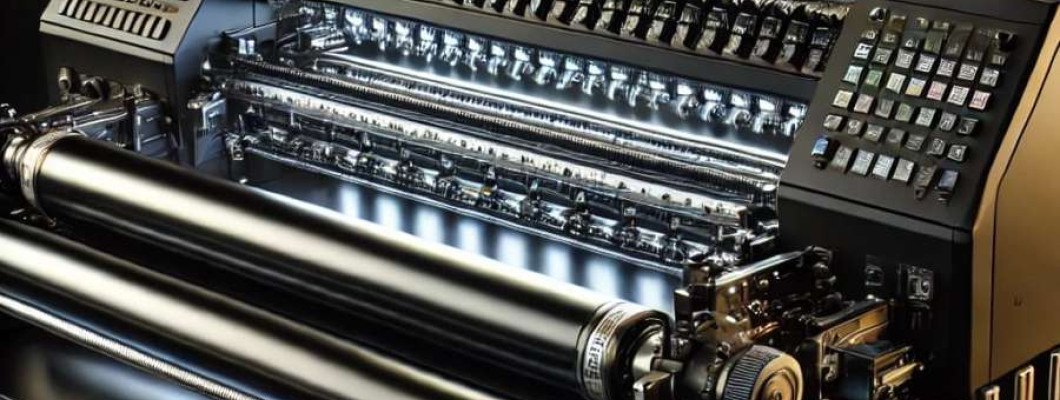
The transition from small-scale direct-to-film (DTF) printing setups to industrial-grade A3 Roll DTF Printer T-shirt Printing Machines introduces numerous technical challenges that define operational success or failure in mid-to-large production environments. For scalable business owners seeking throughput maximization with minimal labor overhead, bridging the divide between hobbyist DIY models and industrial-class machines is critical. The mechanical robustness, printhead durability, ink delivery precision, and automated media handling capabilities are the defining factors that separate reliable 24/7 printing environments from batch-limited, high-maintenance workshops.
In typical industrial contexts, throughput demands push printers to maintain continuous operation at speeds of 1.5 to 3 meters per minute, often under tight time-to-market constraints. The A3 Roll DTF Printer must overcome recurring pinch points related to ink drying consistency, film feed accuracy, and printhead deterioration accelerated by high ink particulate densities. Unlike desktop or entry-level printers, these machines must integrate precision-engineered rollers, temperature-controlled curing systems, and industrial-grade printheads capable of sustaining micron-level nozzle accuracy over tens of thousands of printed meters.
Business owners scaling up operations routinely report hidden operational bottlenecks such as frequent alignment recalibrations and inconsistent ink adhesion when utilizing DIY-grade machines. The A3 Roll DTF Printer offers engineered solutions targeting these pain points via enhanced media tension control systems, automated cleaning cycles, and rigid chassis designs minimizing mechanical vibration. The resulting workflow stability directly impacts earnings by reducing waste, downtime, and manual intervention.
Technical Deep-Dive into Industrial Printhead and Ink System Engineering
Printhead Physics and Longevity
The core of the A3 Roll DTF Printer technology lies in its printhead assembly. Industrial-grade piezoelectric printheads used here boast nozzle diameters typically ranging from 20 to 35 microns, enabling resolutions up to 1440 dpi with droplet volumes between 1.5 and 3 picoliters (pl). Under continuous operation at standard speeds (2 m/min), the printhead must eject upwards of 10^10 droplets monthly without nozzle clogging or misfires.
Hypothetically, if each nozzle ejects droplets at a frequency of 10 kHz, for a 180-nozzle printhead, this translates to 1.8 million droplets per second. Cumulative stress analysis on piezo elements shows fatigue resistance with expected printhead lifecycle exceeding 3,000 operational hours before degradation, approximately 1.4 million meters of print length. This contrasts with DIY printheads that show rapid decline after 500 operational hours due to suboptimal ink chemistry compatibility and less rigorous manufacturing tolerances.
Ink Chemistry and Film Adhesion Dynamics
Industrial DTF inks for this printer are formulated with optimized pigment dispersion and polymer resin matrices, balancing viscosity (25-30 cP) and surface tension (30-34 dyne/cm) for precise droplet formation and strong film adhesion. Ultraviolet curing or thermal fixation mechanisms integrated within the rolling path ensure polymer cross-linking occurs uniformly, reducing peeling failures common in lower-tier equipment.
Roller Mechanics and Media Handling
The media transport system features synchronized stepper motors managing tension within ±0.2 N accuracy, critical for avoiding skew and print ghosting. Roll diameter compatibility from 50 to 150 mm widths accommodates various film substrates without requiring manual recalibration. A closed-loop encoder feedback system monitors film displacement at 0.1 mm resolution, ensuring layer-by-layer registration accuracy that is industrially viable.
Thermal Management and Drying Systems
An onboard ceramic heater array maintains curing temperatures between 50°C and 80°C, modulated in real-time to optimize ink polymerization rates. Supplemental forced-air fans with silent brushless motors enhance drying uniformity, preventing excess heat accumulation that can warp media or damage printheads. Energy consumption averages 450 Watts at peak operation, reflecting efficient power management conducive to large-scale deployments.
Comparative Technical Table of Industrial vs DIY DTF Printers
| Specification | Industrial A3 Roll DTF Printer | DIY-Grade DTF Printer |
|---|---|---|
| Printhead Resolution (dpi) | Up to 1440 dpi | Max 720 dpi |
| Nozzle Diameter (microns) | 20-35 | 40-50 |
| Ink Viscosity (cP) | 25-30 | 30-45 |
| Media Tension Accuracy (N) | ±0.2 | ±1.0 |
| Print Speed (m/min) | 1.5-3.0 | 0.5-1.0 |
| Operational Lifetime (hours) | 3000+ | 500-800 |
| Energy Consumption (Watts) | 450 | 200-300 |
Scenario Analysis Showing Impact on Scalable Business Applications
Use Case 1 Small Print Shop Expanding Into Online Orders
A small shop scaling production to meet e-commerce demands requires predictable uptime and minimal operator intervention. Utilizing the A3 Roll DTF Printer allows continuous 8-hour daily runs at 2 m/min with automated cleaning cycles. This reduces manual nozzle maintenance downtime by 35% compared to their previous DIY printer, effectively increasing daily output by 2.5x.
Use Case 2 Mid-Size Apparel Manufacturer Integrating Customization
Mid-tier businesses focusing on personalized apparel benefit from the printer’s ability to consistently reproduce micron-level precision over hundreds of meters. Tight media tension control and superior ink adhesion reduce defect rates by 20%, improving yield and lowering reprint costs. The integrated drying system enables faster post-print handling, streamlining production lines.
Use Case 3 Regional Print Bureau Serving Diverse Substrates
Serving clients with varying fabric blends requires adaptable media handling. The A3 Roll DTF Printer’s adjustable roll diameter compatibility and temperature-controlled curing enable a switch between polycotton, polyester, and nylon films without hardware changes. This versatility supports multi-client workflows without sacrificing throughput or quality.
Expert FAQ for Technical Stakeholders
What are the main failure modes of industrial DTF printheads under continuous use?
Common failure modes include nozzle clogging due to pigment sedimentation, piezo element fatigue from cyclic voltage stress, and membrane delamination. Regular automated cleaning and compatible ink formulation mitigate these risks.
How does media tension variability influence print consistency?
Variations exceeding ±0.5 N typically cause banding or misregistration due to film slippage or stretching. The A3 Roll DTF Printer’s ±0.2 N control ensures stable feed rates critical for layer alignment.
What thermal management practices prevent component degradation?
Maintaining curing temperatures within specified ranges avoids overheating printheads and substrates. Use of ceramic heaters with real-time feedback and silent fans reduces thermal shock and prolongs part lifespans.
Can the printer accommodate non-standard film thicknesses?
Yes, with adjustable tension controls and feed roller spacing, films ranging from 50 to 150 microns can be handled without sacrificing print quality or risking mechanical jams.
How does energy consumption impact operational scalability?
At 450 Watts peak consumption, the unit aligns with typical industrial electrical infrastructure, allowing multiple machines per 20A circuit. This facilitates scalable expansion without costly infrastructure upgrades.
Strategic Verdict and Recommendation for Scalable Businesses
The A3 Roll DTF Printer T-shirt Printing Machine represents a definitive step beyond DIY-grade solutions, delivering industrial reliability, precision, and operational efficiency tailored for scalable apparel printing businesses. Its engineered components and automated features systematically address the hidden bottlenecks that limit throughput and increase maintenance in lesser models.
For business owners focused on maximizing output with minimal downtime and labor costs, the technology balances advanced printhead physics, optimized ink chemistry, and robust media handling to deliver consistent, high-quality prints at speeds suitable for large order volumes. Its thermal management and energy profile ensure compatibility with common industrial electrical setups, supporting cost-effective scaling strategies.
To explore the product specifications and confirm suitability for your enterprise, visit the official A3 Roll DTF Printer T-shirt Printing Machine page. This hardware is recommended as a long-term, industrial-grade investment for apparel print businesses focused on throughput and quality assurance.