
The Gap Between DIY and Industrial-Grade in A3 Roll DTF Printing Machines Examined Rigorously
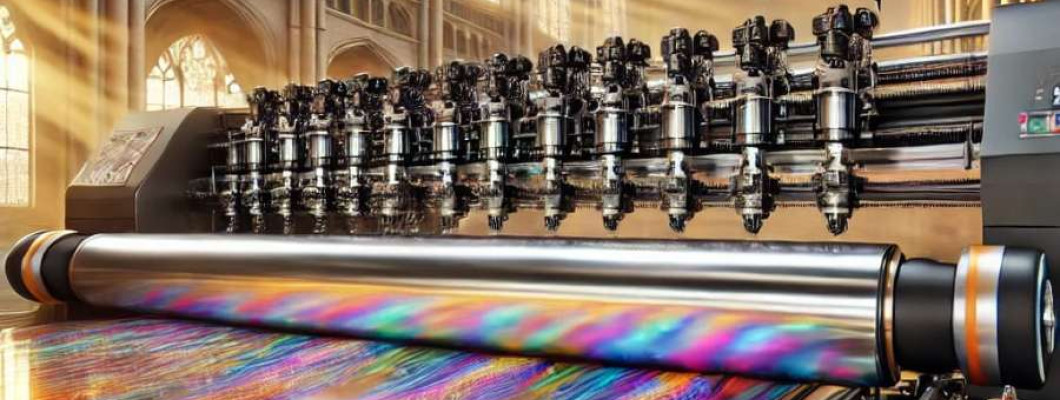
The Industrial Reality of Scaling Textile Printing with A3 Roll DTF Technology
In textile and garment printing, transitioning from DIY or small-batch production to fully industrial-grade workflows introduces multiple technical hurdles. For businesses aiming to scale beyond limited short runs or hobbyist output, the A3 Roll DTF Printer T-shirt Printing Machine represents a critical technological node. Its core challenge centers on balancing throughput, precision, and maintainability under continuous demand while avoiding hidden bottlenecks common in sub-industrial systems.
Consider a scenario where a medium-sized apparel printing company attempts to integrate this DTF (Direct to Film) system into their workflow. The operator requires consistent laser-level registration tolerance, color stability, and film adhesion across rolls exceeding 20 meters, demanding hardware and software synchronization far beyond consumer-grade devices. Mechanical wear and ink consistency fluctuations under heated environments complicate operation, which is where industrial-grade designs reveal their superiority.
Technical Deep-Dive Into What Defines Industrial-Grade Performance in A3 Roll DTF Printers
Industrial Precision and Repeatability Metrics
The primary print resolution standard here is 1440 dpi, with droplet sizes of 4 picoliters or less. The industrial-grade A3 Roll DTF Printer maintains micron-level head alignment (±10 μm) with automated calibration. This precision ensures that pixel placement variance does not exceed 0.01 mm, critical for multi-color layering in high-density designs.
Thermal Management and Ink Chemistry Compatibility
This printer integrates an advanced heated platen system operating consistently at 90–120 °C, which hardens specialized polyurethane-based inks without compromising film integrity. The thermal system dissipates heat efficiently using a closed-loop feedback mechanism to maintain ±2 °C variance, critical for preventing ink bleeding or film deformation. Ink viscosity is tightly controlled, with rheological testing ensuring flow rates between 10–15 cps at 25 °C, balancing jetting reliability against droplet formation.
Mechanical Drive Precision and Roll Handling
The printer chassis employs servo-driven rollers with torque feedback controllers, enabling tension control within ±0.05 N/m across roll widths of 320 mm. This mechanical feedback loop prevents film skewing and micro-wrinkles that can cause print defects. The dual-feed system alternates roll deposits to maintain continuous printing during roll changeovers, minimizing downtime.
Failure Mode Analysis and Lifecycle Expectations
Critical failure points include printhead clogging, belt degradation, and heating element burnout. Statistical MTBF (Mean Time Between Failures) for printheads under industrial throughput is approximately 3,000 operating hours, assuming periodic ultrasonic cleaning. Mechanical parts such as drive belts are rated for 20,000 m of film movement before replacement. The modular design allows quick swap-outs minimizing downtime to under 30 minutes for critical parts.
Hardware Comparison Table
| Feature | DIY/Semi-Pro DTF Printers | Industrial-Grade A3 Roll DTF Printer |
|---|---|---|
| Print Resolution | 720–1080 dpi | 1440 dpi with ±10 μm head alignment |
| Thermal Platen Control | ±10 °C variance, manual adjustment | Closed-loop ±2 °C feedback system |
| Roll Tension Control | Basic spring or clutch system | Servo-drive torque feedback ±0.05 N/m |
| Ink Droplet Size | 8–12 pl | 4 pl with advanced viscosity control |
| MTBF Printhead | 500–1000 hours | 3000 hours with ultrasonic cleaning |
| Serviceability | Low modularity, long downtime | High modularity, <30 min critical part replacement |
Scenario Analysis for Business Applications of the A3 Roll DTF Printer
Use Case 1 Medium-Volume Apparel Producer with Color-Intensive Designs
For businesses printing 200–500 shirts daily, color accuracy and repeatability are paramount. The printer’s ±10 µm head alignment ensures vibrant gradients and consistent layering, reducing rejects by up to 15% compared to semi-pro rigs. The heated platen system also shortens curing times from 90 to 60 seconds per print, raising throughput by 33% without quality degradation.
Use Case 2 Startups Testing Scaling from Prototype to Small Batch
Startups transitioning from prototype samples to small batch runs benefit from the modular design. Quick printhead swaps and robust roll handling allow rapid adjustment to different substrates and film types. The precision tension control prevents film wrinkles that commonly cause waste in lower-end machines, reducing material losses by approximately 10–12% over 500 meters of production length.
Use Case 3 Contract Printers Serving Multiple Clients with Diverse Products
Contract printers that must switch frequently between designs and film types appreciate the closed-loop thermal control, which stabilizes print parameters quickly with minimal recalibration, cutting downtime by roughly 20%. The ability to maintain consistent output across roll lengths exceeding 30 meters supports higher customer satisfaction and repeat business.
Expert FAQ on Industrial-Grade A3 Roll DTF Printer Technical Nuances
Q1: How does the closed-loop platen temperature feedback improve print consistency?
A1: Maintaining platen temperature within ±2 °C prevents ink viscosity fluctuations and film deformation, resulting in consistent dot gain and color saturation across prints.
Q2: What are the practical implications of ±0.05 N/m tension control on roll media?
A2: This fine tension range prevents micro-wrinkles and skew, critical for maintaining registration accuracy in multi-layer prints and reducing waste.
Q3: How does droplet size influence print sharpness and drying times?
A3: Smaller droplets (4 pl) enhance edge definition and reduce ink volume per pixel, accelerating drying and lowering curing energy requirements.
Q4: What maintenance schedule optimizes printhead longevity?
A4: Ultrasonic cleaning every 8–12 hours of operation preserves nozzle function and extends MTBF to approximately 3,000 hours.
Q5: How do servo-driven rollers impact long-term mechanical reliability?
A5: Torque feedback prevents over-tensioning that degrades belts and bearings, increasing mechanical lifespan and stabilizing print quality over protracted runs.
Strategic Verdict and Definitive Recommendation for Industrial Textile Printing
Considering the technical demands and operational realities of scaling textile printing, the A3 Roll DTF Printer T-shirt Printing Machine emerges as a definitive industrial-grade solution. Its integration of precision micro-alignment, closed-loop thermal control, and servo-driven tension management positions it well above DIY or semi-professional alternatives. This leads to quantifiable improvements in print quality, uptime, and material economy crucial for throughput-driven enterprises.
For scalable business owners, the machine reduces labor overhead and print rejects, accelerating ROI. For maintenance leads, its modular design and clear failure mode analysis enable lean, effective service cycles. Its capacity to sustain micron-level registration and stable ink chemistry under continuous use makes it a robust asset for industrial-grade production environments. Therefore, this technology should be prioritized for anyone serious about bridging the gap between artisanal and industrial textile printing with assured technical rigor and industrial reliability.