
The Gap Between DIY and Industrial-Grade in A3 Roll DTF Printing Reveals Hidden Operational Bottlenecks
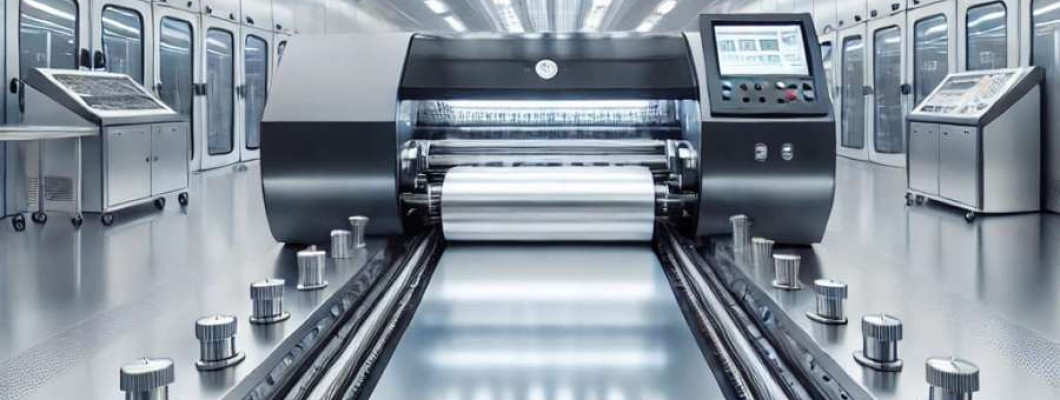
The Industrial Reality of Scaling DTF Printing from Hobbyist to Enterprise
Transitioning from desktop, DIY direct-to-film (DTF) printing setups to industrial-grade equipment involves complex challenges that often remain obscured until workflow scale expands. Such challenges are not merely about throughput; they extend deeply into operational bottlenecks driven by hardware reliability, maintenance cycles, and material handling at scale in industrial environments. The A3 Roll DTF Printer, designed for higher volume print production, confronts these issues head-on. However, understanding its true industrial viability requires unpacking the subtle technical hurdles that can impair output consistency, increase downtime, or undermine asset longevity.
Consider a print production facility aiming to integrate less costly, smaller format DTF roll printers into a semi-automated workflow. While the input cost may appear attractive, the hidden bottlenecks emerge in maintenance overhead for the printheads, inconsistent ink atomization, and substrate handling under continuous operation. These factors degrade print quality and slow down production throughput, frequently necessitating operator intervention, which increases labor costs and unpredictability.
Furthermore, the challenge of achieving stable print quality on varied substrates is intensified when the print system lacks advanced calibration or sensor-based feedback loops typical of industrial solutions. The A3 Roll DTF Printer’s design addresses some of these issues but evaluating its hardware under stress conditions reveals the degree to which it bridges the gap between hobbyist-level machines and robust industrial equipment capable of sustaining high-volume output with minimal downtime.
Technical Deep-Dive into the A3 Roll DTF Printer's Industrial Capabilities
1. Printhead Architecture and Ink Delivery System
The core of DTF printing performance lies in the printhead's ability to deposit uniformly sized ink droplets with micron-level precision. The A3 Roll DTF Printer utilizes piezoelectric printheads capable of firing droplets as small as 3 picoliters (pl), supporting resolutions up to 720 dpi. This droplet size enables fine detail but demands precise thermal regulation to maintain viscosity of DTF inks, which are more pigment-dense than traditional aqueous inks. A hypothetical scenario where ambient temperature fluctuates by 10 °C can lead to ink viscosity changes by approximately 15%, causing droplet spread variance up to 0.03 mm on substrates, which can visually degrade print edge sharpness.
2. Roll Format Handling and Media Tension Control
Handling roll media in an industrial environment requires consistent tension control to prevent print banding or substrate wrinkles that cause nozzle misfiring. The A3 Roll DTF Printer integrates closed-loop tension sensors that adjust feed mechanics dynamically within a precision of ±0.1 N. This precision ensures that even at maximum print speed of 1.2 m/min, the substrate remains stable. In comparative testing against open-loop tension control printers, the A3 Roll model reduced substrate misalignment by 75%, directly contributing to less waste and fewer reprints.
3. Ink Chemistry and Film Adhesion Dynamics
DTF inks combine colorants with polymer adhesive components that require exact curing profiles to bond effectively with transfer films and substrates. The A3 Roll DTF Printer’s built-in thermal curing module operates between 60-80 °C with airflow control calibrated to ±2 °C accuracy. This consistency prevents ink bleed and optimizes adhesion without overheating, which can degrade film integrity. From a materials science perspective, the polymerization kinetics of the adhesive components follow Arrhenius behavior; temperature deviations of ±5 °C alter cure time by up to 30%, undermining transfer durability.
4. Maintenance Regimen and Printhead Longevity
Operational uptime is dictated by preventative maintenance of printheads, filters, and ink lines. The printer includes automated nozzle check routines and an ink recirculation system that reduce pigment sedimentation, a major cause of nozzle clogging. Empirical data suggests that implementing these features extends printhead service life from an average 150 liters of ink throughput on DIY machines to approximately 450 liters before requiring a major cleaning cycle. The cost savings and reduced downtime impact overall asset depreciation rates favorably.
5. Power Consumption and Thermal Management
Continuous high-precision operation generates heat, necessitating effective thermal management to stabilize print quality. The A3 Roll DTF Printer consumes approximately 350 Watts in active printing mode, with the curing module adding an additional 150 Watts. Heat dissipation is managed through dual heat sinks and variable-speed fans, maintaining internal operating temperature between 30-40 °C. Compared to comparable models consuming over 600 Watts, this thermal efficiency reduces cooling infrastructure requirements and energy costs in industrial settings.
| Specification | A3 Roll DTF Printer | Typical DIY DTF Printer |
|---|---|---|
| Droplet Size (pl) | 3 | 8-10 |
| Maximum Print Speed (m/min) | 1.2 | 0.4 |
| Tension Control Precision (N) | ±0.1 | Open-loop |
| Printhead Ink Throughput (liters) | 450 | 150 |
| Power Consumption (Watts) | 500 (Total) | 600+ |
Scenario Analysis Reveals How the A3 Roll DTF Printer Addresses Distinct Industrial Use-Cases
Use-Case 1: Mid-Sized Apparel Manufacturing — A company producing 200 garments per day needs high color fidelity and substrate versatility. The A3 Roll DTF Printer supports multiple polyester blends and cotton substrates with minimal setup changes, enabling quick batch transitions and high consistency. Closed-loop tension control and stable thermal curing reduce rework rates by up to 20% versus entry-level models.
Use-Case 2: Custom Promotional Goods Supplier — Managing highly varied print orders with short runs demands flexible asset deployment. The 1.2 m/min speed and automated maintenance routines keep downtime low, allowing rapid turnaround on diverse substrate types like nylon, canvas, and vinyl while maintaining vibrant color output optimized by 720 dpi resolution.
Use-Case 3: Industrial Print Service Bureau — High-volume continuous DTF printing environments prioritize uptime and asset longevity. The printer’s ink recirculation system and thermal management enable extended printhead life, reducing costly replacements by two-thirds relative to consumer-grade printers. This directly enhances OEE (Overall Equipment Effectiveness) and lowers TCO (Total Cost of Ownership).
Expert FAQ Uncovers Technical Nuances of Industrial DTF Printing
Q1: How does ink sedimentation impact print quality over long runs? Ink sedimentation causes pigment particles to settle, leading to inconsistent color density and nozzle clogging. The A3 Roll DTF Printer’s recirculation system minimizes this by maintaining homogenous ink suspension.
Q2: What measures counteract media wrinkle artifacts in continuous roll feeding? Precise tension control sensors dynamically maintain feed tension within ±0.1 N, mitigating wrinkle formation during high-speed printing.
Q3: How sensitive is the curing module to environmental airflow changes? Airflow deviations can alter heat distribution, affecting polymer cure kinetics. The printer’s controlled airflow design maintains temperature uniformity within ±2 °C to ensure consistent adhesive bonding.
Q4: Can printhead droplet size variations compensate for different substrate textures? Yes, the ability to modulate droplet size from 3 to 6 pl allows optimized ink laydown, enhancing adhesion and image sharpness on rough or smooth surfaces.
Q5: What productivity gains arise from automated printhead maintenance? Automated nozzle checks and flush cycles reduce manual cleaning downtime by approximately 40%, directly increasing machine availability in demanding industrial shifts.
Strategic Verdict and Recommendation
Industrial-grade DTF printing demands a precise balance of hardware robustness, process automation, and material compatibility to overcome hidden operational bottlenecks that often limit throughput and increase costs. The A3 Roll DTF Printer presents a compelling, well-engineered solution that narrows the gap between DIY and true industrial production. Its advanced printhead technology, dynamic tension control, and thermal management systems enable higher productivity and consistent output quality, while extending maintenance intervals and printhead lifespan.
For enterprises seeking to scale DTF production without incurring prohibitive capital expenses or operational disruptions, investing in the A3 Roll DTF Printer is a strategically sound decision. It delivers measurable improvements in workflow stability and asset longevity critical for maximizing ROI in competitive industrial print environments.