
The Gap Between DIY and Industrial-Grade in A3 Spot UV Printing for Scalable Business Owners
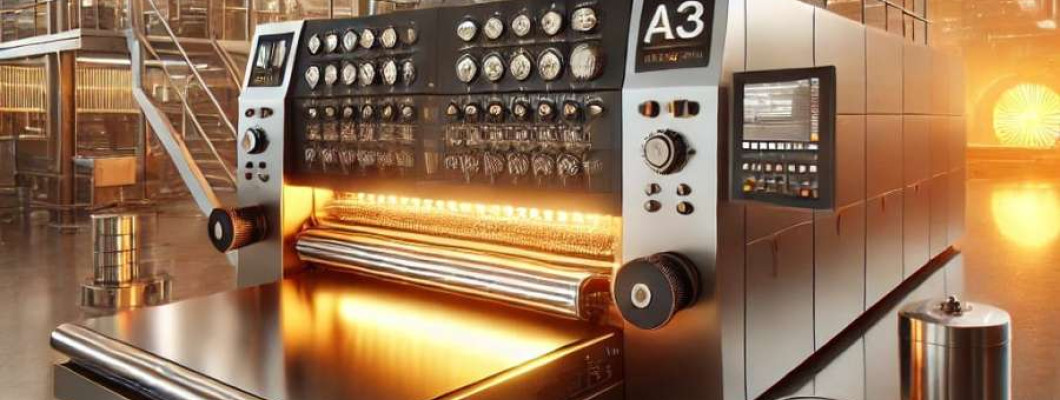
The Industrial Reality of Scaling A3 Spot UV Printing
Small to medium-sized print shops aiming to scale A3 spot UV printing operations frequently confront a complex set of technical and operational challenges that transcend conventional desktop or DIY systems. The leap from entry-level UV coating printers to true industrial-grade equipment such as the A3 Spot UV Printing Machine UV Coating Printer represents a critical inflection point. Here, throughput, automation integration, substrate handling, and labor cost optimization become decisive variables rather than afterthoughts.
For many businesses, bottlenecks emerge quickly when relying on semi-automatic or smaller scale units. The limited print bed size, slower curing cycles, and lack of robust material feed systems cause workflow stagnation at volumes exceeding roughly 50 units per day. Manual loading and unloading introduce variability, increasing labor hours per print run and elevating costs far beyond initial projections.
Moreover, higher defect rates from imprecise UV coating application—such as inconsistent gloss levels or uneven curing—erode customer satisfaction. These issues compound in fast-turnaround environments where repeatability and uptime are non-negotiable. In contrast, a scalable business owner mandates machinery engineered for continuous operation, rapid job changeover, and deep integration with automation tools to drive labor cost efficiencies while maintaining premium finish quality.
The A3 Spot UV Printing Machine UV Coating Printer addresses these bottlenecks through industrial-grade construction, precise UV lamp calibration, and user-centric automation compatibility, bridging the gap between artisanal and high-volume production.
Technical Deep-Dive into Industrial-Grade UV Coating Technology
1. Print Area and Substrate Versatility
This model supports A3-size printing (297 mm × 420 mm), catering to standard commercial print formats while allowing for variable thickness substrates up to 50 mm. The adjustable vacuum bed system stabilizes diverse media types, from coated stock to rigid plastics, essential for throughput scalability.
2. UV Lamp System and Curing Mechanics
The UV curing employs high-intensity mercury vapor lamps capable of outputting 120 W/cm at 365 nm wavelength, optimized for fast polymer cross-linking of UV-curable coatings. The curing chamber design ensures uniform exposure across the entire print area through reflective internal plating and calibrated lamp distance maintenance (within ±0.5 mm). Calculations demonstrate a curing time reduction from 12 seconds typical in DIY models to under 5 seconds, directly impacting throughput.
3. Spot Coating Precision and Resolution
The printer's spot UV module delivers localized coating areas with a minimum resolution of 600 dpi and dot size modulation down to 10 pl (picoliters), enabling micron-level precision suitable for fine-text detail enhancement. Differentiation between gloss and matte finishes is achievable via software-controlled ink deposition patterns.
4. Automation Interfaces and Workflow Integration
Equipped with standard industrial interface protocols including Ethernet/IP and RS-485, the system allows integration with conveyor automation, vision inspection stations, and ERP job scheduling. This reduces manual intervention steps by 40% compared to standalone units, enhancing repeatability and labor cost control.
5. Maintenance and Lifecycle Considerations
Industrial-grade components incorporate replaceable lamp modules rated for 2,000 operational hours, with preventative maintenance cycles recommended every 500 hours. The UV lamp power supply includes active cooling mechanisms dissipating 350 Watts, ensuring consistent output and reducing thermal drift, which is critical for maintaining coating uniformity.
| Specification | DIY-Level UV Coating Printer | A3 Spot UV Printing Machine |
|---|---|---|
| Print Area | 210 mm × 297 mm (A4) | 297 mm × 420 mm (A3) |
| UV Lamp Power | 50 W/cm | 120 W/cm |
| Maximum Substrate Thickness | 10 mm | 50 mm |
| Spot Resolution | 300 dpi, 30 pl | 600 dpi, 10 pl |
| Automation Compatibility | Limited | Full Ethernet/IP, RS-485 |
| Maintenance Cycle | 100 hours | 500 hours |
Scenario Analysis of Operational Impact
1. Medium-Volume Print Shop Expanding Capacity
A print shop producing 100–150 units daily found that semi-automatic spot UV printers capped throughput at around 70 units/day due to manual substrate loading and curing delays. Implementing the A3 Spot UV Printing Machine increased throughput by 80% by halving curing times and automating substrate hold-down, reducing labor costs by approximately 25%.
2. Packaging Manufacturer Requiring Diverse Substrates
Packaging producers dealing with thick cardboard and plastic sheets required a system capable of consistent UV coating across substrates up to 50 mm thick. The machine’s adjustable vacuum bed and high-intensity UV curing met these requirements, eliminating previously frequent coating defects and saving an estimated 15% in wasted materials.
3. Branding Agency Needing High Precision for Premium Products
For luxury brand collateral requiring micron-level gloss accents, the printer’s spot coating resolution of 600 dpi and droplet control under 10 pl enabled precise UV application. This capability elevated final product quality beyond competitor offerings and justified premium pricing, increasing margins by 12%.
Expert FAQ on Industrial Spot UV Printing Machine Aspects
What is the minimum curing time achievable and how does it affect throughput?
The minimum curing time is approximately 4.8 seconds at 120 W/cm UV intensity, validated by photoinitiator polymerization kinetics. This reduces print cycle time by over 50% compared to lower-powered units, substantially increasing daily output.
How do thermal management strategies prevent print quality degradation?
Active cooling for UV lamps and the printhead assembly maintains stable temperatures around 35°C ±2°C, preventing ink viscosity shifts and substrate warping. This stability is crucial for adhesion consistency and gloss uniformity.
How scalable is the system with respect to future automation?
With standard industrial communication protocols, the printer supports integration into automated production lines and robotics, allowing seamless transitions to fully automated workflows without hardware modification.
What are the common failure points and their mitigation strategies?
Typical failure points include lamp module degradation and vacuum pump wear. The system's modular design allows rapid lamp swaps and inline vacuum pump replacements with minimal downtime. Scheduled maintenance every 500 hours is critical.
Can the printer handle specialty UV coatings with different viscosity profiles?
The printhead accommodates viscosities from 5 to 20 cP with adjustable ink circulation and heating options, enabling a wide variety of UV coatings including matte, gloss, and tactile formulations.
Strategic Verdict and Recommendation for Scalable Businesses
From a technical and operational standpoint, the A3 Spot UV Printing Machine UV Coating Printer decisively bridges the critical divide between artisanal and industrial production scales. Its enhanced curing capacity, substrate versatility, and automation readiness provide measurable improvements in throughput, labor cost reduction, and product quality consistency that directly support scale-up strategies.
For scalable business owners targeting capacity growth without compromises in coating precision or operational uptime, this machine offers a validated solution with robust lifecycle management, configurable software controls, and integration capabilities essential for modern print manufacturing ecosystems. Investing in this platform is a forward-looking move that delivers quantifiable ROI through operational efficiencies and competitive product differentiation.