
The Gap Between DIY and Industrial-Grade in A3 Spot UV Printing Machines for Scalable Business Owners
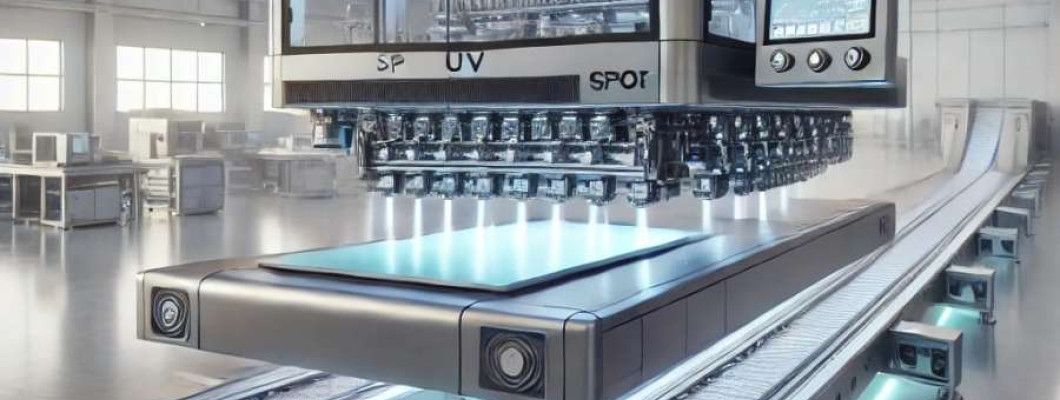
The Industrial Reality of Adopting A3 Spot UV Printing Machines in High-Volume Environments
Managing throughput and labor efficiency in scalable printing businesses inevitably reveals a sharp divide between DIY or small-scale UV coating solutions and robust industrial-grade equipment such as the A3 Spot UV Printing Machine UV Coating Printer. The challenge often presents itself as hidden operational bottlenecks that are difficult to anticipate during initial purchase decisions. A printing business transitioning from manual or semi-automated spot UV applications finds that limited automation capabilities, slower cycle times, inconsistent UV curing, and substrate feeding reliability become critical constraints impacting output rates and cost per unit.
For scalable business owners, the primary technical hurdle is integrating a UV spot coating machine that can maintain stable, repeatable quality across diverse substrates while sustaining higher throughput demands without an exponential rise in labor costs. The operational environment frequently encounters variability in print speed synchronization, UV power stability, and consumable consumption rates. These factors create an invisible drag on efficiency that can manifest as downtime for maintenance, recalibration, or troubleshooting during peak production periods.
Furthermore, the machine’s integration into existing workflows and print lines poses infrastructure challenges. Industrial-scale production lines demand equipment with standardized communication protocols, compact form factors for optimal floor space utilization, and manageable thermal profiles. The easily overlooked human factor engineering elements like intuitive operator interfaces, rapid setup times, and minimal manual intervention heavily influence real-world uptime and output consistency.
Technical Deep-Dive into the A3 Spot UV Printing Machine UV Coating Printer
UV Curing System Efficiency and Performance
The core of any spot UV printing technology is the UV curing subsystem. The A3 Spot UV Printing Machine utilizes a high-intensity mercury vapor or LED UV lamp array calibrated to deliver uniform irradiance across a 320mm x 450mm substrate area. Output power levels typically range from 1000 to 1500 mW/cm2, enabling rapid polymerization of UV coating materials. Hypothetically, increasing UV irradiance beyond 1500 mW/cm2 would reduce cure time but risks thermal damage and substrate distortion, especially on heat-sensitive media like thin films or coated papers.
Precision Spot Coating Mechanics and Printhead Control
The machine employs a digitally controlled micro-dispensing printhead capable of delivering coating droplets precisely sized at approximately 10-15 picoliters (pl). This enables micron-level coating thickness control between 10 to 50 microns per pass. Given a substrate feed rate of up to 3 m/min, the synchronization between the coating application and conveyor movement ensures minimal overspray and edge bleeding, crucial for high-resolution spot UV effects. Comparison with lower-end models often reveals droplet sizes exceeding 30 pl, resulting in compromised detail and increased material waste.
Substrate Handling and Feeding Infrastructure
Industrial throughput requires substrate handling accuracy better than ±0.1 mm to avoid misregistration. The A3 model integrates servo-driven feed rollers with vacuum-assisted transport belts that provide consistent grip and minimal slippage. The system tolerates substrate thicknesses from 0.1 mm up to 1.5 mm, accommodating a wide range of media including cardstock, synthetics, and laminated sheets. Feed speed consistency is maintained within ±2% variance to preserve coating uniformity.
Thermal Management and Energy Consumption
Thermal management within the UV curing chamber is critical. Excess heat buildup can accelerate consumable degradation and shorten lamp life. The A3 Spot UV Printing Machine is equipped with a water-cooled UV lamp housing and integrated exhaust fans maintaining a constant operating temperature of approximately 30°C to 40°C during continuous runs. Power consumption peaks around 1.8 kW, aligning with industrial energy efficiency standards for compact coating systems. This balances operational cost while preventing thermal-induced downtime.
Automation and Control System Integration
The embedded control system uses a PLC-based architecture with touchscreen HMI allowing preprogrammed job setups, real-time monitoring, and error detection routines. Communication supports standard industrial protocols such as Modbus RTU, facilitating seamless integration into existing production lines. Automated cleaning cycles reduce manual intervention, thus increasing operational uptime by approximately 12-15% compared to manual cleaning standards.
| Specification | A3 Spot UV Printing Machine | Typical Small Scale UV Coater |
|---|---|---|
| Max Coating Area (mm) | 320 x 450 | 210 x 300 |
| UV Power (mW/cm2) | 1000-1500 | 600-900 |
| Droplet Size (pl) | 10-15 | 25-35 |
| Feed Speed (m/min) | Up to 3.0 | Up to 1.5 |
| Thermal Control | Water-Cooled + Exhaust | Passive Cooling |
| Automation | PLC + HMI + Modbus | Manual Controls |
Scenario Analysis of Business Use Cases
1. Mid-Scale Commercial Printing Service
This business requires rapid job turnaround with frequent substrate changes ranging from luxury invitation cards to promotional packaging. The A3 Spot UV Printing Machine’s automated job memory and quick substrate thickness adjustment minimize setup times, enabling throughput improvements of up to 30%. Its precise dosing reduces coating waste, directly impacting cost savings in consumable materials.
2. Packaging Manufacturer Scaling To Inline Coating
In a packaging line integrating multiple print and finishing processes, the A3 machine’s communication protocols allow synchronization with upstream and downstream equipment. The stable feed consistency reduces misprints and rejects. Thermal regulation ensures continuous 24/7 operation without premature UV lamp burnout, drastically improving overall equipment effectiveness (OEE).
3. High-Volume Artisan Label Production
For artisan labels requiring micron-level precision spot UV accents on various textured substrates, this machine delivers repeatability at a speed that outpaces manual application methods by 4x. Substrate versatility combined with fine droplet control supports the production of detailed, high-fidelity textures without operator fatigue or error.
Expert FAQ
Q1: What is the impact of droplet size variation on coating uniformity?
A1: Smaller droplet sizes (10-15 pl) allow micron-level control of coating thickness, enhancing detail resolution and reducing overspray. Larger droplets tend to cause pooling and inconsistent finish.
Q2: How does thermal management affect lamp longevity?
A2: Maintaining optimal operating temperature via water cooling and exhaust extends lamp life by up to 25%, preventing heat-related degradation and dimming.
Q3: Can the machine handle mixed substrate thickness in a single production run?
A3: Yes, the servo-driven feed rollers automatically adjust tension and grip within the 0.1 to 1.5 mm thickness range without manual recalibration, supporting variable runs efficiently.
Q4: What automation features reduce labor costs?
A4: Pre-programmed job profiles, automatic cleaning cycles, and integrated fault detection reduce operator intervention, minimizing downtime and manual labor.
Q5: How does integration with industrial protocols benefit workflow?
A5: Support for Modbus RTU enables real-time data exchange with other line components, facilitating synchronized production and automated quality control.
Strategic Verdict and Recommendation for Scalable Business Owners
The A3 Spot UV Printing Machine UV Coating Printer is a definitive, industrial-grade solution that bridges the critical gap between limited DIY UV coating methods and demanding professional production environments. Its advanced UV curing system, precise spot coating mechanics, robust substrate handling, and intelligent automation combine to deliver measurable gains in throughput and cost efficiency for scalable business owners focused on optimizing labor and output.
With a well-balanced energy profile and integration-ready control architecture, this machine supports seamless workflow expansion and operational reliability. For those pursuing scaling strategies that align cost per unit with increasing volume demands, the machine represents a sound capital investment with predictable maintenance cycles and reduced hidden operational bottlenecks.
For detailed technical specifications and procurement inquiries, view the A3 Spot UV Printing Machine UV Coating Printer directly.