
The Gap Between DIY and Industrial-Grade in A3 UV DTF Multifunction Printing Machines for Scalable Business Owners
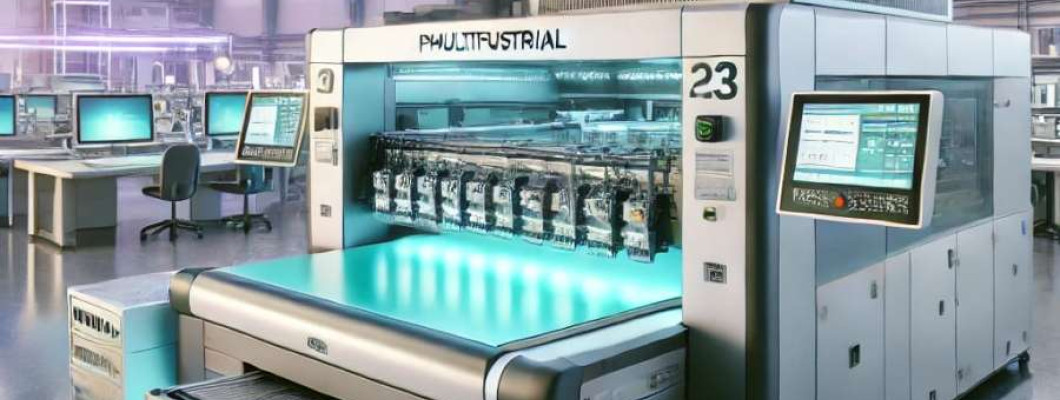
The Industrial Reality of Integrating A3 UV DTF Printing at Scale
In industrial-scale printing workflows, particularly those targeting versatile mini-batch production or on-demand customization, the transition from DIY or semi-professional UV direct-to-film (DTF) printers to industrial-grade multifunction machines is a critical inflection point. Scalable business owners pursuing throughput gains must navigate challenges that are frequently obscured in hobbyist setups yet emerge sharply in high-volume production lines.
The A3 UV DTF Printer Multifunction Printing Machine represents a class of devices engineered to mitigate operational bottlenecks associated with lower-tier printers. However, the disparity between smaller-format DIY DTF units and industrial multifunction machines encompasses more than print quality. It extends into the domains of asset reliability, throughput automation, ink chemistry stability, substrate adhesion consistency, and lifecycle maintenance costs.
Consider a print house ramping production from 50 to 500 units daily across varied substrates such as polyester films, synthetic textiles, and rigid panels. Low-end units may sustain early-stage prototype demands but reveal limitations rapidly: inconsistent UV curing speeds induce variable print adhesion; printhead clogging escalates downtime; imprecise motor controls affect registration accuracy. These deficiencies translate into labor intensiveness and yield loss, indirectly inflating operational expenditures.
Addressing such realities requires analyzing the underlying mechanical and electronic architectures, precise environmental controls, and the integration capabilities of multifunction print platforms. Scalable business owners face pressure to optimize print head longevity, automate substrate handling, and maintain repeatable color fidelity under extended duty cycles.
Technical Deep-Dive into A3 UV DTF Multifunction Printer Capabilities
Printhead Performance and Lifespan
Central to the A3 UV DTF printer's industrial-grade credentials is its use of precision piezoelectric printheads with nozzle diameter calibrated to 10 pl drop size. This enables a native resolution of 1200 x 1200 dpi, supporting micron-level detail fidelity. However, sustained throughput at this precision requires robust anti-clogging mechanisms employing UV-resistant materials and optimized ink formulations to reduce nozzle failure rates.
Comparison to DIY units with 20-30 pl nozzles reveals the technical trade-off: finer nozzles improve sharpness but increase risk of blockage under high-throughput conditions. The multifunction unit integrates automated nozzle check routines and ultrasonic cleaning cycles, essential for maintaining uptime in continuous-use scenarios.
UV Curing Unit and Energy Efficiency
UV LED lamps rated at 24 Watts per channel provide rapid curing, facilitating cycle times of approximately 30 seconds per print pass. The energy consumption per print averages 5.5 Wh, significantly lower than conventional mercury vapor lamps often exceeding 15 Wh. This reduction not only curtails operational costs but also enhances safety by minimizing heat dissipation, crucial for tightly packed production environments.
Substrate Handling and Automation Potential
The multifunction aspect incorporates vacuum-assisted platen positioning with repeatability tolerance within 0.05 mm, permitting high-precision multi-pass printing on substrates ranging from 0.2 mm thin polyester films to 5 mm thick rigid plates. Automated loading options reduce labor dependency, enabling throughput scalability without linear growth in headcount.
Ink Chemistry and Adhesion Dynamics
The integrated UV-curable ink system leverages a proprietary polymer matrix optimized for direct-to-film adhesion and flexibility to mitigate microcracking under mechanical stress. The ink’s viscosity maintains a stable 12-15 cps at 25°C, ensuring smooth jetting characteristics with minimal satellite droplet formation. Adhesion testing following ASTM D3359 standards shows peel strengths exceeding 5 N/cm on standard PES substrates, supporting durable end-use performance.
Maintenance Architecture and Lifecycle Costing
Predictive maintenance is architected through embedded sensors monitoring printhead temperature, ink supply levels, and UV lamp intensity decay. This data feeds into automated alerts and calibration prompts, reducing unscheduled downtime. Lifecycle maintenance extended by modular printhead replacement options and quick-change UV LED units lowers total cost of ownership relative to lower-tier machines lacking such foresight in design.
| Specification | DIY DTF Printer | A3 UV DTF Multifunction Printer |
|---|---|---|
| Printhead Drop Size (pl) | 20-30 | 10 |
| Resolution (dpi) | 600-900 | 1200 x 1200 |
| UV Lamp Power (Watts) | 15+ | 24 (LED) |
| Curing Time per Pass (s) | 60+ | 30 |
| Substrate Thickness (mm) | 0.1 - 2 | 0.2 - 5 |
| Automation Level | Manual | Vacuum platen + Optional loader |
| Maintenance Features | Basic Cleaning | Sensor-driven Alerts + Modular Parts |
Scenario Analysis of Business Use-Cases
Small Print Shop Transitioning to Mass Customization
A boutique apparel decorator scaling from manual heat transfer to on-demand UV DTF printing gains significant margin improvements by reducing print defect rates and labor hours per batch. The multifunction printer’s automated substrate alignment and fast UV curing cut turnaround times from 48 hours to 12 hours, enabling rapid response to fluctuating demand.
Industrial Label Printer Moving Beyond Conventional Inks
Label manufacturers requiring durable, flexible prints for variable substrate thicknesses find the multifunction printer’s precision UV ink adhesion system critical. The ability to print on thick rigid materials while maintaining registration accuracy reduces outsourcing costs and allows in-house flexible packaging production.
OEM Electronics Marking Facility with High Compliance Needs
Electronic component manufacturers mandating traceability marks with micron precision benefit from the printer’s advanced printhead stability and ink curing consistency. The unit’s thermal management system prevents heat buildup, maintaining rack density compliance within server-like production environments.
Expert FAQ Answering Industrial-Grade Technical Queries
How does the UV LED lamp lifespan affect maintenance schedules?
UV LED lamps typically rated for 10,000 operating hours allow for predictable replacement intervals. The multifunction printer monitors intensity degradation to schedule lamp swaps before print quality impacts occur, avoiding unexpected downtime.
What are the critical environmental controls needed for consistent print quality?
Maintaining relative humidity between 40-60% and ambient temperatures of 20-25°C is essential. Variations outside these ranges affect ink viscosity and curing polymerization kinetics, causing adhesion failures or color shifts.
How does nozzle diameter influence print speed versus resolution trade-offs?
Smaller nozzle diameters improve resolution but require slower print speeds due to lower droplet volume. The multifunction machine balances this with adaptive print modes, allowing faster draft printing with larger drops or slower detailed passes at 10 pl.
What are the typical failure modes of piezoelectric printheads in UV DTF printers?
Common failure points include nozzle clogging from polymerized ink, piezo actuator fatigue due to high-frequency operation, and electrical degradation. The printer’s automated cleaning and monitoring mitigate these risks.
How do modular components reduce total cost of ownership?
By enabling quick replacement of only worn parts (printheads, LEDs) instead of entire modules, service downtime decreases and maintenance costs are optimized, extending the working life of the overall unit.
Strategic Verdict and Industrial Recommendation
The A3 UV DTF Printer Multifunction Printing Machine decisively bridges the gap between DIY print systems and truly industrial-grade platforms. For scalable business owners prioritizing throughput, process repeatability, and automation, this unit's technical specifications and embedded maintenance intelligence substantially reduce operational risk and lifecycle costs.
Its precise printhead design, advanced UV LED curing, substrate versatility, and sensor-led maintenance architecture support robust mass customization and on-demand production demands. These capabilities position it as a definitive solution for businesses seeking sustainable growth in fast-paced printing sectors.
For further technical details and procurement options, refer directly to the A3 UV DTF Printer Multifunction Printing Machine. This platform is recommended as a foundational investment for serious industrial printing operations aiming to close the gap between prototype and high-volume manufacturing.