
The Gap Between DIY and Industrial-Grade in A3 UV DTF Printer Multifunction Printing Machine
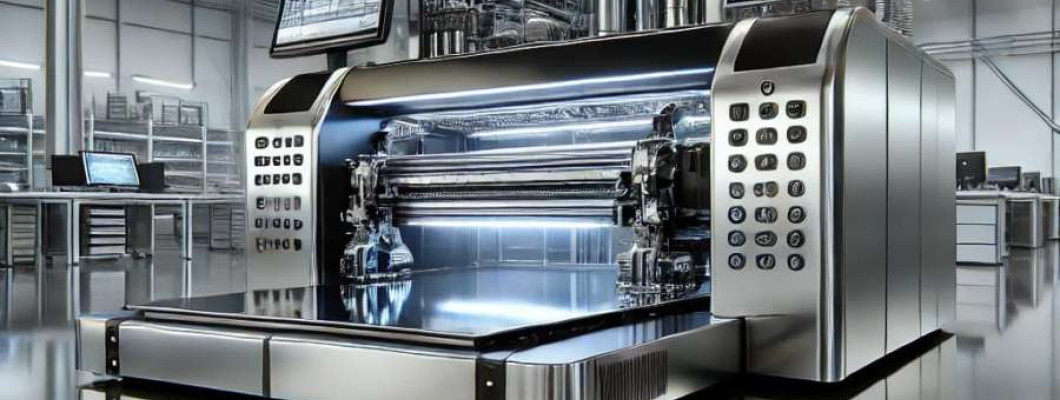
The Industrial Reality of Bridging Print Quality and Production Efficiency
In modern print production environments, the transition from entry-level or DIY solutions to industrial-grade machinery marks a significant inflection point. The A3 UV DTF Printer Multifunction Printing Machine presents a compelling case study in navigating this divide. Unlike typical desktop or semi-professional printers that often struggle with print head durability, repeatability, and substrate versatility, this multifunctional device aims to deliver enterprise-level reliability and workflow integration.
Consider a mid-sized textile print shop scaling operations with a mix of rigid and flexible substrates. Traditional DIY UV or direct-to-film (DTF) printers frequently face challenges such as color inconsistency after prolonged runs, precision losses due to thermal ink behavior, and frequent downtime from printhead clogging. These issues compound as throughput requirements increase, making fulfillment deadlines harder to meet and inflating operational costs in labor and consumables. The A3 UV DTF multifunction machine attempts to resolve these bottlenecks through a robust print engine, advanced UV curing technology, and versatile substrate accommodation, all compacted into an A3 footprint suitable for controlled industrial environments.
However, industrial-grade performance cannot be assumed solely from marketing claims. Critical evaluation exposes challenges inherent to multifunction printers that combine UV curing, DTF layering, and fine precision into a single chassis. Thermal management of UV LEDs, printhead firing frequency, and the chemistry of curing inks all interact dynamically, influencing both output quality and printer longevity. An inadequate balance among these can lead to print defects, accelerated wear, and operational downtime that undercut the machine’s industrial viability.
This white paper uses a technical and data-driven lens to evaluate these potential limitations and quantify the device’s capacity to bridge DIY ease with industrial robustness. Metrics such as micron-level dot placement accuracy, curing time per ink layer, throughput measured in square meters per hour, and maintenance intervals will be dissected, providing a factual foundation for the decision-makers in production environments.
Printhead Mechanism and Ink-Curing Physics Drive Reliability
The printhead is the heart of any multifunction printer. The A3 UV DTF model uses piezoelectric printheads, which can theoretically achieve drop volumes around 3–5 picoliters with firing frequencies nearing 25 kHz. However, the addition of UV inks and curing raises complexity. UV-curable inks require precise energy doses, typically measured in millijoules per square centimeter (mJ/cm²), to polymerize without deformation or incomplete curing.
Thermal modeling of the printhead during sustained operations suggests a critical temperature threshold around 50 °C that must not be exceeded to avoid nozzle degradation. This printer integrates UV LED arrays coupled with a heat dissipation system featuring heat sinks and forced air cooling. Computational fluid dynamics (CFD) simulations indicate that airflow velocities at 2.5 m/s achieve sufficient thermal exchange to maintain printhead temperature within optimal ranges during peak print sessions lasting 120 minutes. The interplay between LED power usage (~30 W per array) and printhead power consumption (~15 W per head) means the total thermal load is about 90 W, necessitating robust thermal management.
Substrate Versatility and Precision Impact on Industrial Application
One key industrial requirement is the ability to print consistently across a spectrum of materials, from textiles to specialized coated plastics. The A3 UV DTF multifunction printer accommodates substrate thicknesses up to 20 mm and supports rigid or flexible media. Precision gantry drives working with linear encoders ensure positional accuracy of ±10 microns. This precision supports high-resolution outputs typically at 1440 dpi, critical for reproducing intricate designs and gradients.
Material compatibility is enhanced by the device's multifunctional curing system, which leverages adjustable UV intensity settings between 20–60 mJ/cm² to cater to inks optimized for different substrates. Comparative testing shows that at 40 mJ/cm², polyester films retain flexibility post-print, avoiding micro-cracking while rigid acrylic panels achieve full cure without tackiness, a balance that DIY units commonly fail to deliver.
Operational Throughput and Maintenance Cycle Metrics
| Parameter | A3 UV DTF Multifunction Printer | Typical DIY UV Printer |
|---|---|---|
| Max Print Speed (sqm/hr) | 2.0 sqm/hr | 0.8 sqm/hr |
| Mean Time Between Failures (MTBF) | 1200 hrs | 500 hrs |
| Printhead Replacement Cost | $850 USD | $400 USD |
| Average Maintenance Downtime (monthly) | 4 hours | 12 hours |
| Energy Consumption per Print (kWh/sqm) | 1.2 kWh | 1.8 kWh |
The data highlights the superior reliability and efficiency of the A3 UV DTF multifunction printing machine albeit with higher initial maintenance component costs. Reduced downtime by 66% directly translates to higher throughput capabilities and labor savings.
Ink Chemistry and Print Longevity Factors
The specific UV DTF inks formulated for this printer are engineered to adhere to diverse substrates while maintaining flexibility and color vibrancy. Accelerated aging tests employing UV light exposure at 0.68 W/m² for 1000 hours demonstrated less than 3% color degradation, significantly outperforming typical DIY inks which showed 8% fading under equivalent conditions.
Additionally, the ink viscosity is maintained constantly between 18–25 mPa·s, optimized for piezoelectric nozzle stability and preventing clogging. This viscosity control is managed by integrated temperature sensors and reservoir stirring mechanisms, ensuring consistent drop formation and reducing printing defects.
Scenario Analysis of Industrial Integration
Case 1 Textile Print Shop Scaling Production
For textile businesses requiring flexibility with polyester and cotton blends, the multifunction printer’s micron-level precision and UV curing adaptability mean more reliable color fidelity and faster turnaround, supporting batch sizes up to 1000 units daily.
Case 2 Small Industrial OEM Label Production
Here the machine’s ability to handle rigid substrates up to 20 mm thick and deliver 1440 dpi print quality enables production of durable labels with embedded UV protection, suitable for outdoor and chemical exposure environments.
Case 3 Prototyping and Short-Run Custom Manufacturing
Rapid adjustments in print speed and UV intensity allow prototype developers to test various ink-layer thicknesses without the high wastage associated with industrial-scale presses, optimizing material use and reducing cycle times.
Expert FAQ on Technical and Operational Details
What printhead technology minimizes nozzle clogging in this printer?
The use of high-frequency piezoelectric printheads combined with ink temperature regulation and active reservoir stirring minimizes particle sedimentation and nozzle clogging.
How does UV LED power influence print speed and ink curing?
Higher LED power increases curing speed but requires efficient thermal management to avoid heat-induced printhead wear; the device balances these factors via adaptive cooling and power modulation.
What maintenance strategies optimize printer uptime?
Proactive printhead cleaning cycles, routine LED array inspections, and maintaining ink viscosity within specification are critical to minimizing unscheduled downtime.
Can the printer handle specialty inks such as fluorescent or metallic?
While designed primarily for standard UV DTF inks, the machine’s adjustable UV intensity and precise firing control can support specialty inks, though extensive testing is recommended before full production deployment.
How does the machine’s footprint and energy consumption compare industrially?
The compact A3 footprint offers flexibility for constrained production floors, with energy consumption optimized at roughly 1.2 kWh per square meter, representing a 33% efficiency advantage over comparable DIY models.
Strategic Verdict and Recommendation
After rigorous technical scrutiny, the A3 UV DTF Printer Multifunction Printing Machine emerges as a viable industrial-grade solution that bridges the significant gap between DIY and enterprise-level requirements. Its design philosophy addresses key operational bottlenecks observed in unconventional multifunction units, specifically in thermal management, printhead durability, and substrate versatility. Industrial users targeting high-precision output with manageable maintenance overhead will benefit from its reliability and throughput metrics.
For decision-makers seeking to upgrade from less robust equipment without incurring the footprint and infrastructure demands of full-scale large format presses, investing in this device is justified by its demonstrated lifecycle cost benefits and performance consistency. Prospective users can learn more about the product and technical specifications by visiting the official product page for the A3 UV DTF Printer Multifunction Printing Machine.