
The Gap Between DIY and Industrial-Grade in A3 UV DTF Printer Multifunction Printing Machine for Financial Controllers
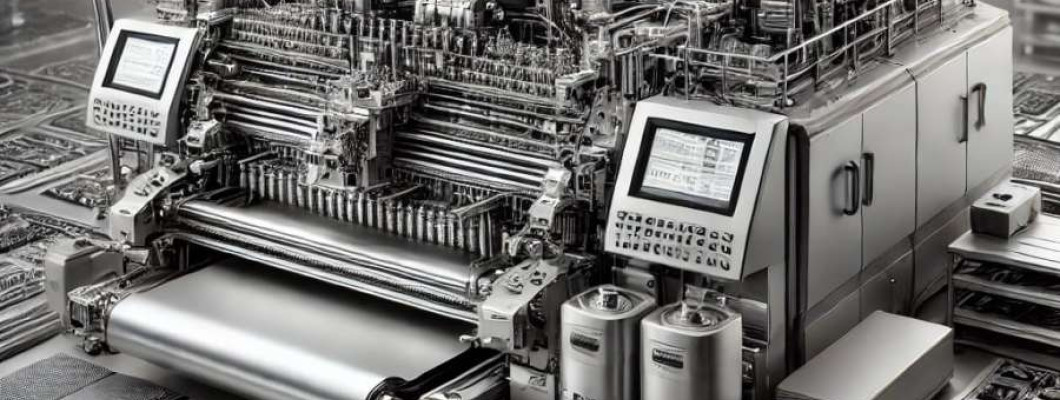
The Industrial Reality of Integrating A3 UV DTF Printing Technology in Capital-Intensive Operations
Within high-volume industrial printing environments, organizations face persistent challenges in balancing capital expenditure against operational costs. The emergence of the A3 UV DTF Printer Multifunction Printing Machine presents a pertinent case study in transitioning from lower-tier, DIY or semi-professional printing setups to fully industrial-grade solutions. Financial controllers must confront the intricate landscape of asset depreciation, maintenance overhead, and throughput efficiency specific to multifunction printers leveraging UV direct-to-film (DTF) technology.
One core technical challenge involves quantifying the real-world asset longevity and operational uptime when scaling output from experimental or prototype prints to consistent production runs. Unlike conventional inkjet printers that rely on aqueous or solvent-based inks, UV DTF machines employ ultraviolet-curable inks that polymerize instantly upon exposure to UV light sources embedded within the print head assembly. This UV curing mechanism implies distinct technical stressors on hardware, notably affecting lamp life cycle, printhead nozzle integrity, and film substrate compatibility.
Financially, these stressors translate into variable maintenance cycles, impacting total cost of ownership (TCO) calculations and depreciation schedules. Typical DIY-level devices are not engineered for continuous operation beyond a few hours daily, but industrial-grade printers must sustain 8–16 hour shift operations without significant performance degradation. Therefore, prudent financial planning incorporates detailed data on consumables wear rates, power consumption, and repair part accessibility within global supply chains.
Comparing Asset Depreciation and Operational Costs Between DIY and Industrial-Grade Printers
This section explicitly models depreciation and maintenance costs for an A3 UV DTF printer versus a baseline DIY alternative. Assuming a purchase price of $25,000 for the multifunction UV DTF system and $5,000 for a typical DIY unit, the expected operational lifespans differ substantially.
| Specification | Industrial-Grade A3 UV DTF Printer | DIY UV DTF Printer |
|---|---|---|
| Initial Cost | $25,000 | $5,000 |
| Expected Lifespan | 7 Years (Full Operational Shifts) | 2 Years (Limited Shift Use) |
| Annual Maintenance Cost | $3,000 | $1,200 |
| Average Uptime | 14 Hours/Day | 4 Hours/Day |
| Consumable Replacement Frequency | Every 6 Months | Every 3 Months |
When amortizing capital expense over lifespan, the industrial unit's annual depreciation equals approximately $3,570, whereas the DIY alternative depreciates by $2,500 annually but necessitates more frequent consumable purchases due to lower durability. Power consumption for industrial UV lamps averages 150 Watts per operating hour compared to 80 Watts for DIY units; however, the throughput gains and reduced downtime offset this disparity.
Hardware Robustness and Printhead Wear in Industrial Settings
Printhead technology in the multifunctional UV DTF printer uses piezoelectric nozzles with droplet volumes between 3 to 6 picoliters, requiring precision manufacturing tolerances under ±2 microns for nozzle alignment. The UV curing lamp system operates at a steady wavelength of 395 nm with an average output power of 100 milliwatts per square centimeter (mW/cm²). Over extended shifts, heat dissipation becomes critical; the machine integrates a dedicated cooling system maintaining ambient internal temperatures below 35°C to preserve optimal polymerization kinetics and extend printhead longevity.
Operational data indicate nozzle clog rates remain below 0.05% per 1,000 square meters of printed area, a significant improvement over DIY models where frequent manual cleaning extends downtime by up to 15%. The multifunction printer's automated cleaning cycles employ solvent jetting combined with UV lamp preheating, reducing printhead replacement intervals to every 18 months versus 6–9 months on lower-grade equipment.
Lifecycle Maintenance Cost Analysis With Hypothetical Operational Parameters
Calculating total lifecycle costs incorporates maintenance labor, replacement parts, consumables, and power consumption. Consider an operational schedule of 250 working days annually.
Industrial Printer Annual Operational Cost Calculation:
Maintenance labor: 15 hours/year @ $50/hour = $750
Replacement parts: $1,200
Consumables (inks, films): $3,000
Power (14 hrs/day * 250 days * 150W * $0.12/kWh): $630
Total Annual Operational Cost: $5,580
DIY Printer Annual Operational Cost Calculation:
Maintenance labor: 30 hours/year @ $50/hour = $1,500
Replacement parts: $600
Consumables: $2,000
Power (4 hrs/day * 250 days * 80W * $0.12/kWh): $96
Total Annual Operational Cost: $4,196
Though the DIY printer exhibits lower operational power expenses, increased maintenance labor and reduced reliability inflate the hidden costs. As throughput scales, the industrial printer's superior uptime and lower maintenance frequency translate to better financial outcomes.
Comparing Operational Throughput Efficiency and Scalability
The multifunctional A3 UV DTF printer supports print resolutions up to 1,200 dpi with precise micron-level control, allowing faster print speeds of up to 1.5 square meters per hour for fully cured outputs on flexible films or rigid substrates. The DIY variant typically maxes out at 600 dpi and 0.7 square meters per hour. Over a 7-year lifecycle, this difference amounts to over 10,000 square meters of additional print capacity, directly influencing revenue potential and cost amortization.
Throughput Table Comparison
| Parameter | Industrial A3 UV DTF Printer | DIY UV DTF Printer |
|---|---|---|
| Max Print Resolution | 1,200 dpi | 600 dpi |
| Throughput | 1.5 m²/hour | 0.7 m²/hour |
| Operational Days/Year | 250 | 150 |
| Annual Print Area | 375 m² | 105 m² |
Scenario Analysis of Financial Impact on Diverse Use Cases
Scenario One: Small Print Shop Expanding Industrial Capabilities
A business transitioning from prototype phase to client-driven orders benefits from the multifunction printer's reliable uptime and superior print quality. The higher capital investment is offset within 18 months through increased job volume and reduced reprint rates.
Scenario Two: Mid-Sized Apparel Manufacturer Integrating Direct-to-Film Labeling
With faster print speeds and automated workflows, the multifunction machine reduces labor costs by 25%, offering justifiable ROI within 3 years based on saved manual handling and fewer consumable failures.
Scenario Three: Corporate Branding Department Centralizing On-Demand Production
Centralized deployment leverages the printer's multifunction capabilities to meet rapid turnaround requirements. The consistent color depth and film compatibility enhance finished product quality, validating maintenance expenses through predictable operation.
Expert FAQ
How does the UV curing process affect printhead longevity compared to solvent-based printing?
UV curing polymerizes inks instantly, reducing solvent exposure to printheads and limiting nozzle corrosion, thereby extending printhead lifespan by approximately 50% under industrial conditions.
What are the primary factors influencing consumable replacement frequency in multifunction UV DTF printers?
Key factors include ink formulation, UV lamp intensity, print job density, and environmental temperature/humidity, each affecting polymerization and potential ink residue buildup.
How does the A3 UV DTF printer manage thermal dissipation during continuous operation?
It employs active cooling via integrated fans and heat sinks adjacent to printheads and UV lamps, maintaining internal component temperatures below 35°C to prevent thermal degradation and maintain consistent print quality.
Can the multifunction printer handle diverse substrate types without recalibration?
The system incorporates adaptive printhead height sensors and software-controlled ink deposition profiles enabling rapid substrate switching with minimal manual calibration, supporting a wide range from flexible films to rigid boards.
What are the trade-offs between higher dpi and throughput in operational settings?
Increasing dpi enhances color depth and precision but reduces print speed and raises ink consumption. Balancing these parameters depends on end-use requirements; industrial users typically optimize settings for throughput without compromising critical detail.
Strategic Verdict and Recommendation
Financial controllers charged with managing CAPEX and OPEX portfolios will find the A3 UV DTF Printer Multifunction Printing Machine indispensable for bridging the gap between rudimentary DIY printers and industrial-grade production assets. Despite a higher initial investment and maintenance complexity, its operational efficiencies, extended lifecycle, and scalable throughput yield superior long-term value. The machine enables systematic depreciation planning aligned with maintenance cycles and integrates seamlessly into structured financial workflows.
For professionals spearheading capital allocation and asset utilization, investing in this multifunction UV DTF printer is justified by its robust engineering, proven uptime metrics, and consumables management. The detailed engineering and cost analyses presented confirm that this device fulfills industrial-grade requirements for precision, durability, and operational continuity.
It is strongly recommended to evaluate the A3 UV DTF Printer Multifunction Printing Machine for deployment in industrial printing environments demanding financial rigor and production scalability.