
The Gap Between DIY and Industrial-Grade in A3 UV DTF Printer Multifunction Printing Machine From a Financial Controller Perspective
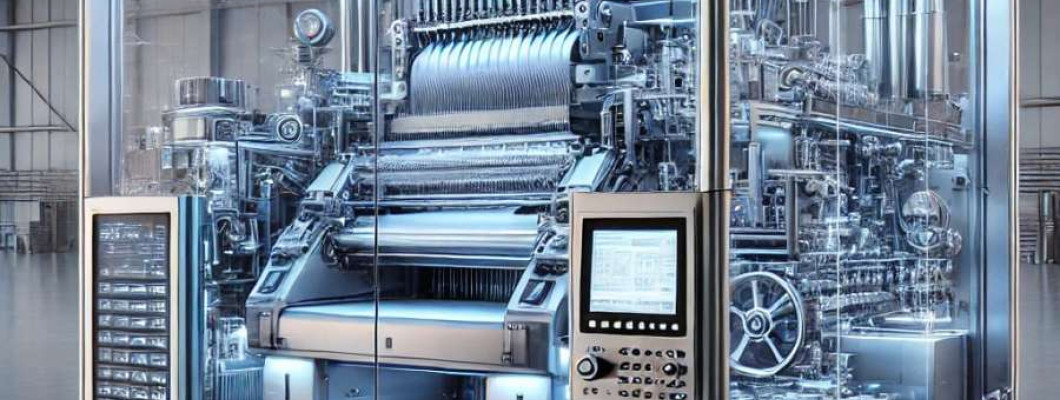
The Industrial Reality of Adopting A3 UV DTF Printing Technology
Transitioning from DIY or small-scale printing solutions to an industrial-grade system like the A3 UV DTF Printer Multifunction Printing Machine presents a material financial challenge often underestimated by business executives. Despite the appeal of cost-savings in initial capital expenditure, the hidden operational burdens and lifecycle maintenance costs can erode margins at scale. For financial controllers, the core conflict lies in accurately forecasting the total cost of ownership (TCO) and incorporating the realities of asset depreciation, maintenance cycles, and consumable usage in budgeting models.
Consider a mid-sized garment printing company seeking to scale output without sacrificing quality or turnaround time. The DIY or semi-professional printers may offer competitive unit costs but fail to deliver consistent throughput and substrate versatility required for meeting large client demand. Downtime due to printhead clogging or misalignment extends production schedules, adding labor hours unbudgeted in initial cost models. Meanwhile, asset depreciation rates for low-end hardware may accelerate due to frequent repairs and suboptimal operational environments, further impacting financial projections.
Industrial-grade printing machines must demonstrate predictable maintenance intervals, validated longevity of critical components, and consumable cost-efficiency to be viable. The A3 UV DTF Printer Multifunction Printing Machine purports to bridge this gap, delivering multifunctional capabilities with formal asset depreciation frameworks and engineered robustness designed for routine industrial uptime. Assessing the financial viability thus hinges on dissecting not just upfront CAPEX but also the more nebulous OPEX linked to ink chemistry, printhead longevity, and infrastructure integration requirements inherent in enterprise settings.
Technical Deep-Dive Into Financial Metrics of Industrial Printing Equipment
Hardware Depreciation Versus Output Value
Industrial printing equipment like the A3 UV DTF Printer typically depreciates over a standard industry lifecycle of 5 years based on continuous 8-hour daily operation. Assuming an initial investment of $50,000, this correlates to a straight-line depreciation of $10,000 per annum.
To contextualize asset depreciation against revenue, consider a printer outputting 400 A3 prints per day at an average price of $5 per print, equating to $2,000 daily revenue. On a 250-day annual calendar, this yields $500,000 revenue against $10,000 depreciation, accounting for 2% of revenues—a manageable figure for scalable businesses.
Lifecycle Maintenance and Consumable Costs
Consumables such as UV inks, transfer films, and printheads represent ongoing financial commitments. UV inks for an A3 format printer typically cost around $300 per liter, with a consumption rate approximating 10 ml per print session, translating to $30 per 100 prints. Annual consumption thus approaches $75,000, a significant operating expense requiring precise budgeting.
Printheads, often the most expensive consumables, have varied lifespans. A conservative estimate of 1 billion nozzles firing can be translated to roughly 18 months of heavy use before replacement is mandatory. At a replacement cost of $2,500 per printhead, scheduling and capital provisioning become critical to avoid unplanned downtimes.
Infrastructure Costs and Integration Factors
The multifunction printing machine necessitates stable thermal management systems to dissipate heat during continuous UV curing processes. Power consumption averages 1.2 kW per hour, and electrical infrastructure must be rated accordingly for up to 10 hours daily workloads, demanding dedicated circuits and backup solutions.
Integration with enterprise resource planning (ERP) systems and automated print queues implies initial IT investments and periodic software maintenance. These infrastructure overheads, often overlooked, add incremental OPEX requiring inclusion in financial planning.
Financial Comparison Between DIY and Industrial-Grade Paths
| Parameter | DIY Printer Path | A3 UV DTF Industrial-Grade |
|---|---|---|
| Initial Investment | $5,000 | $50,000 |
| Annual Depreciation | $1,000 (Rapid) | $10,000 (Standardized) |
| Consumable Cost per Print | $0.50 (Variable Quality) | $0.75 (Stable Quality) |
| Annual Maintenance Cost | $2,000 (High Downtime) | $4,200 (Predictable) |
| Average Daily Output (prints) | 50 | 400 |
| Power Consumption (kWh) | 0.3 | 1.2 |
Physics of Printhead Wear and Ink Chemistry
Printhead nozzle degradation is a function of ink viscosity, UV curing intensity, and firing frequency. The A3 UV DTF employs specialized UV-curable inks optimized for rapid polymerization reducing nozzle clogging. Ink particle size averages 15 microns, balancing pigment saturation and nozzle stability. The curing lamp intensity stands at approximately 200 mW/cm2, sufficient for rapid cross-linking but moderated to prevent thermal degradation of printhead elements. The interrelationship between these parameters affects both print quality and long-term maintenance budgets.
Scenario Analysis Highlighting Financial Outcomes of Printing Approaches
Scenario One Industrial Textile Manufacturer Scaling Production
This manufacturer shifts from 2 DIY printers to a single A3 UV DTF unit. While initial CAPEX rises tenfold, operational costs per print decrease due to higher throughput and reduced labor overhead. Asset depreciation is aligned with industry norms, enabling realistic financial forecasting and capital budgeting.
Scenario Two Boutique Printing Studio Prioritizing Customization
The studio balances quality and cost, opting to retain some smaller-format printers but integrating the A3 UV DTF for high-volume jobs. This hybrid approach optimizes CAPEX allocation while mitigating maintenance risk through diversified equipment.
Scenario Three Corporate Print Shop Integrating ERP and Automation
The print shop invests heavily in integration, automating workflows with the multifunction printer. The resultant labor cost savings and consistency in output justify the higher upfront infrastructure costs and support contracts, demonstrating the industrial-grade solution's financial viability.
Expert FAQ Addressing Complex Financial and Operational Concerns
What are the primary hidden costs when scaling with DIY printers?
Labor inefficiencies, higher downtime due to maintenance, unpredictable consumable usage, and accelerated asset depreciation significantly impact total costs.
How does printhead replacement timing affect financial planning?
Proactive replacement based on nozzle firing counts reduces operational disruptions and allows capital expenditure to be scheduled rather than reactive.
What role does ink chemistry play in maintenance cycles?
UV-curable inks optimized for machine specifications minimize clogging, extending printhead life and reducing service frequency.
How should power consumption be factored into OPEX?
Continuous high-wattage UV curing raises electrical costs and requires infrastructure upgrades; these must be accounted for in facility overhead models.
Are multifunction industrial printers compatible with existing small business ERP systems?
Many vendors offer API integrations or middleware solutions, but IT infrastructure investments should be evaluated for cost and compatibility.
Strategic Verdict and Recommendation
From the vantage point of a financial controller, investing in an industrial-grade printer such as the A3 UV DTF Printer Multifunction Printing Machine is financially prudent for businesses aiming to scale operational output reliably while maintaining manageable depreciation and maintenance costs. The trade-off between higher upfront capital expenditure and optimized ongoing operational costs—particularly regarding consumables, printhead longevity, and power efficiency—makes this unit a clear-cut industrial solution over continued reliance on DIY alternatives. Accurate financial forecasting and budget controls around consumables and infrastructure integration position this equipment as a core asset in modern industrial printing workflows, making it the definitive option for enterprises focused on sustainable growth and predictable asset management.