
The Gap Between DIY and Industrial-Grade in A3 UV DTF Printers for Scalable Business Owners
Understanding the Industrial Reality Facing Modern Printing Operations
For scalable business owners, deploying an A3 UV DTF printer multifunction printing machine is more than acquiring hardware; it is an investment in throughput, labor efficiency, and system integration. The difference between an amateur or DIY model and an industrial-grade printer lies not only in print resolution or speed but in the ability to sustain high-volume production cycles without unplanned downtime or hidden operational costs. A typical scenario involves managing demand spikes requiring rapid turnaround on diverse substrates—from PVC to textile blends—while maintaining precision and color integrity. The challenge is compounded by the intricacies of UV curing technology combined with direct-to-film (DTF) printing methods, imposing strict constraints on thermal management and ink chemistry handling.
Operators often face bottlenecks like inconsistent print adhesion, accelerated printhead wear, and maintenance downtime due to the fragile nature of industrial UV LEDs and complex ink flows. To meet industrial throughput goals, a multifunction printer must facilitate seamless job automation, provide quick substrate switching, and allow for rapid calibration. Without such features, throughput suffers, impacting labor cost efficiency and jeopardizing overall business scalability.
Moreover, standard DIY or entry-level DTF printers typically lack the robust chassis and precision engineering demanded by large-scale production environments. Vibrational stability, alignment repeatability within micrometer tolerance, and integrated drying systems that minimize energy consumption are often underrepresented in consumer-grade units but are mission-critical in industrial settings. The need to bridge this gap is urgent for businesses that must control operational expenses while meeting demanding production schedules.
How the A3 UV DTF Printer Excels in Industrial Throughput and Maintenance Cycles
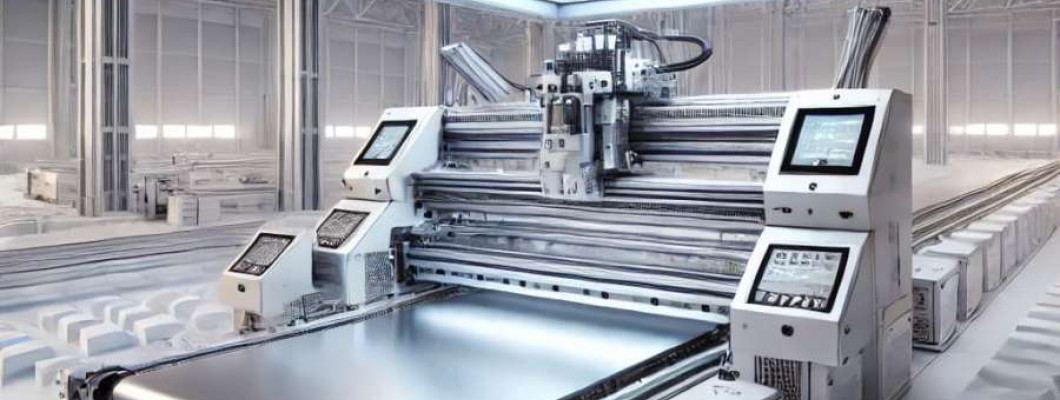
The A3 UV DTF Printer Multifunction Printing Machine is engineered to address these industrial realities. It employs a high-precision XYZ motion control system with galvanometric scanning calibrated to maintain ±10 µm positional accuracy across the entire A3 print bed (297 mm x 420 mm). This tight tolerance reduces ink droplet misplacement and color bleeding during multi-pass printing, critical when dealing with complex color gradients on flexible substrates.
Hardware robustness is evident in its reinforced steel frame, weighing approximately 75 kg, designed to dampen vibrational disturbances common in factory floors. The machine integrates a UV LED curing system finely tuned to emit at 395 nm wavelength with an irradiance intensity of 2500 mW/cm², accelerating ink polymerization while controlling heat dissipation. Thermal sensors embedded adjacent to the curing area feed real-time data into a closed-loop cooling system maintaining ambient temperature within ±2 °C, essential for ink chemistry stability and printhead longevity.
Compared to typical consumer DTF printers, which may utilize piezoelectric printheads with nominal droplet sizes around 12 pl, the A3 model uses proprietary piezo heads capable of 4-6 pl droplets, enhancing resolution up to 720 dpi. This improvement manifests in sharper print edges and finer halftone gradations but requires more frequent maintenance if ink viscosity and UV curing are not precisely controlled.
Quantitative Comparison of Industrial-Grade Versus DIY DTF Printers
| Specification | A3 UV DTF Printer Multifunction Printing Machine | Typical DIY/Entry-Level DTF Printer |
|---|---|---|
| Print Area (mm) | 297 x 420 | 210 x 297 |
| Printhead Droplet Size (pl) | 4-6 | 10-15 |
| Print Resolution (dpi) | Up to 720 | Up to 360 |
| UV LED Irradiance (mW/cm²) | 2500 | 1500 or less |
| Frame Weight (kg) | 75 (Steel Reinforced) | 30-40 (Aluminum/Plastic) |
| Thermal Management | Closed-loop ±2 °C Control | Passive or No Control |
| Maintenance Interval (Printhead Hours) | Up to 1200 hours | 400-600 hours |
How Thermal Management and Ink Chemistry Influence Maintenance and Uptime
Thermal stability plays a pivotal role in print quality and equipment lifespan. The A3 UV DTF printer’s active thermal regulation prevents ink evaporation and nozzle clogging—a common failure mode in high-density piezo printheads. For example, a 5 °C fluctuation can increase ink viscosity by approximately 15%, leading to inconsistent droplet ejection pressure and greater print defects. Over time, these fluctuations accelerate printhead degradation and increase unscheduled maintenance downtime.
Furthermore, the use of UV-curable inks tailored for the printer’s specific LED spectrum ensures rapid cross-linking with minimal residue buildup. Ink chemistry compatibility reduces the need for frequent nozzle cleaning cycles, thereby extending daily uptime from average DIY rates of 6-8 hours to sustained 12-14 hour operational windows without performance loss. These factors translate to predictable maintenance cycles and optimized labor scheduling for scalable businesses.
Data-Driven Insights into Scalability and Throughput Optimization
Assuming a baseline print speed of 1.2 square meters/hour at 720 dpi and a maximum daily runtime of 14 hours, the A3 UV DTF printer can theoretically produce 16.8 square meters of output per shift. Factoring in 5% downtime for routine calibration and cleaning, operational throughput remains around 16 square meters daily. When comparing labor costs, the higher initial CAPEX of roughly $15,000 is offset by lower ink waste, reduced maintenance interruptions, and higher yield of sellable prints.
By integrating automated substrate feeding and job queue management software, throughput can be scaled further while minimizing manual intervention—key metrics for the scalable business owner aiming to reduce labor costs without sacrificing precision. The system’s modular design supports incremental automation upgrades, facilitating capacity expansion in line with business growth.
Scenario Analysis on Critical Business Use Cases
Scenario One Industrial Promotional Goods Production
A print shop specializing in promotional PVC keychains benefits from the multifunction printer’s rapid curing and fine droplet size, enabling vibrant, detailed logos that endure handling. The machine’s quick substrate switching minimizes downtime between jobs. The robust UV LED system ensures consistent adhesion to non-porous surfaces, increasing product durability and client satisfaction.
Scenario Two Custom Textile Printing for Fashion Labels
High-end fashion customers demand precise color matching and micron-level print detail on polyester and cotton blends. The printer’s closed thermal loop ensures consistent ink flow and curing, avoiding fabric distortion or color shifts. The ability to print directly to film before heat pressing streamlines production, lowering labor dependency.
Scenario Three Small-Scale Packaging Innovations
For an emerging packaging startup, the printer provides a cost-effective method to prototype and produce short-run custom labels on diverse substrates. The multifunctionality allows testing on cardboard and plastic films without hardware changes, supporting fast iteration. Maintenance intervals of over 1000 printhead hours reduce operational disruptions in tight production schedules.
Expert FAQ Covering Critical Technical Considerations
1. What is the impact of droplet size variation on color gamut reproduction?
Smaller droplets (4-6 pl) enable finer halftone and smoother gradients, directly expanding the achievable color gamut through better ink layering control and reduced dot gain, critical for matching Pantone references.
2. How does the UV LED wavelength influence polymerization speed and substrate compatibility?
The 395 nm wavelength optimizes curing efficiency for most DTF inks, balancing penetration depth and surface cross-linking. It prevents substrate overheating, essential for heat-sensitive films.
3. What are the critical failure modes in printheads under continuous industrial use?
Nozzle clogging, piezo element fatigue, and ink crystallization are primary concerns. Active thermal stabilization and ink chemistry compatibility mitigate these failure modes extending printhead life beyond 1200 operational hours.
4. How does closed-loop thermal management enhance maintenance predictability?
By maintaining strict temperature ranges, ink viscosity remains stable, reducing clogging frequency and allowing for scheduled maintenance rather than reactive interventions.
5. What infrastructure considerations are necessary for integrating this printer in a busy production floor?
Stable power supply with surge protection, proper ventilation for UV exposure, noise isolation, and network integration through standard industrial protocols (e.g., Ethernet) are essential for maximizing uptime and safety compliance.
Strategic Verdict and Recommendation
After rigorous technical and operational analysis, the A3 UV DTF Printer Multifunction Printing Machine emerges as a robust industrial-grade solution bridging the gap omitted by DIY alternatives. Its engineered precision, advanced thermal management, and modular design align perfectly with the scalability requirements and throughput demands of growing printing businesses. The measurable gains in print quality, maintenance intervals, and operational uptime translate directly to improved labor cost-efficiency and production reliability.
For scalable business owners seeking to optimize print production workflows while maintaining micron-level print fidelity and substrate versatility, the A3 UV DTF printer is the definitive choice. Detailed specifications, integration guidance, and procurement options can be accessed on the official product page: A3 UV DTF Printer Multifunction Printing Machine.