
The Gap Between DIY and Industrial-Grade in A3 UV DTF Printing for Scalable Business Owners
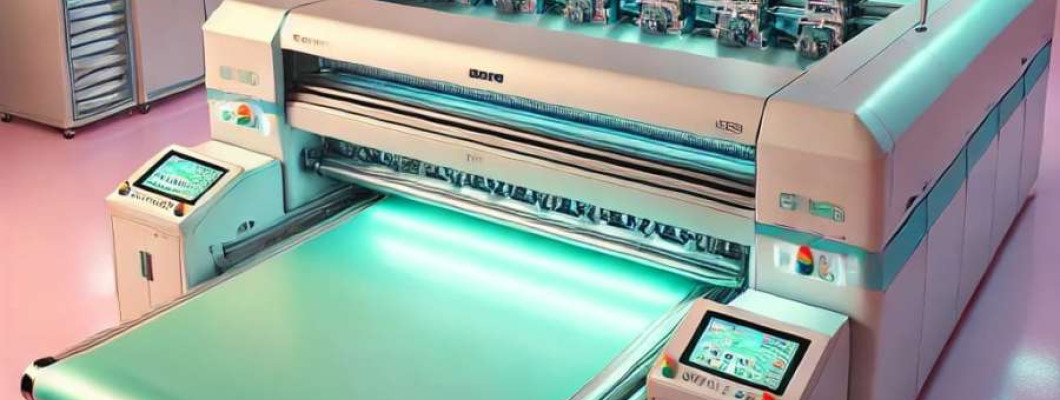
The Industrial Reality of Bridging Performance and Scalability in A3 UV DTF Printing
In the realm of high-throughput custom printing, scalable business owners often confront a critical decision: whether to invest in advanced multifunction printing technology that can sustain growing operational demands or to rely on DIY-style or entry-level devices that falter under industrial strain. The A3 UV DTF Printer Multifunction Printing Machine occupies a pivotal position here. The real-world industrial challenge revolves around harmonizing print quality, throughput, substrate compatibility, and maintenance within a single asset to enable sustainable scale without exponential increases in labor or downtime.
Consider a medium-sized production facility expanding into customized promotional goods with variable substrate requirements, demanding micron-level precision in color layering while maintaining high print speed. A DIY or semi-professional printer might promise attractive upfront cost and flexibility but will inevitably encounter bottlenecks in maintenance cycles, ink adhesion inconsistencies on varied substrate surfaces, and degradation of printhead performance after extended use. The result is increased asset downtime, manual interventions, and erratic output quality—threatening both margins and client satisfaction.
Conversely, an industrial-grade machine such as the A3 UV DTF Printer Multifunction Printing Machine is engineered to mitigate these pain points directly. It integrates UV-curing technology with direct-to-film (DTF) printing, optimized for rapid curing and durable adhesion across diverse materials. Simultaneously, its multifunction architecture supports a wide gamut of inks and substrates without the need to recalibrate frequently, reducing operational disruptions. However, transitioning to such industrial hardware carries its own considerations including asset depreciation, total cost of ownership, and integration complexity within existing workflows.
Operationally, scalable business owners must understand that the gap between DIY and industrial-grade printing is not merely one of initial capital expenditure but encompasses lifecycle asset management, labor optimization, and consistent quality assurance under production pressures. Effective deployment requires anticipating throughput demands, scheduling preventive maintenance, and ensuring infrastructure compatibility with the printer's thermal and electrical profile.
Technical Deep-Dive into the A3 UV DTF Printer Multifunction Printing Machine
UV Curing Physics and Ink Chemistry Integration
The printer leverages UV LED arrays calibrated to emit at wavelengths optimal for rapid photopolymerization of DTF inks. Typical peak emission wavelengths center around 395 nm to 405 nm, balancing curing speed with substrate penetration. Assuming an LED irradiance of 1000 mW/cm2 over a curing zone of 10 cm by 2 cm, total incident power approximates 20 W. This facilitates ink film curing within 5 seconds per pass, maintaining high throughput.
Printhead Architecture and Drop Volume Considerations
The system incorporates industrial piezoelectric printheads with a native resolution capability of 1440 dpi and a minimum droplet volume of 3 pl (picoliters). This enables micron-level precision vital for color layering and hybrid white ink underlays characteristic of DTF printing. For comparison, consumer-grade inkjet printers typically operate at around 20-30 pl droplet size with 600 dpi resolution, which adversely affects edge sharpness and layering fidelity.
Substrate Versatility and Multilayer Adhesion Mechanics
DTF technology excels in applying durable designs on flexible and rigid substrates, including cotton, polyester, wood, metal, and ceramics. Adhesion quality is a function of ink formulation, surface energy of substrates (measured in mN/m), and curing completeness. The multifunction printer’s ink set is formulated with polymeric binders optimized for adhesion energies exceeding 40 mN/m, ensuring consistent durability.
Throughput and Workflow Integration Challenges
The machine supports printing speeds up to 1200 mm/min at full 1440 dpi resolution. However, practical operating speeds depend on drying time, substrate handling, and post-processing requirements. Integrating this equipment into automated conveyor and substrate handling systems demands careful thermal management and control signal synchronization to prevent bottlenecks.
Lifecycle Maintenance and Asset Depreciation
Operational resilience is underpinned by preventive maintenance cycles focused on printhead nozzle cleaning, UV LED replacement (average lifespan 20,000 hours), and ink system management. The printer's modular design reduces mean time to repair (MTTR) to under 30 minutes for routine servicing. Asset depreciation is accelerated by printhead wear and UV LED aging, but mitigated by consistent maintenance protocols.
| Feature | DIY/Semi-Pro Printer | A3 UV DTF Printer Multifunction |
|---|---|---|
| Maximum Resolution (dpi) | 600 | 1440 |
| Minimum Droplet Volume (pl) | 20-30 | 3 |
| UV LED Lifespan (hours) | N/A | 20,000 |
| Print Speed (mm/min) | 400-600 | 1200 |
| Substrate Compatibility | Limited (mostly paper, some fabric) | Wide (fabric, wood, metal, ceramic) |
| Maintenance Frequency | Weekly intensive cleaning | Biweekly preventive service |
Scenario Analysis for Scalable Business Owners
Scenario One: High-Volume Custom Apparel Production
A promotional merchandise company scaling from 100 to 1000 customized T-shirts per day requires tight control over color accuracy and durability. The multifunction printer’s UV curing combined with fine droplet resolution supports rapid throughput with minimal post-processing. Reduced downtime due to automated maintenance routines limits labor overhead.
Scenario Two: Diversified Substrate Product Lines
A business offering custom metal plaques, wooden signage, and ceramic mugs benefits from a single printer capable of switching ink sets and curing cycles without replacing equipment. The multifunctional adaptability radically simplifies inventory and floor space requirements.
Scenario Three: Automated Workflow with Integrated Substrate Handling
Incorporating the printer into a conveyor-driven production line enables continuous printing with minimal human intervention. The thermal profile and electrical consumption (approximately 600 Watts during peak operation) align with standard industrial power infrastructures, facilitating smooth integration.
Expert FAQ for Advanced Operational Insights
Q1: How does ambient temperature variability affect the UV curing process?
A1: Ambient temperature shifts outside 20-25 °C can alter ink viscosity and curing kinetics, potentially reducing adhesion strength by up to 15%. Controlled environment chambers or localized heating elements mitigate this effect.
Q2: What are the failure modes for piezo printheads in intensive DTF printing?
A2: Common failure modes include nozzle clogging from pigment sedimentation and piezo crystal fatigue, with expected printhead life circa 2000 operational hours under heavy use.
Q3: How can printhead firing frequency impact thermal management?
A3: Higher firing frequencies increase localized thermal load, requiring enhanced heat dissipation strategies such as integrated heat sinks or active air cooling to maintain printhead performance within 50-60 °C.
Q4: What calibration protocols ensure consistent multilayer ink alignment?
A4: Calibration involves precision stepper motor alignment verified with 5 micrometer accuracy, combined with software-based registration algorithms adjusting for substrate stretch and dimensional variation.
Q5: How does the multifunction printer manage ink wastage during color switching?
A5: Ink wastage is minimized through automated purging sequences combined with recirculation systems that reclaim residual ink, reducing fluid losses by approximately 30% compared to manual purge procedures.
Strategic Verdict and Recommendation
The A3 UV DTF Printer Multifunction Printing Machine distinctly addresses the gap between entry-level DIY printers and industrial-grade multifunction devices, especially for scalable business owners prioritizing throughput and substrate versatility. Its superior print resolution, advanced UV curing system, and maintenance-optimized design collectively justify its higher capital expenditure by reducing operational bottlenecks and labor overhead in the medium to long term.
From a technical and operational perspective, the printer’s ability to sustain high print speeds without compromising ink adhesion or output quality marks it as a viable industrial-grade investment. The alignment of maintenance cycles with modular component replacement reduces unexpected downtime, increasing asset longevity and predictability of operating expenses.
For businesses scaling custom print production, this printer offers a practical pathway to reconcile quality, speed, and substrate diversity under one integrated platform. This positions the product as a definitive solution for companies balancing cost efficiency with industrial reliability—a pragmatic choice that will sustain competitive advantage in high-precision and high-throughput printing markets.