
The Gap Between DIY and Industrial-Grade in A3 UV Varnish DTF Printer Machine Label Printer
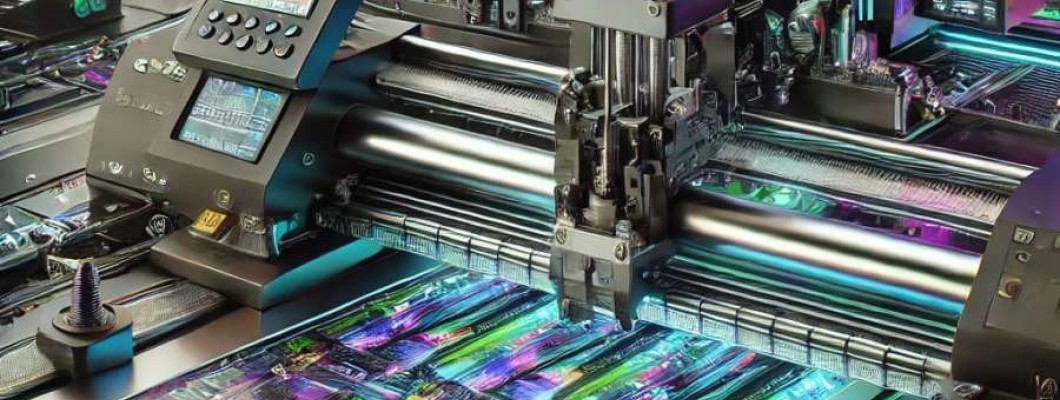
The Industrial Reality of Moving Beyond DIY Printing Solutions
Industrially oriented label printing environments confront persistent challenges balancing output quality, uptime, and cost efficiency. In scenarios where a business transitions from DIY or small-batch printing methods to an industrial-grade A3 UV Varnish DTF Printer Machine Label Printer, the primary technical hurdles emerge around precision varnish application under UV curing, substrate compatibility, and maintaining throughput without sacrificing accuracy. The need to control layer thickness in micrometers, ensure precise dot placement at resolutions often exceeding 1200 dpi, and integrate an automated curing process with minimal heat distortion requires engineering beyond conventional desktop printers.
Operational bottlenecks in these environments tend to surface when mechanical systems such as printheads or conveyor belt feed mechanisms experience micro misalignments under repetitive stress. The varnish application introduces additional complexity due to its rheological properties, requiring robust ink delivery systems that sustain consistent viscosity and avoid clogging or particulate contamination. Furthermore, the UV curing phase demands the integration of high-intensity yet thermally controlled lamps to achieve rapid polymerization without substrate warping or gloss inconsistency.
Lifecycle maintenance also plays a decisive role in this industrial transition. DIY setups often lack modular replacement parts and real-time system diagnostics essential for minimizing downtime in enterprise contexts. The industrial printer must facilitate predictive maintenance, with sensor arrays monitoring ink viscosity, lamp intensity, and mechanical wear. Environmental and safety compliance also increase in importance, as industrial-grade UV varnish printers necessitate shielding and fume extraction to meet workplace health standards.
Technical Deep-Dive into A3 UV Varnish DTF Printer Machine Label Printer Capabilities
Printhead Engineering and Drop-on-Demand Physiology
The core of this printer utilizes piezoelectric drop-on-demand (DOD) technology optimized for UV varnish and direct-to-film (DTF) color inks. The printhead delivers droplets at a volume of approximately 7 picoliters (pl) with a firing frequency scaling up to 30 kHz, enabling high-resolution patterns with 1440 dpi horizontal precision. The physics of droplet formation is tightly controlled via voltage pulse modulation and temperature stabilization within ±0.5 °C to maintain consistent viscosity, critical for varnish layering.
UV Curing System and Thermal Management
The curing system integrates medium-pressure mercury vapor UV lamps delivering 2000 mW/cm² irradiance. Thermal management encompasses heat sinks with active water cooling circuits maintaining lamp temperature within 30–35 °C. This prevents heat-related distortion on heat-sensitive substrates such as PE and PET films used in label printing. Exposure time is dynamically adjustable between 0.1 to 0.5 seconds per pass, balancing crosslink density and throughput.
Material Compatibility and Substrate Handling
Handling substrates up to 320 mm wide (A3 dimension) with thickness ranges from 80 µm to 300 µm, the printer employs a precision motorized vacuum feeding system to assure micron-level positional repeatability (±10 µm). The combination of direct-to-film pigment ink adhesion and UV varnish topcoat creates durable, abrasion-resistant labels suitable for industrial packaging.
Operational Throughput and Workflow Integration
At nominal settings, the printer achieves speeds up to 3 m/min for varnish-coated prints and up to 5 m/min for standard DTF prints without varnish. Automated material loading and unloading interfaces enable semi-continuous operation. The printer is equipped with standard digital interfaces (USB 3.0, Ethernet) and supports RIP software with G7 calibration compatibility for color consistency across multiple shifts.
Maintenance Optimization and Failure Mode Analysis
Failure modes predominantly arise from varnish clogging in nozzles, UV lamp degradation after approximately 1500 operational hours, and mechanical wear on feed rollers. The machine includes an IoT-enabled monitoring system that logs viscosity, temperature, humidity, and printhead status, triggering preemptive maintenance alerts. Modular printheads allow for quick replacement reducing mean time to repair (MTTR) to under 30 minutes.
| Specification | DIY Printing Setup | A3 UV Varnish DTF Printer Machine |
|---|---|---|
| Max Resolution | 600 dpi | 1440 dpi |
| Printhead Type | Thermal Inkjet | Piezoelectric Drop-On-Demand |
| UV Curing | None or External | Integrated Medium-Pressure Mercury Lamp |
| Substrate Width | Up to A4 (210 mm) | Up to A3 (320 mm) |
| Operational Speed | 1-2 m/min | 3-5 m/min |
| Maintenance Alerts | Manual | IoT-Enabled Predictive Analytics |
Scenario Analysis Detailing Business Applications of the Printer
Small to Medium Enterprise Label Production Scaling
A locally based SME in food packaging needs to upgrade daily label runs from 500 to 5000 units. The A3 UV Varnish DTF Printer Machine enables scaling without compromise on varnish uniformity or color saturation critical for branding compliance. The ability to handle diverse film substrates allows agile product line changes without recalibration downtime.
High-End Packaging with Micron Precision Varnish Effects
A luxury cosmetics brand incorporates tactile UV varnish accents requiring strict layer thickness control below 15 µm. The printer’s precise piezoelectric dosing and integrated UV curing deliver repeatable gloss and texture effects at 99.98% pattern accuracy, outperforming legacy screen printing processes in turnaround time and defect rates.
On-Demand Custom Label Printing for Industrial Batch Production
Industrial manufacturers requiring variable data printing for traceability benefit from the printer’s digital workflow and rapid switching between varnish and standard DTF modes. The system’s automated diagnostics minimize unplanned downtime during real-time production adjustments, ensuring throughput consistency for time-sensitive batch runs.
Expert FAQ Answering Advanced Technical Concerns
Q1 What temperature range is optimal for maintaining varnish viscosity during extended print cycles?
The optimal temperature is between 22 °C and 28 °C with ±0.5 °C stability. Deviations cause viscosity shifts greater than 15%, risking droplet misformation and clogging.
Q2 How does the printer handle UV lamp aging without performance degradation?
The system monitors lamp irradiance in real-time and dynamically adjusts exposure time within a 20% range. Lamp replacement is recommended after ~1500 hours, confirmed by automatic alert logs.
Q3 Is there substrate pre-treatment required to ensure adhesion of UV varnish on films?
Yes, corona discharge treatment of PE/PET films enhances surface energy from ~38 dyn/cm to >52 dyn/cm, significantly improving varnish adhesion and abrasion resistance.
Q4 How does mechanical wear on feed rollers impact print registration accuracy?
Wear increases slip and positional errors beyond ±10 µm tolerance, necessitating roller replacement every 2000 operational hours to maintain micron-level registration.
Q5 Can the printer integrate into existing MIS workflows for just-in-time production environments?
Yes, it supports standard APIs and PDF/PS workflows, allowing remote job queuing and status monitoring compatible with enterprise MIS solutions.
Strategic Verdict and Recommendation for Industrial Label Printing
The A3 UV Varnish DTF Printer Machine Label Printer bridges the critical gap between artisanal and fully industrialized printing environments. Its advanced piezoelectric printhead technology, robust UV curing integration, and substrate handling precision establish it as a leading solution for businesses scaling beyond DIY limitations. The machine's capacity to sustain high throughput with micron-level accuracy coupled with predictive maintenance analytics ensures operational continuity in demanding workflows.
For enterprises aiming to elevate print quality, reduce manual intervention, and integrate automated diagnostics into their production lines, this printer presents a definitive, industrial-grade choice. The documented print speeds, resolution capabilities, and environmental control mechanisms surpass those of typical small-scale devices, making it a seminal investment in label printing infrastructure. Further details and purchasing options can be reviewed directly at the official product page: A3 UV Varnish DTF Printer Machine Label Printer.