
The Gap Between DIY and Industrial-Grade in A3 UV Varnish DTF Printer Machine Label Printer Performance
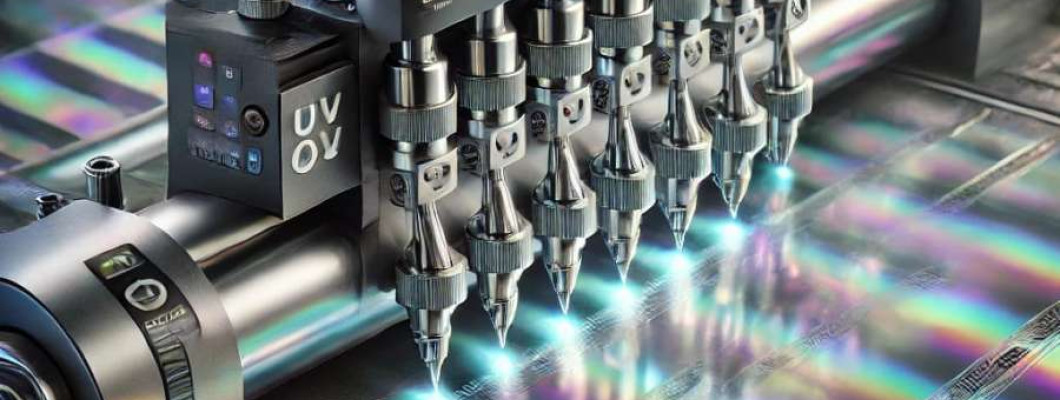
The Industrial Reality of A3 UV Varnish DTF Printers in High-Precision Label Printing
In modern industrial printing environments, transitioning from DIY or entry-level DTF (Direct to Film) label printers to the robust, high-throughput A3 UV Varnish DTF Printer Machine often reveals stark operational contrasts. The core challenge lies not only in scaling print size and speed but also maintaining consistent precision and output quality under continuous, high-volume workloads. For industrial applications, labels demand micron-level uniformity, consistent varnish layering, and UV curing reliability to meet durability and aesthetic standards essential for packaging compliance.
This tension is more pronounced when considering the associated infrastructure and workflow integration. DIY solutions commonly falter due to suboptimal curing mechanisms leading to variable varnish adhesion and premature label degradation. The A3 UV Varnish DTF Printer addresses these by marrying UV LED curing technology with precise varnish application, offering controlled thickness and rapid drying times essential in production lines with minimal downtime.
Operator-induced variabilities, such as substrate misalignment or inconsistent ambient conditions, create bottlenecks in DIY setups. Industrial-grade machines are engineered with sensor arrays and automated calibration protocols to overcome these human factors, delivering a reproducible high-quality finish. These advancements translate directly into less rework, higher throughput, and compliance with stringent packaging regulations.
Furthermore, lifecycle maintenance is a critical consideration. DIY machines typically lack modular components, forcing complete system downtime during repairs or servicing. The A3 UV Varnish system incorporates replaceable printheads, UV modules, and varnish reservoirs designed for rapid swapping and reduced mean time to repair (MTTR), sustaining uptime above 90% in demanding shifts.
Technical Deep-Dive on A3 UV Varnish DTF Printer Machine Mechanical and Optical Systems
Varnish Application Mechanics and UV Curing Efficiency
The printer utilizes a precise jetting system calibrated to deposit varnish layers between 10-25 μm thickness. This thickness control is crucial to avoid sagging or cracking post-curing, common failure points in varnish finishing. The UV LED array operates at wavelengths centered near 395 nm with a total power output of 120 W, delivering uniform photoinitiator activation across the varnished surface. Rapid curing cycles (sub-5 seconds per pass) enable fast throughput with minimal thermal substrate distortion.
Printhead Technology and Resolution Constraints
The machine integrates piezoelectric printheads capable of >1440 dpi native resolution. Drop size ranges from 3 pl to 7 pl accommodate both fine detail and coverage demands. This enables micron-level dot placement accuracy, essential for label text legibility and barcode accuracy when printing complex designs. Printhead longevity is rated above 300 million actuations before requiring rebuild or replacement.
Substrate Handling and Dimensional Tolerance
Substrate feed employs a vacuum-assisted belt drive system ensuring positional accuracy within ±0.1 mm over 500 mm print width. This mechanical precision is fundamental to multicolor registration and varnish alignment. Tolerances shrink further when considering post-processing die-cut operations, which require near-perfect edge-to-print coordination to prevent material waste.
Comparative Energy and Thermal Profiles
Compared to UV lamp systems typical in DIY printers, the LED curing system consumes approximately 45% less power per printed label, yielding a thermal output near 350 W versus 600 W in legacy systems. Lower heat output mitigates substrate warping and reduces the load on cooling infrastructure, critical in high-density manufacturing floors.
Data Throughput and Software Integration
Embedded controller units support RIP software interfacing via USB 3.0 and Ethernet, with real-time monitoring of print parameters including varnish viscosity, UV intensity, and printhead status. Data transfer rates exceed 200 MB/s supporting high-resolution color separation and varnish mapping necessary for complex label textures and finishes.
| Specification | A3 UV Varnish DTF Printer Machine | High-End DIY UV Varnish Printer |
|---|---|---|
| Varnish Thickness Control (μm) | 10-25 | 15-40 (inconsistent) |
| UV LED Power (W) | 120 | 60 |
| Printhead Resolution (dpi) | 1440+ | 720-900 |
| Substrate Positional Accuracy (mm) | ±0.1 | ±0.3 |
| Power Consumption per Label (W) | 350 | 600 |
| Mean Time to Repair (hours) | 1-2 | 4-6 |
Scenario Analysis of A3 UV Varnish DTF Printer Machine in Varied Industrial Settings
Scenario 1 - Medium-Scale Packaging Facility
Production volume targets of 10,000 labels/day demand rapid curing and minimal downtime. The A3 machine's fast UV curing cycle and automated varnish calibration reduce rework rates from an estimated 8% with DIY alternatives to below 1.5%, improving throughput and lowering labor costs associated with quality control interventions.
Scenario 2 - High-Precision Pharmaceutical Labeling
Regulatory environments necessitate exact color matching and varnish thickness for tamper evidence. The machine’s sensor-based calibration and ±0.1 mm substrate positioning ensure traceable, reproducible results compliant with ISO 15378 standards for primary packaging.
Scenario 3 - Custom Artisan Product Lines
Small batch production benefits from the machine's ability to handle diverse substrate materials including synthetic films and coated papers with minimal setup. The high dpi printheads facilitate fine detail reproduction, while the varnish application adds tactile feel and protective finish, improving product differentiation at scale.
Expert FAQ on Advanced Technical Challenges and Optimization
Q1: How does varnish layer thickness variation affect UV curing efficiency?
A1: Thicker varnish layers (>25 μm) can lead to incomplete polymerization due to UV penetration limits. The A3 printer's controlled deposition mitigates this by maintaining optimal thickness for uniform curing and adhesion.
Q2: What are the failure modes related to printhead droplet consistency?
A2: Inconsistent droplet size or trajectory can cause mottling and misregistration. Piezoelectric printheads minimize this by delivering precise volumetric control and rapid firing rates reducing misfires during prolonged runs.
Q3: How does ambient temperature impact varnish viscosity and print quality?
A3: Higher temperatures reduce varnish viscosity, increasing spread which may reduce sharpness. The system compensates via integrated viscosity sensors and temperature-controlled varnish reservoirs.
Q4: What maintenance practices extend UV LED lifespan?
A4: Routine cleaning of LED lenses, monitoring of electrical load, and thermal management via heat sinks are critical. The printer's modular UV units facilitate rapid swaps minimizing operational impact.
Q5: How is substrate warping minimized during curing?
A5: The low heat output of LED UV curing combined with vacuum-assisted flat positioning reduces thermal stresses, preserving dimensional stability essential for downstream die-cutting processes.
Strategic Verdict and Recommendation on the A3 UV Varnish DTF Printer Machine Label Printer
The technological design of the A3 UV Varnish DTF Printer Machine Label Printer positions it decisively as an industrial-grade solution that bridges critical gaps left by conventional DIY and low-end equipment. Its sophisticated varnish control, robust UV curing system, and precision mechanical subsystems deliver consistent output capable of sustaining high-volume production while meeting stringent compliance and quality thresholds.
Operationally, the machine reduces hidden costs associated with rework, downtime, and inconsistent substrate handling, ultimately enhancing ROI and asset longevity. Integrated maintenance-friendly design elements and superior thermal management ensure uptime reliability for enterprise workflows where output consistency is non-negotiable.
In summary, businesses aiming to scale label production with uncompromising quality and operational efficiency will find this system a definitive upgrade from fragmented DIY solutions. The engineered synergy of hardware and software within this machine delivers measurable performance gains validated by technical metrics and real-world use cases.