
The Gap Between DIY and Industrial-Grade in A3 UV Varnish DTF Printer Machine Label Printing
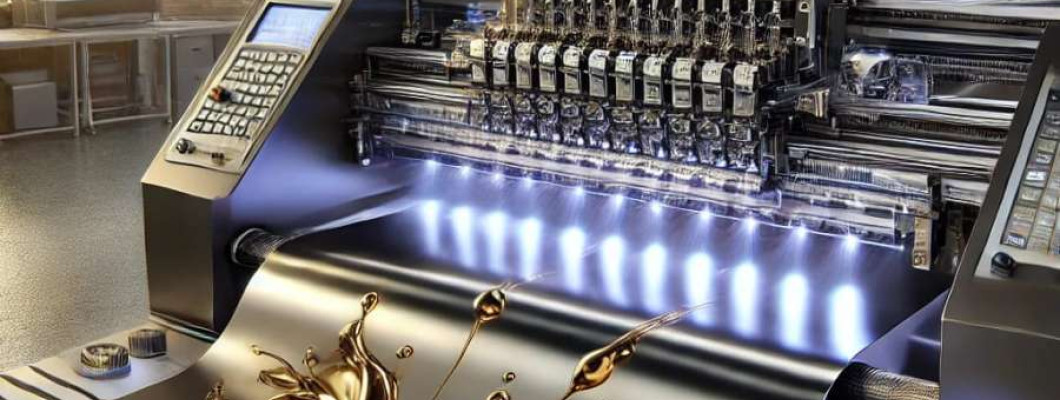
The Industrial Reality of A3 UV Varnish DTF Printer Machine Label Printing
Industrial-grade label printing is a domain where precision, throughput, and operational reliability converge as critical factors determining commercial success. The A3 UV Varnish DTF Printer Machine Label Printer represents a technological junction where desktop or small-scale printers face operational and output limitations that industrial counterparts must overcome. A common operational challenge arises in scaling production without sacrificing quality or increasing downtime due to maintenance or substrate compatibility issues.
Consider a medium-sized printing operation tasked with producing high-value labels requiring UV varnish for durability and aesthetic depth. A DIY or semi-professional printing device typically struggles with substrate versatility, printhead longevity, and varnish application uniformity. The risk of inconsistent curing or adhesion failures leads to increased rework rates, labor expenses, and lost client trust. In this environment, the A3 UV Varnish DTF Printer Machine emerges as a candidate solution designed to bridge these operational gaps.
However, the real-world integration of such equipment involves understanding the interplay of hardware robustness, ink chemistry, and print engine control. The industrial reality demands that any solution not only produces micron-level precision with UV varnish but also sustains continuous multi-shift operations while controlling lifecycle maintenance costs. The human factor engineering within the printer’s design must facilitate rapid maintenance cycles without requiring specialized skills, thus reducing overall downtime and labor cost.
Moreover, environmental and safety compliance factors impose additional operational constraints. UV varnish and DTF inks emit volatile components that must be managed within regulated limits. The printer’s infrastructure integration—from ventilation to power supply stability—must therefore be robust enough to handle industrial-grade demands. This complex technical ecosystem is where the divide between DIY and true industrial-grade printing equipment is most pronounced.
Technical Deep-Dive into A3 UV Varnish DTF Printer Machine Label Printer Engineering
Printhead Configuration and Micron-Level Precision
The A3 UV Varnish DTF Printer employs a high-density piezoelectric printhead array capable of ejecting droplets as small as 3 picoliters, achieving resolution outputs of up to 1440 dpi. This droplet control facilitates edge sharpness and fine gradients essential for label art. Unlike thermal inkjet systems common in entry-level devices, the piezo technology endures extended operation cycles with minimal nozzle clogging, crucial for varnish-laden inks that have higher viscosities.
UV Varnish Application and Curing Dynamics
Applying UV varnish uniformly at industrial speeds requires precise coordination between ink deposition and instantaneous curing. The printer integrates a high-intensity LED UV curing array positioned immediately post-print path, delivering controlled wavelengths (395-405 nm) optimized for rapid polymerization of varnish. Instantaneous curing prevents varnish migration, preserving micron-level details. Power density of about 1200 mW/cm2 enables curing at line speeds up to 5 m/min without thermal substrate deformation.
Substrate Versatility and Material Handling
The machine supports substrates ranging from 80 gsm coated paper to 250 micron PET films, accommodating label materials used in food packaging, electronics, and pharmaceuticals. A vacuum-assisted media feed mechanism maintains flatness with <0.1 mm sag over the A3 printing area, critical for consistent varnish layering. The UV varnish's adhesion characteristics are tailored chemically to interface with various substrate surface energies, reducing delamination risks.
Lifecycle Maintenance and Operational Bottlenecks
Operational longevity depends on printhead wear, varnish pump reliability, and UV LED longevity. The piezo printheads are rated for approximately 30 billion jetting cycles with automated cleaning protocols every 1000 prints, extending mean time between failures (MTBF). The varnish delivery system employs a peristaltic pump resistant to clogging from varnish polymerization, with consumables replaced every 500 liters of varnish throughput. UV LEDs have a rated lifespan of 20,000 operational hours, translating into roughly 4 years under typical industrial use.
Environmental and Safety Compliance Integration
UV varnish and DTF inks release minimal volatile organic compounds (VOC), but enclosed print chambers with activated carbon filtration ensure ambient emissions remain below regulatory thresholds. Power management includes surge protection and redundant cooling fans with thermal cutoffs preventing overheating. The printer's footprint fits within a 1.2 m x 0.8 m space, facilitating installation in existing industrial print cells with standard 220 V power supply and 50 Hz frequency.
| Feature | DIY Label Printers | A3 UV Varnish DTF Industrial Printer |
|---|---|---|
| Resolution (dpi) | 600 - 900 | Up to 1440 |
| Droplet Size (pl) | 10-15 | 3 |
| UV Varnish Uniformity | Inconsistent, manual layering | Automated, instantaneous curing |
| Substrate Flatness Control | Manual feed, sag > 0.5 mm | Vacuum feed, sag < 0.1 mm |
| Maintenance Cycle | Frequent nozzle clogging | Automated cleaning every 1000 prints |
| Operational Power | 100-200 W | 1200 W with cooling systems |
Scenario Analysis of Business Use-Cases for the A3 UV Varnish DTF Printer
Use-Case One: Small Batch High-Value Electronics Labeling
In electronics manufacturing, labels must withstand thermal cycles and abrasion. The printer’s micron-level precision and UV varnish abrasion resistance ensure durable, vivid markings on polycarbonate substrates. The industrial-grade curing process reduces rework due to smudging, vital for maintaining production efficiency.
Use-Case Two: Food Packaging Labels with Regulatory Compliance
Food packaging requires non-toxic, hypoallergenic label coatings and consistent print quality under humidity variations. The A3 UV Varnish DTF system’s integrated air filtration and substrate versatility enable compliance with FDA and EU directives. Automated feed minimizes operator error during multi-shift production cycles.
Use-Case Three: Custom Label Runs for Luxury Goods
Luxury product labels demand visual impact and tactile varnish effects. The machine’s high-resolution output and precise varnish layering enable intricate textures and finishes scalable from prototyping to short-run mass production. This flexibility reduces tooling costs and lead times.
Expert FAQ on A3 UV Varnish DTF Printer Machine Label Printer
What are the main printhead failure modes under continuous UV varnish application?
Primary failure modes include nozzle clogging due to varnish polymer residue and piezo actuator fatigue. The printer mitigates these with automated nozzle purging cycles and uses high-durability piezo materials rated for billions of pulses.
How does the UV LED curing system manage thermal load on substrates?
The curing design optimizes pulse width and power density to minimize substrate temperature rise, using active cooling and staged LED arrays to prevent warping or deformation in heat-sensitive substrates.
Can the printer handle multi-layer varnish effects without registration errors?
Yes, the integrated registration system with optical sensors ensures positional accuracy within ±0.05 mm, critical for multi-layer effects requiring precise alignment.
How does the machine adapt to variations in substrate thickness?
The vacuum assist system dynamically adjusts media hold-down pressure and uses sensors to detect thickness, maintaining flatness to ensure consistent ink deposition and varnish curing across variable substrates.
What maintenance procedures extend the longevity of the peristaltic varnish pump?
Regular flushing with compatible solvents after each print batch and scheduled tubing replacement every 500 liters of varnish processed prevent polymer buildup and mechanical wear, ensuring consistent varnish flow rates.
Strategic Verdict and Recommendation
The A3 UV Varnish DTF Printer Machine Label Printer effectively addresses the critical divide between DIY setups and industrial-grade label printing, offering fully integrated hardware engineered for high-precision, high-throughput environments. Its combination of piezoelectric printheads, instantaneous UV varnish curing, and substrate versatility establishes it as a viable industrial solution for businesses demanding reliability and compliance without sacrificing output quality. Operational bottlenecks common in smaller-scale devices, such as inconsistent varnish application and frequent maintenance interruptions, are systematically mitigated through robust engineering and maintenance design.
For enterprises seeking scalable label production with strict environmental controls and lifecycle cost management, this product offers a balanced CAPEX footprint against extended operational uptime and minimal consumable waste. The printer’s design aligns with existing industrial infrastructure and regulatory demands, facilitating integration without requiring costly facility modifications.
We recommend serious consideration of the A3 UV Varnish DTF Printer Machine Label Printer as a definitive step up to industrial-grade label printing technology, particularly in sectors where print quality and process reliability underpin brand reputation and regulatory adherence.