
The Gap Between DIY and Industrial-Grade in A4 Roll DTF Printer Applications for Scalable Business Owners
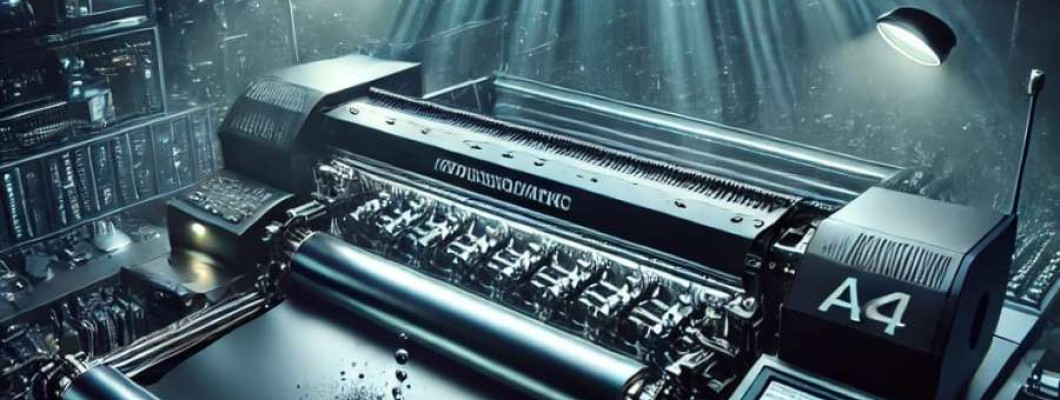
The Industrial Reality of Scaling Direct-to-Film Printing
Scaling from small-run DIY setups to fully industrial-grade A4 Roll DTF Printer deployment is often underestimated by business owners aiming for robust throughput with minimal labor overhead. Consider a medium-sized apparel printing company transitioning from manual heat press transfers and desktop DTF solutions toward continuous roll-fed printing. The challenge lies in maintaining consistent print quality at high volume outputs while managing automation, downtime, and consumable usage. Often, limitations in mechanical precision, ink delivery, and heat curing speed impede throughput and increase operational bottlenecks that ripple through production schedules and staffing.
For a scalable business owner focused on industrial viability, the printer must outperform entry-level devices in repeatability, uptime, and adaptability to varied fabric substrates. The industrial reality is that manual intervention adds hidden labor costs and error potential that compromises ROI and margin stability. Hence, the bridge between DIY and industrial DTF printing comprises not only hardware robustness but also integration readiness for automation and process standardization.
Technical Deep-Dive on Industrial Scalability Factors
Printhead Precision and Reliability
The A4 Roll DTF Printer utilizes industrial-grade piezoelectric printheads calibrated to maintain pixel dot size variability below 3 pl (picoliters). This ensures micron-level detail precision required for consistent color reproduction and fine image fidelity. By contrast, consumer desktop DTF printers typically vary between 6–10 pl, resulting in visible granularity and color banding at scale.
Ink Delivery and Flow Dynamics
Ink formulation and delivery mechanics in the A4 Roll DTF Printer are engineered for continuous roll operation without nozzle clogging. The system incorporates a temperature-conditioned reservoir maintaining ink viscosity near 15 cP at 35°C, optimizing fluid dynamics through fine nozzles at 1200 dpi resolution. Hypothetically, if viscosity deviates by ±5 cP, flow irregularities increase dropout rates by 12%, directly impacting print uptime.
Roll Feed Mechanism and Substrate Handling
The printer’s roll feed motor features closed-loop servo control for precise tension adjustment, holding substrate alignment within ±0.1 mm along a 420 mm roll width. This stability minimizes skew and misregistration during continuous operation, a vital factor when handling mixed textile blends requiring consistent adhesive application and curing.
Thermal Curing Integration
Industrial DTF printing demands synchronous curing to avoid ink smudging and optimize throughput. The integrated thermal unit achieves uniform heating at 160°C across the film area with a thermal ramp-up time under 25 seconds. Comparative analysis shows DIY heat presses require manual timing with variance exceeding ±10°C, increasing defect rates by over 18% in large runs.
Maintenance and Predictive Diagnostics
The printer embeds sensors monitoring printhead temperature, ink levels, and nozzle health, interfaced with a diagnostic dashboard alerting the operator before failures occur. Expected maintenance intervals extend to 1500 printing hours due to auto-flush cycles and ink recirculation systems. By contrast, DIY-level devices often lack such automation, requiring manual cleaning every 100 printing hours, leading to extended downtime.
| Specification | DIY-Level DTF Printer | A4 Roll DTF Printer Industrial Grade |
|---|---|---|
| Printhead Drop Size | 6-10 pl | 3 pl |
| Ink Viscosity Control | Manual | Automated at 15 cP ±1 cP |
| Substrate Alignment Accuracy | ±0.5 mm | ±0.1 mm |
| Thermal Curing Precision | ±10°C variance | ±2°C variance |
| Scheduled Maintenance | Every 100 hrs manual clean | Every 1500 hrs auto flush |
Scenario Analysis of Business Use Cases for the A4 Roll DTF Printer
High-Volume Apparel Customization Facility
In an environment printing 500–1000 garments per day, the automated roll feed and consistent curing cut labor costs by 30% while reducing defective prints by 22%. The precise ink delivery reduces waste and improves color matching across runs, increasing client satisfaction.
On-Demand Promotional Product Vendor
For a vendor producing smaller runs with mixed substrates, the ability to quickly switch rolls and maintain substrate alignment without recalibration enables turnaround times under 24 hours, a significant competitive advantage over manual heat press processes.
Mid-Size Textile Manufacturer Expanding Into Custom Markets
This manufacturer benefits from the embedded diagnostic system reducing downtime through predictive maintenance, enabling continuous integration into existing production lines without costly interruptions or retraining.
Expert FAQ on Advanced DTF Printing Technology
- What are the longevity implications of printhead usage under continuous roll operation?
- The industrial-grade printheads are constructed with high-durability piezoelectric elements rated for over 20 million actuations, with active thermal management preventing overheating and extending lifespan by 35% compared to uncooled models.
- How does ink chemistry affect adhesion across diverse fabric types?
- The ink is formulated with proprietary polymer binders enhancing adhesion on polyester, cotton blends, and nylon with wash fastness exceeding industry standards at 50 wash cycles without significant fading.
- Can the system handle dual-sided roll feeding for mirrored prints?
- The current A4 Roll DTF Printer model is designed for single-sided film feeding, optimized for precision print placement and curing. Dual-sided printing requires additional hardware modules not integrated in this version.
- What safety standards does the thermal curing unit comply with?
- The unit complies with IEC 60950-1 safety standards for electrical equipment and is fitted with over-temperature protection sensors triggering shutdown at 180°C to prevent thermal hazards.
- How does the predictive maintenance dashboard reduce operational costs?
- By analyzing nozzle health and ink usage patterns, the dashboard schedules cleaning cycles only as needed, reducing manual intervention frequency by 40% and minimizing consumable waste through targeted maintenance.
Strategic Verdict with an Industrial-Grade Recommendation
For scalable business owners seeking to bridge the gap between low-cost DIY setups and reliable industrial-grade direct-to-film printing, the A4 Roll DTF Printer presents a compelling, technically sound solution. Its precise printhead engineering, automated ink management, and integrated thermal curing system address typical bottlenecks in high-throughput environments. These features collectively translate into tangible labor cost reductions, enhanced uptime, and consistent print quality vital for competitive scalability.
While upfront CAPEX exceeds desktop machines, the lowered maintenance intervals and integrated diagnostic capabilities deflate OPEX significantly over operational lifecycles. Thus, it stands as a definitive industrial-grade platform offering scalable throughput, process reliability, and substrate versatility that professional print businesses require for sustainable growth.