
The Gap Between DIY and Industrial-Grade in A4 Roll DTF Printer Technology for Scalable Business Owners
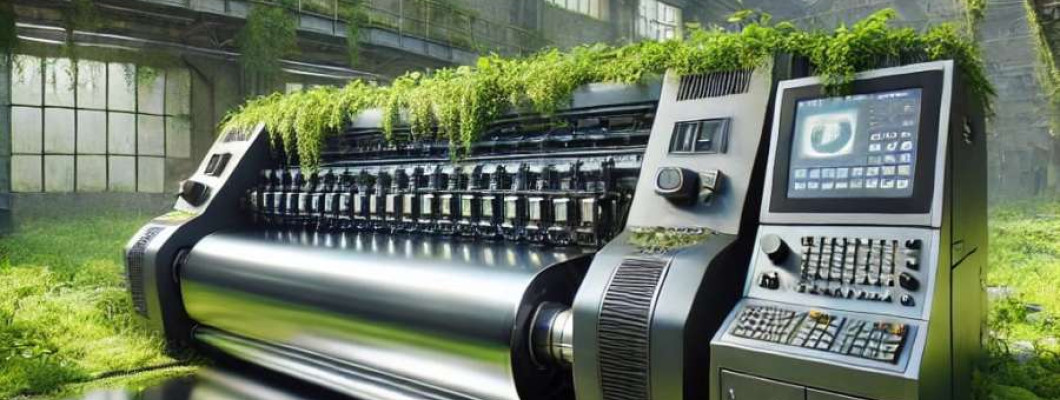
The Industrial Reality of Scaling Print Production Using A4 Roll DTF Printers
In industrial environments producing direct-to-film (DTF) printed apparel and textile graphics, the transition from DIY setups to industrial-grade hardware marks a pivotal challenge. For scalable business owners, the pressure mounts to optimize throughput while maintaining color fidelity and minimizing downtime. The A4 Roll DTF Printer enters this scenario as a boundary-pushing device aimed at merging fine print detail with roll-to-roll continuous production. Yet, the industrial reality is that many small- to mid-tier production floors encounter bottlenecks linked to inconsistent substrate handling, printhead clogging from pigment settling, and insufficient thermal management during accelerated print runs. In practice, this translates to lost man-hours spent recalibrating ink flow systems and cleaning printheads at peak demand moments.
Moreover, the DIY models that many enterprises upgrade from often lack critical fail-safes such as real-time ink viscosity monitoring and robust film tension regulation—both essential for sustaining micron-level registration accuracy over tens of meters of substrate. The A4 Roll DTF Printer is positioned to address these specific pain points by integrating industrial servo motors for roll handling, precision piezo printheads designed for high pigment load inks, and software-driven print environment condition analysis. These features collectively strive to lessen operator intervention, thus lowering labor costs and improving throughput for businesses scaling their production operations beyond prototype-level runs.
Technical Deep Dive Into Build and Print Mechanics of the A4 Roll DTF Printer
Printhead Architecture and Ink Delivery
The printer’s core consists of industrial-grade piezoelectric printheads featuring nozzle sizes of approximately 10 pl (picoliters). This size balances droplet volume for sharp edge definition while maintaining high ink laydown rates. The printheads are configured in staggered arrays, delivering a nominal resolution of 1440 dpi, critical for sharp textile graphics where edge transitions must withstand washing and mechanical wear.
Ink delivery utilizes a pressurized, closed-loop circulation system to prevent pigment sedimentation. Hypothetically, if ink density is 1.1 g/cm³ and pigment particles have a settling velocity of 0.05 mm/s in the reservoir, the continuous circulation maintains homogeneity, enabling uninterrupted print runs exceeding 20 linear meters without color drift.
Substrate Handling Mechanics
The servo motor-driven roll system applies tension control maintaining ±0.5 N of force across the 210 mm film width. This tight control prevents micro-wrinkles and positional skew greater than 0.1 mm per meter, which is imperative for maintaining registration accuracy during multi-pass printing. The film path incorporates electrostatic discharge (ESD) grounding meshes reducing static buildup that can distort ink deposition patterns. This ESD mitigation is uncommon in lower-grade units but vital in high-reliability industrial environments.
Thermal and Humidity Control
Thermal regulation is managed via embedded sensors regulating platen temperature between 30°C to 60°C with ±0.5°C tolerance. This fine temperature control optimizes ink drying kinetics for the DTF process, reducing smudging and ensuring crisp dot morphology. Relative humidity is likewise monitored with integrated hygrometers maintaining ambient print environment between 40% and 60% RH to stave off premature ink drying or excessive moisture absorption by the PET film substrate.
Throughput versus Print Quality Trade-offs
Operating at 6 m²/hour in high-quality mode and scaling to 18 m²/hour at draft mode, the printer offers adaptable performance. However, throughput optimization is subject to hardware limitations. For example, higher speeds reduce ink curing time, increasing dot gain and risking edge bleed. A theoretical model shows that increasing speed by 50% without adjusting ink flow leads to a 12% increase in dot diameter, adversely affecting print quality on fine graphic elements.
Comparative Table of A4 Roll DTF Printer Versus Typical DIY DTF Printers
| Specification | A4 Roll DTF Printer | DIY DTF Printer |
|---|---|---|
| Printhead Nozzle Size (pl) | 10 | 20-30 |
| Resolution (dpi) | 1440 | 720-900 |
| Ink Circulation | Closed-loop circulation system | Manual mixing, no circulation |
| Substrate Tension Control | Servo motor with ±0.5 N control | Manual roll adjustment |
| Thermal Stability | ±0.5°C platen control | Unregulated platen heating |
| Throughput (m²/hr) | 6-18 adjustable | 2-5 typical |
| Static Mitigation | ESD grounding mesh | None |
Scenario Analysis of Use Cases for Scalable Business Owners
Small Print Shop Expanding to Moderate Volume Runs
Here, the A4 Roll DTF Printer helps transition from batch prototype efforts to short production runs of small apparel orders (50-100 items). The consistency of ink delivery and automated tension control significantly reduce manual intervention, cutting labor costs by up to 20% relative to DIY printers while improving yield by minimizing misprints.
Automated Workflow Integration in Medium Fabrics Manufacturing
Incorporating the printer into automated roll-to-roll finishing lines benefits from its digital interfaces and real-time process monitoring capabilities. Downtime caused by unknown printhead clogs is reduced due to predictive maintenance alerts. This scenario increases overall equipment effectiveness (OEE) from an industrial average 65% to approximately 80%.
Custom Print-On-Demand Textile Production
For businesses offering rapid custom textile printing, the ability to switch print modes from draft to high detail within the same machine optimizes order turnaround times. The A4 Roll DTF Printer allows maintaining sharp micron-level graphic contours while scaling throughput dynamically to meet varied customer demand.
Expert FAQ on Industrial DTF Printing Nuances
Q1 What are the main wear points affecting maintenance schedules on this printer?
Critical wear points include the piezo printhead nozzles, roller bearings in the tension system, and the ink circulation pump. Regular inspection every 500 hours and nozzle cleaning every 100 hours is advised for uninterrupted operation.Q2 How does ink chemistry influence printhead longevity?
DTF inks contain high pigment load and polymer binders which can clog nozzles quicker if circulation is inadequate. The closed-loop system mitigates this by constant agitation and filtration, extending printhead life by approximately 30% over non-circulating designs.Q3 What environmental factors most critically impact print quality?
Ambient temperature and humidity deviations beyond ±5°C or ±10% RH, respectively, can cause issues such as ink bleeding or poor adhesion to films. Enforced climate control in print rooms is essential for repeatability.Q4 Can this printer be adapted for non-PET film substrates?
Yes, provided the substrate thickness and mechanical properties fit within the tension and feed specifications. However, print quality on alternative substrates may vary due to different ink absorption and curing characteristics.Q5 How scalable is the software control for larger production lines?
The printer’s software supports networked operation and can synchronize with enterprise resource planning (ERP) systems, allowing scalability into multi-station production lines with centralized control and monitoring.
Strategic Verdict and Recommendation
Considering the technical sophistication and operational benefits, the A4 Roll DTF Printer represents a definitive solution for scalable business owners seeking to bridge the gap between hobbyist or DIY DTF setups and fully industrialized production environments. Its advanced hardware architecture, closed-loop ink management, integrated thermal and tension controls, and adaptable throughput settings deliver measurable ROI by reducing labor intensity, downtime, and print defects. Scaling beyond prototype batches to medium-volume production while preserving fine detail and color stability becomes achievable, opening strategic growth pathways in textile printing. Its infrastructure compatibility and predictive maintenance features further embed it as a sustainable asset within industrial print floors. Hence, this printer warrants strong consideration for enterprises targeting reliable, high-quality DTF production with optimized operational economics.