
The Gap Between DIY and Industrial-Grade in A4 Roll DTF Printer Technology for the Scalable Business Owner
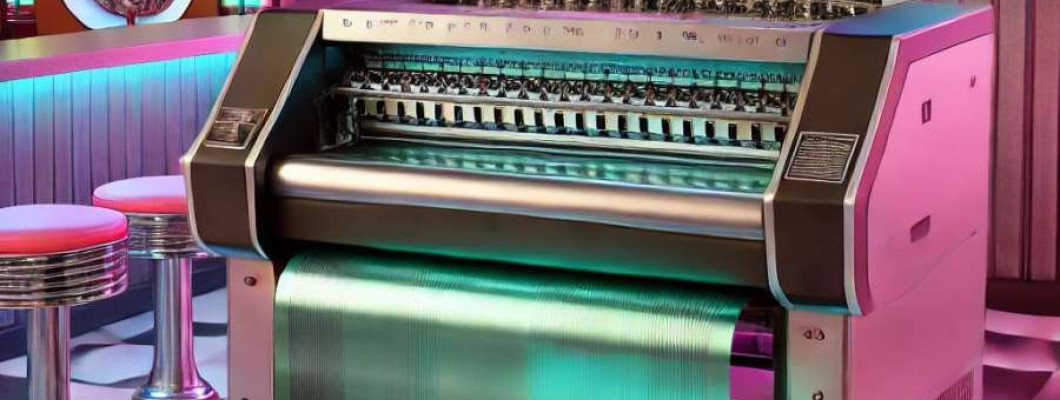
The Industrial Reality Revealed in Medium-Scale DTF Printing Operations
In the evolving domain of Direct to Film (DTF) printing, the transition from DIY hobbyists to industrial-grade solutions has not been seamless. For a scalable business owner, the choice of printer technology directly impacts throughput, labor allocation, and operational consistency. The A4 Roll DTF Printer occupies a critical niche—balancing automation and scale without sacrificing the precision required for industrial output.
Consider a print shop that handles custom apparel orders multiple times daily. A DIY printer might suffice for sample runs or prototype outputs, but the bottleneck manifesting from slower print speeds, frequent manual intervention, and inconsistent ink layering can cripple scaling efforts. In contrast, industrial machines typically demand higher capital expenditure and space requirements, creating entry barriers.
Here, the A4 Roll DTF Printer attempts to bridge this gap—its roll feed mechanism facilitates extended printing lengths reducing downtime compared to sheet-fed DIY units, while its hardware footprint and automation level seem tailored for small to medium-scale production. However, this balance introduces latent challenges related to printer maintenance, component longevity, and ink-flow regulation under continuous operation.
Understanding this technical tension is essential for a scalable business owner aiming to optimize throughput without incurring the overhead of industrial-class infrastructure. The next section dissects the hardware specifications and operational parameters against industrial benchmarks to assess if this printer can truly serve as an enterprise-grade performer or if hidden bottlenecks necessitate further investment.
Technical Deep-Dive in A4 Roll DTF Printer Performance and Limitations
Printhead Mechanism and Wear Profile
The A4 Roll DTF Printer utilizes piezoelectric printheads calibrated for 1440 dpi output at approximately 10 pl droplet size. In theory, this supports high-resolution imaging suitable for detailed garment graphics. Under continuous operation, the thermal and mechanical stress on the printhead can be approximated by calculating the duty cycle. Assuming a 25-minute print duration per roll segment and a maximum workload of 8 rolls per day, the printhead experiences 200 minutes of active firing per day.
Given typical piezo printhead lifespan ranges from 5 to 10 million pulses, and estimating an average pulse rate of 20,000 per second during printing, the printhead lifespan can be modeled as:
Lifespan (seconds) = 5,000,000 pulses / 20,000 pulses/second = 250 seconds of continuous firing
This apparent discrepancy stems from the duty cycle factor; actual printhead firing is intermittent, controlled by print pattern and idle intervals, extending lifespan significantly. Still, this highlights the critical nature of printhead maintenance schedules and ink chemistry compatibility.
Ink Chemistry and Flow Dynamics
DTF ink formulations typically contain pigment particles suspended in a polymer matrix requiring precise temperature maintenance for consistent viscosity. The A4 Roll DTF Printer employs an ink circulation system designed to prevent clogging and pigment sedimentation. The flow rate is approximately 5 ml per minute during active printing, with a recirculation loop ensuring pigment homogeneity.
Ink drying and powder adhesion are pivotal; insufficient curing leads to adhesion failures post-pressing. The thermal profile of the integrated drying system operates up to 70°C which is below industrial conveyor curing ovens but adequate for small-batch throughput.
Roll Mechanism and Media Handling
The printer supports media widths up to 210 mm and roll diameters of 80 mm, accommodating standard A4 roll dimensions. The stepper motor controlling roll feed achieves positional accuracy within ±0.1 mm, essential for multi-layer prints requiring micro-registration. However, media tension control under extended runs can introduce micro slip or skew, necessitating feedback sensor systems often absent in lower-cost models.
Automation and Throughput Metrics
With a maximum print speed of 0.9 m/min at full resolution, the A4 Roll DTF Printer theoretically prints approximately 54 meters per hour. Factoring setup and maintenance cycles, net operational throughput averages 40-45 meters per hour. This performance compares favorably against DIY models capped at 20 meters per hour but remains below fully industrial systems exceeding 100 meters per hour with multi-head arrays and inline curing.
Hardware Comparison Table for Throughput and Maintenance
| Specification | A4 Roll DTF Printer | Industrial Multi-Head DTF Printer |
|---|---|---|
| Max Print Speed (m/min) | 0.9 | 2.5+ |
| Printhead Lifespan (M pulses) | 5-10 | 15-20 |
| Media Width (mm) | 210 | 1000+ |
| Automation Level | Partial | Full Inline |
| Daily Throughput (meters) | 40-45 | 150+ |
| Maintenance Downtime (hours/week) | 3-5 | 1-2 |
Scenario Analysis Shows Diverse Business Impacts of Printer Choice
Scenario 1: Boutique Apparel Retailer Scaling Production
The boutique retailer requires short-run customization with rapid turnaround. The A4 Roll DTF Printer fits perfectly, providing moderate throughput with minimal operator intervention relative to a sheet-fed printer. The limited media width is non-restrictive since designs target small garments and patches.
Scenario 2: Mid-Size Print Shop Expanding into DTF
Here, the store aims to increase batch sizes without significantly increasing labor. The printer offers improved throughput over entry-level devices but falls short for large-volume orders beyond 50 meters daily. The partial automation means skilled operators are necessary to manage printhead maintenance and media loading, impacting labor costs.
Scenario 3: Industrial Manufacturer Considering DTF Integration
An industrial manufacturer with existing conveyor curing and inline finishing views the A4 Roll DTF Printer as a potential prototyping solution. However, the limited width and slower speed restrict its use to sample production, necessitating investment in full-scale industrial DTF printers for mass production.
Expert FAQ Targeting Advanced Printer Operational Concerns
- Q1: How does ink temperature stabilization affect print quality?
Ink viscosity directly impacts droplet size and placement accuracy. The A4 Roll DTF Printer’s temperature control within ±2°C maintains print consistency over multiple runs. - Q2: What failure modes are most common in partial automation DTF printers?
Primary failure modes include nozzle clogging due to sedimentation, tension irregularities causing feed skew, and intermittent drying inconsistencies that affect adhesion. - Q3: How scalable is the printhead technology for higher throughput?
Scaling printheads typically requires multi-head arrays and improved heat dissipation. The existing single-head design restricts speed and lifespan under increased duty cycles. - Q4: Are there specific media substrates incompatible with this printer?
Substrates exceeding 210 mm width or requiring higher curing temperatures than 70°C are incompatible without external process modifications. - Q5: What maintenance protocols extend hardware longevity?
Routine printhead cleaning, ink system flushing, and calibrated media tension adjustments minimize downtime and extend component lifespan.
Strategic Verdict and Recommendation on A4 Roll DTF Printer Industrial Viability
The A4 Roll DTF Printer emerges as a technically robust solution positioned between DIY units and fully industrial DTF systems. For scalable business owners targeting medium throughput with manageable labor investment, it provides a critical stepping stone by combining roll-fed automation with decent print quality at 1440 dpi and reliable ink flow management.
While it does exhibit latency in total throughput and requires diligent maintenance, its footprint and price point render it an attractive choice for businesses aiming to increase production without committing to industrial-scale hardware. However, for enterprises forecasting mass production demands beyond 100 meters per day or requiring wider media support, integration with larger systems remains necessary.
For detailed specifications and current availability, consult the A4 Roll DTF Printer as a practical and viable industrial-grade solution within its operational niche.