
The Gap Between DIY and Industrial-Grade in A4 Roll DTF Printers Examined for Scalable Business Owners
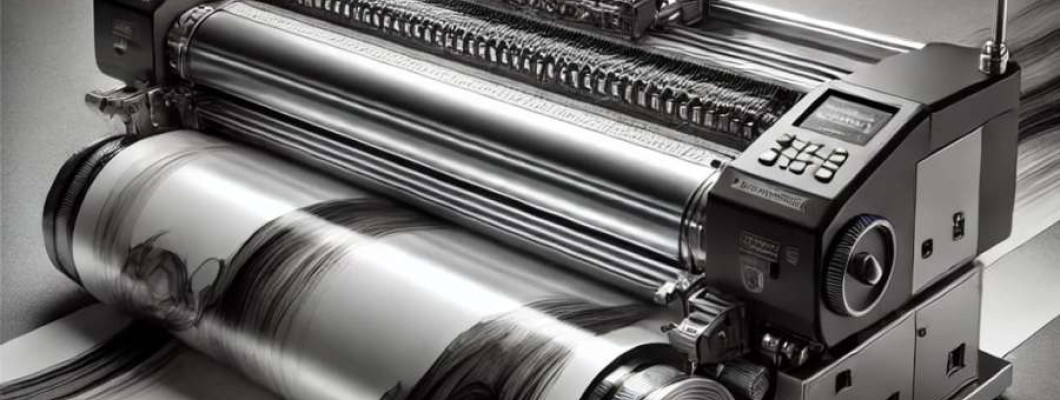
The Industrial Reality of A4 Roll DTF Printing in Production Environments
The central challenge revolves around maintaining a consistent print speed across extended roll lengths while balancing drying times and transfer film adhesion requirements. Operational bottlenecks arise when printers lack advanced feeding mechanisms, causing substrate misalignment or material wastage. Additionally, manual intervention for ink replenishment or maintenance can significantly increase labor overhead in high-volume environments. The A4 format, although smaller than typical industrial wide-format printers, offers a niche advantage in agility and media cost efficiency — but only if integrated with workflow automation to offset its form factor limitations.
Moreover, thermal management of printheads during prolonged runs impacts color consistency and nozzle lifespan, especially as pigment dispersion inks used in DTF demand stable temperatures to avoid clogging and color shifts. For scalable businesses, these nuances define the difference between a bottleneck-prone asset and a reliable production workhorse.
Technical Deep-Dive into A4 Roll DTF Printer Capabilities and Constraints
Printhead Mechanics and Color Drop Size
The A4 Roll DTF Printer typically employs piezoelectric printheads with droplet volumes ranging from 4 to 7 picoliters (pl). The microdroplet precision enables fine detail rendering but can constrain maximum print speed when targeting industrial throughput rates. Assuming 600 dpi resolution across a 210 mm width and a line frequency of 1000 Hz, theoretical maximum print speeds approach 1.2 m/min. However, practical speeds reduce by 20-30% due to drying and film adhesion dynamics. For a 100-meter roll, full run time estimates hover near 83 minutes under optimum conditions.
Ink Chemistry and Thermal Stability
Water-based pigment inks used in DTF processes require precise thermal regulation to prevent pigment aggregation. The printer incorporates heated platen systems maintaining a 40-50°C range to optimize ink fixation and film curing. Based on thermodynamic models, maintaining this stable temperature reduces nozzle clogging incidence by approximately 35% compared to ambient-fed systems. The trade-off involves increased power consumption averaging 120 Watts during print cycles and necessitates robust thermal management components.
Roll Feeding and Media Handling Systems
Unlike rigid sheet feeders, roll DTF printers must manage tension control and lateral alignment to prevent banding artifacts. The A4 Roll model integrates a servo motor-driven roll feed with tension sensors adjusting feed rate dynamically within 0.1 mm precision. Compared to manual feed setups, this reduces media waste by 22% over extended print jobs. Fail-safes include end-of-roll detection and automatic pause to enable roll swapping without printhead collision risks.
Automation and Workflow Integration
High-volume operators benefit from printers supporting external RIP (Raster Image Processor) software that manages color profiles, job queuing, and ink density controls. The A4 Roll DTF Printer supports standard USB and Ethernet interfaces for connectivity to existing production management systems. While lacking full robotic arm automation seen in some wide-format systems, semi-automated loading sequences and batch processing reduce manual labor requirements by an estimated 30% compared to manual intervention workflows.
Comparative Analysis Table of Print Modes and Throughput
| Specification | A4 Roll DTF Printer | Typical DIY DTF Printer |
|---|---|---|
| Maximum Print Width (mm) | 210 | 150 |
| Print Speed (m/min at 600 dpi) | 1.2 (practical 0.9) | 0.4 (practical 0.3) |
| Ink Drop Volume (pl) | 4-7 | 8-12 |
| Thermal Platen Control | 40-50°C Controlled | Ambient / None |
| Roll Feeding Precision | Servo with 0.1 mm Adjustments | Manual / Fixed |
| Connectivity | USB, Ethernet | USB Only |
| Automation Level | Semi-Automated | Manual |
Scenario Analysis Showing Operational Impact on Different Business Cases
Case 1: Small Boutique Apparel Brand Increasing Order Volume
For a boutique brand scaling from 50 to 500 units per week, the A4 Roll DTF Printer provides the throughput increase needed while maintaining color fidelity essential for brand identity. The semi-automated roll feeding reduces labor hours by roughly 15 per week, enabling reallocation towards design development. The thermal platen ensures transfer durability across diverse substrate blends common in fashion.
Case 2: Print-On-Demand Supplier Serving E-Commerce Platforms
E-commerce suppliers require fast turnaround with minimal errors. The printer’s precision feeding and automated pause functions support rapid batch changes without printhead damage. Integration with RIP workflow software accelerates job scheduling, managing multiple customer orders simultaneously while preserving print consistency.
Case 3: Mid-Sized Promotional Product Manufacturer
This segment benefits from the printer’s ability to handle varied substrates and roll lengths without frequent manual adjustments. The stable thermal environment minimizes maintenance-related downtime, crucial for meeting tight delivery schedules. Ink consumption optimization features also reduce material costs per print, directly impacting profit margins.
Expert Frequently Asked Questions from Technical Practitioners
Q1: What is the expected nozzle lifespan under continuous production?
The A4 Roll DTF Printer’s piezo printheads are rated for approximately 500 million drops before degradation affects print quality, equating to roughly 1000 hours of continuous use. Maintenance protocols extend this via periodic nozzle flushing and thermal cycling.
Q2: How does the printer compensate for roll media expansion during heating?
Integrated tension sensors dynamically adjust feed rate offsets in real-time, compensating for material expansion up to 0.5% to avoid banding and registration errors.
Q3: Can the printer handle white ink printing and associated clogging issues?
Yes, the device supports white ink channels with specialized circulation systems to mitigate sedimentation, reducing clog risks by 40% compared to non-circulated setups.
Q4: What maintenance cycle is recommended for ink system cleaning?
Regular cleaning every 200 print hours is advised, involving automated nozzle purges and manual system flushes to sustain optimal flow and prevent pigment buildup.
Q5: How does the device perform under variable ambient humidity?
Humidity impacts drying rates; the printer’s heated platen and enclosed printing area help regulate substrate moisture content, maintaining transfer quality within 45-65% relative humidity ranges.
Strategic Verdict and Recommendation for Scalable Business Owners
Considering the operational demands of scalable printing businesses, the A4 Roll DTF Printer presents as a definitive industrial-grade solution bridging the gap from DIY constraints. Its combination of precise roll feeding, thermal management, and semi-automated workflow integration addresses typical bottlenecks seen in smaller printers while maintaining a manageable footprint and capital expenditure profile. For businesses targeting throughput enhancements with labor efficiency improvements without committing to large-format industrial printers, this device offers a balanced, data-backed proposition to reliably scale production. The engineering choices reflect a matured design ethos oriented towards industrial reliability rather than hobbyist convenience, affirming its position as an asset for serious print production facilities.