
The Gap Between DIY and Industrial-Grade in A4 Roll DTF Printing for Maintenance Leads
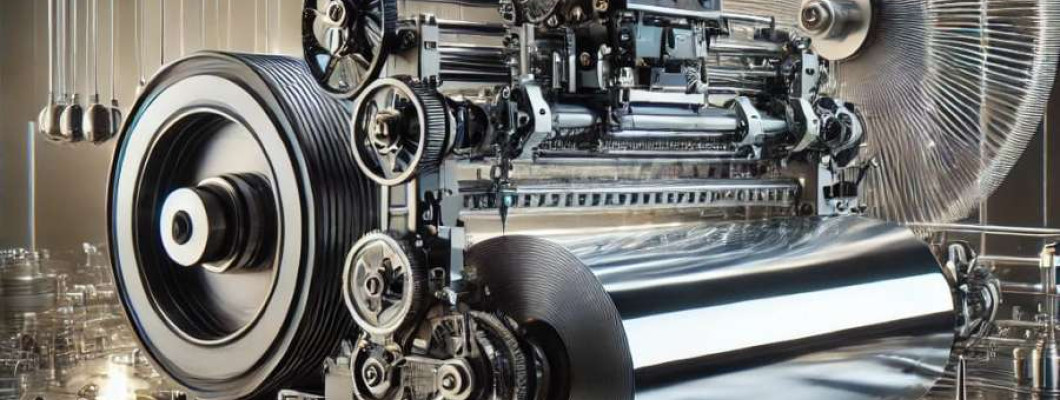
The Industrial Reality of Operating an A4 Roll DTF Printer in High-Precision Environments
In industrial printing settings, the transition from desktop or DIY roll Direct to Film (DTF) printers to robust, enterprise-grade equipment reveals multiple operational hurdles. Maintenance leads face daily challenges balancing printhead longevity, ink chemistry consistency, and uptime reliability. Unlike enthusiast-level devices, industrial-grade A4 Roll DTF printers are expected to operate with minimal downtime under continuous load while maintaining micron-level precision across variable substrates. Printhead nozzles, commonly sized around 2-5 picoliters (pl), are highly sensitive to clogging due to pigment ink particle aggregation or improper fluid viscosities. Without proactive filtration and cleaning protocols, print quality degradation and mechanical wear accelerate, leading to costly maintenance cycles.
The complexity escalates during high-throughput production runs where the printer’s internal mechanisms—including the capstan rollers and tensioners designed to advance the roll of PET film—are subjected to mechanical stress. The accumulation of ink residue and particulate can cause misfeeds or film tearing. Moreover, ambient environmental factors such as temperature fluctuations and humidity levels influence ink drying behavior, affecting adhesion and print density. Maintenance engineers must therefore anticipate these operational bottlenecks, implementing advanced diagnostics and preventative servicing plans to ensure consistent output quality and machine uptime.
Technical Deep-Dive Into Printhead Physics and Ink Chemistry Management
Printhead Design and Failure Modes
Modern roll-to-roll DTF printers typically employ piezoelectric or thermal inkjet printheads with nozzle arrays between 600 and 1200 dpi resolution. Each nozzle ejects ink droplets in the range of 2-5 pl, requiring precise control of drop velocity (approximately 5-8 m/s) and droplet placement accuracy (within 10 microns). Failure modes include nozzle clogging, misfiring, and mechanical abrasion. Printhead lifespan is often quantified in billable prints or operating hours, with OEM specifications usually recommending replacement or recalibration after 200-400 operational hours under industrial conditions.
Ink Viscosity and Particle Suspension Physics
DTF inks contain pigment particles suspended in a polymer binder matrix with a typical viscosity range of 12-18 cP at 25°C. Maintaining the homogeneity of pigment suspensions requires constant agitation or recirculation to prevent sedimentation, which can obstruct micro-channels in the printhead orifices. Chemical stability under thermal cycling (typically 20-40°C) ensures consistent droplet formation. Analytical techniques such as rheometry and dynamic light scattering are essential for quality control.
Mechanical Stress and Roll Film Handling
Roll-to-roll feed mechanisms apply tension forces roughly between 0.5 to 2 N to the PET film to maintain smooth motion without deformation. The precision of roll diameter compensation algorithms directly affects media alignment and registration accuracy. Mechanical wear of rollers, bearings, and sensors leads to error accumulation manifesting as banding or ghosting in prints.
Environmental Conditioning and Operational Stability
Ink curing via thermal or UV methods requires regulation of ambient temperature within ±2°C and humidity between 40-60% RH to prevent ink spread or adhesion failures. Uncontrolled environmental conditions accelerate drying inconsistencies, risking premature head clogging or substrate warping.
Comparative Data Table of DIY vs Industrial-Grade A4 Roll DTF Printers
| Feature | DIY A4 Roll DTF Printers | Industrial-Grade A4 Roll DTF Printers |
|---|---|---|
| Printhead Resolution | 600-720 dpi | 1200 dpi and above |
| Ink Particle Stability | Limited recirculation, manual agitation | Active recirculation with filtration systems |
| Operational Uptime | 2-4 hours/day | 16-24 hours/day continuous |
| Maintenance Interval | Daily cleaning, frequent clogging | Scheduled servicing every 50 hours |
| Environmental Controls | Minimal or none | Integrated temperature/humidity control |
| Roll Film Handling | Basic tension control | Automated tension and alignment systems |
Scenario Analysis for Industrial Maintenance Applications
Scenario 1 Printing Large Batches of Uniform Textile Graphics
The printer must maintain consistent print density and registration over extended runs exceeding 100 meters of film. Automated maintenance alerts for nozzle health and ink filtering optimize uptime, reducing manual intervention by maintenance staff.
Scenario 2 Handling Diverse Substrates Including Heat-Sensitive Materials
Precision control of printhead temperature and ink curing timing reduces substrate deformation and ensures adhesion quality. Maintenance leads must monitor printhead thermal profiles to avoid overheating and nozzle degradation.
Scenario 3 Integrating with Automated Finishing Lines
Effective synchronization between the printer and cutting or pressing stations requires tight control over media advance speeds and film tension feedback. Maintenance routines must validate sensor calibrations regularly to prevent downtime due to misfeeds or jams.
Expert FAQ on A4 Roll DTF Printer Maintenance Challenges
1. What are the most common causes of nozzle clogging in industrial DTF printers?
Primarily pigment sedimentation, ink polymerization in stagnant ink lines, and particulate contamination. Regular filtration and head cleaning cycles alleviate these issues.
2. How can maintenance teams monitor printhead health in real time?
Using embedded nozzle diagnostics, including waveform analysis and drop volume consistency checks. Some printers integrate optical sensors for immediate defect detection.
3. What metrics best predict printhead end-of-life?
Drop volume deviation beyond ±10%, increased firing latency, and physical wear detected via scanning electron microscopy on nozzle plates during scheduled inspections.
4. How critical is environmental control in maintaining print quality?
Extremely critical—temperature and humidity fluctuations directly impact ink rheology and substrate interaction, influencing drying time and adhesion strength.
5. What maintenance strategies extend roller assembly longevity?
Routine lubrication with anti-wear compounds, cleaning to remove ink residue, and calibration of tension sensors every 100 hours minimize mechanical failure rates.
Strategic Verdict and Recommendation
The A4 Roll DTF Printer exemplifies a highly capable industrial-grade direct to film solution addressing the fundamental gaps present in DIY units. Its design accommodates the rigorous demands of continuous production with advanced printhead management, precision ink chemistry control, and robust film handling systems. For maintenance leads overseeing high-precision printing environments, this printer offers measurable uptime improvements and predictable servicing cycles, validating its role as a definitive industrial asset. Organizations aiming for scalable, reliable DTF printing deployment will find this model indispensable for integrating sophisticated preventive maintenance frameworks and achieving consistent, high-quality output without operational compromises.