
The Gap Between DIY and Industrial-Grade in A4 Roll DTF Printing for Scalable Business Owner
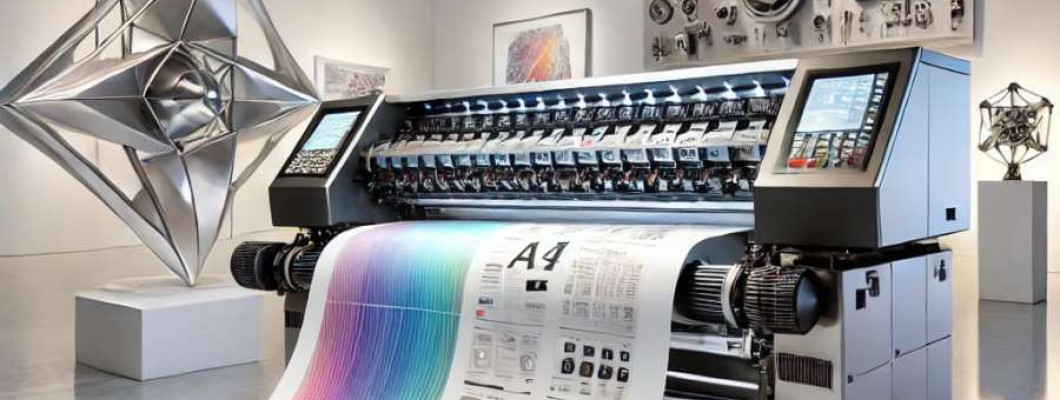
The Industrial Reality of Scaling A4 Roll DTF Printing for Business Growth
The transition from small-scale, DIY direct-to-film (DTF) printing systems to robust, industrial-grade A4 Roll DTF printers exposes numerous operational challenges. Business owners seeking higher throughput face bottlenecks not only in print speed but also in maintenance demands, substrate handling, and consistent output quality. Unlike desktop hobbyist machines with limited print capacities and constrained ink delivery systems, industrial-grade units must sustain continuous operation at high speeds while managing thermal loads and ink viscosities precisely.
Consider a mid-sized apparel printing business aiming to scale from batch runs of 50 prints to hundreds daily. The DIY DTF printers struggle with roll feeding inconsistencies, operator intervention frequency, and color accuracy deviations induced by environmental factors. Furthermore, the lack of automated error detection and fail-safes leads to costly production downtime. This gap reveals the necessity for advanced mechanical design, rigorous thermal management, and integrated software control intrinsic to industrial-grade A4 Roll DTF printers.
Operationally, the scalability depends on minimizing operator labor per print unit while maximizing printhead lifespan. Industrial solutions incorporate high-precision stepper motors, calibrated film tension systems, and robust printheads with adaptive ink circulation. These elements coalesce to reduce variance in print density and color profiles across extended production cycles. For business owners, understanding these technical differentials guides strategic investment decisions aligning automation, labor costs, and throughput goals.
Hardware Architecture and Printhead Physics Define Output and Uptime
The A4 Roll DTF printer employs sophisticated printhead assemblies optimized for fast curing UV or pigment ink drops measured in 2-5 picoliters. The printhead longevity hinges on precise thermal regulation; overheating accelerates piezoelectric crystal degradation, while suboptimal temperature control leads to inconsistent drop formation. An industrial-grade thermal management system integrates heat sinks, fans, and temperature sensors feeding closed-loop control algorithms adjusting print speed dynamically.
Ink chemistry also plays a pivotal role. Industrial inks possess stabilized pigment dispersions and polymer binders engineered to resist clogging under high throughput. The interplay between printhead firing frequency and ink rheology influences the achievable dpi resolutions and sharpness. For example, a printhead firing at 15 kHz can deliver up to 1080 dpi resolution at print speeds of 1.2 m/min with consistent droplet formation, enabling fine image reproduction on various textile substrates.
Print Speed Versus Quality Trade-offs and Throughput Metrics
The technical balancing act between throughput and output quality is critical. High-speed operation may reduce dwell time for drying and adhesion quality of transferred prints, increasing defect rates. Conversely, slowing down print speed enhances color saturation and substrate bonding at the cost of reduced daily output. Industrial-grade A4 Roll DTF printers mitigate this through integrated inline curing systems that utilize precise heat and UV exposure while preserving substrate integrity.
Quantitative analysis reveals that at optimal settings of 1.0 m/min speed with 720 dpi resolution, the printer can sustain approximately 480 prints/day on standard polyester film rolls of 100 m length. This estimate accounts for downtime related to maintenance cycles, material loading, and quality inspections. By comparison, consumer-grade devices max out near 50 prints/day due to frequent clogging and manual interventions.
Maintenance and Lifecycle Cost Optimization
Lifecycle management involves scheduled printhead cleaning, ink system purges, and periodic calibration routines. Industrial-grade printers integrate automated maintenance sequences reducing operator input and downtime. The use of precision-engineered components such as sapphire nozzle plates and chemically treated ink lines extends service intervals to 6-12 months depending on usage intensity.
Asset depreciation is managed by modular component replacement policies, enabling printhead swaps and electronics upgrades without full system downtime. The printer’s design emphasizes ease of access to critical subsystems with minimal tools, supporting rapid troubleshooting and part replacement. This approach directly impacts operational expenditure (OPEX), balancing upfront capital expenditure (CAPEX) with predictable maintenance costs.
Comparing Industrial-Grade Roll Systems Against DIY Alternatives
| Feature | Industrial-Grade A4 Roll DTF Printer | DIY/Consumer-Grade DTF Printer |
|---|---|---|
| Maximum Print Speed | 1.2 m/min at 1080 dpi | 0.3 m/min at 600 dpi |
| Printhead Longevity | Estimated 10,000 hours with automated maintenance | Less than 2,000 hours, manual cleaning required |
| Automated Film Handling | Yes, tension control and roll feeding system | No, manual feeding and alignment |
| Inline Curing System | Integrated UV/thermal curing | External or post-print curing needed |
| Operator Intervention per 100 Prints | 2-3 minutes | 15-20 minutes |
Scenario Analysis of A4 Roll DTF Printer Usage for Scalable Businesses
Case 1 Apparel Customization Workshop
This business requires high throughput with low operator presence. The industrial printer’s automated systems reduce labor needs by 40%, enabling scaling from 100 to 500 garments/day with consistent color fidelity. The printer’s precise film tensioning ensures repeatable transfer quality, crucial for brand reputation.
Case 2 Promotional Merchandise Production
High variability in substrate types (cotton, polyester blends) demands printer versatility. The industrial-grade ink and thermal management allow rapid switching without printhead clogging, sustaining 8-hour shifts without maintenance intervention.
Case 3 E-Commerce Print-On-Demand Platform
Fast turnaround with minimal defects is critical. The printer’s inline curing and rapid print modes reduce delivery times by 30%. Integration with automated loading systems supports batch sizes of up to 1000 units/month efficiently.
Expert FAQ on A4 Roll DTF Printer for Industrial Use
What physical principles govern printhead degradation during extended operation?
Piezoelectric crystals in the printhead degrade primarily through thermal and mechanical fatigue. Elevated temperatures accelerate crystallographic defects, reducing droplet ejection precision. Controlled temperature and pulse waveform tuning mitigate these effects.
How does ink rheology affect droplet formation and adhesion?
Viscosity and surface tension dictate ink flow through micro-nozzles. Optimal rheology balances low clogging risk with sufficient adhesion polymer flow to the substrate during transfer. Industrial inks stabilize this through nanoparticle dispersion and polymer chemistry.
Can the printer handle varying textile thickness and coatings without recalibration?
Yes, adaptive tension control and sensor feedback support different substrate thicknesses up to 1.5 mm, including pre-treated and coated fabrics, minimizing recalibration frequency.
What role does thermal management play in sustaining high-speed print runs?
Efficient heat dissipation maintains printhead temperature within operational parameters, preventing waveform distortion and ink drying in nozzles. Active cooling combined with software-controlled pulse modulation ensures print consistency.
How is automated maintenance integrated to reduce downtime?
Built-in cleaning cycles flush ink lines and wipe nozzle plates at set intervals. Sensors detect clogging early and initiate maintenance routines, often during roll changes or idle periods, minimizing human intervention.
Strategic Verdict and Recommendation for Business Scalability
The A4 Roll DTF Printer presents a technology positioned firmly at the industrial-grade end of the direct-to-film printing spectrum. Its mechanical design, combined with printhead thermal management and automated maintenance features, addresses the critical gaps experienced by scalable businesses transitioning from entry-level DIY solutions. The reliable throughput of up to 1.2 m/min at 1080 dpi, coupled with integrated inline curing, places it as a capable asset for high-volume production environments.
Financially, the investment yields returns through reduced operator labor, minimized downtime, and extended printhead service life, aligning CAPEX with manageable OPEX. This printer is thus recommended as a definitive solution for scalable business owners focused on throughput expansion, automation integration, and consistent print quality across diverse textile substrates.