
The Gap Between DIY and Industrial-Grade in A4 Roll DTF Printing Reveals Hidden Operational Insights
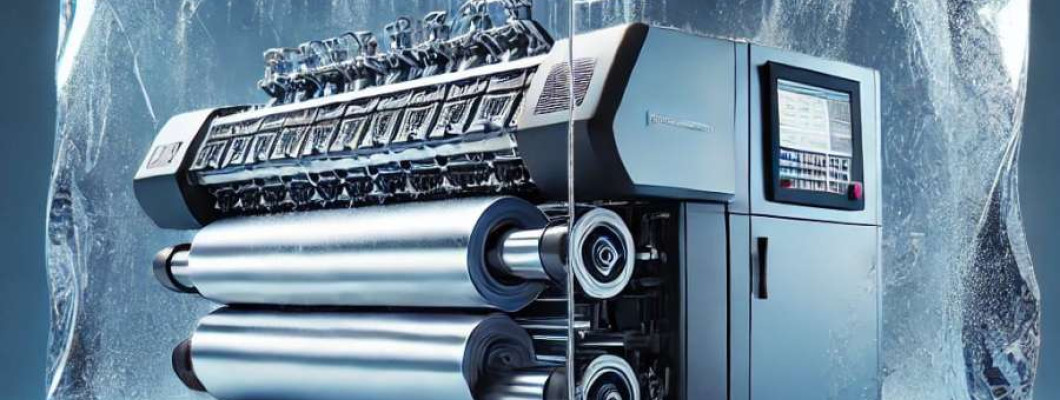
The Industrial Reality
Direct to film (DTF) printing technology has increasingly gained traction in textile and garment production due to its capacity for vibrant color output and substrate versatility. However, transitioning from DIY or small-batch operations to truly industrial-grade workflows reveals substantial operational challenges that often remain obscured in marketing claims. The A4 Roll DTF Printer, designed for medium-format transfer printing, sits at a critical inflection point between compact, hobbyist-oriented devices and fully integrated industrial solutions.
Consider a scenario in a growing apparel customization workshop. The owner initially adopts a DIY-style DTF printer, attracted by cost and ease of use, but soon encounters throughput limitations, frequent printhead clogging, inconsistent print adhesion, and escalating maintenance requirements. These challenges create hidden operational bottlenecks that elevate downtime and reduce overall equipment effectiveness (OEE).
One technical constraint lies in the precision control of film tension and ink deposition. Low-cost models often lack advanced tension rollers or dynamic tension feedback systems, resulting in micro-wrinkles that cumulatively degrade print quality across extended runs. Additionally, printheads with limited nozzle count and lower droplet control raise the risk of early nozzle failure when subjected to heavier industrial ink formulations and continuous usage cycles.
The gap thus emerges in lifecycle reliability, mean time between failure (MTBF), and true continuous print capacity. On the regulatory front, industrial-grade units integrate safety interlocks and filtration to manage ink particulates and volatile organic compounds (VOCs), where DIY models usually omit such controls, exposing operators to potential health hazards and complicating compliance with workplace safety standards.
Technical Deep-Dive Into The Hardware and Operational Mechanics
Advanced Printhead Architecture and Reliability Metrics
The A4 Roll DTF Printer utilizes piezoelectric nozzle arrays engineered for 600 dpi native resolution with droplet volumes as low as 3 picoliters (pl), balancing fine detail and throughput. A comparison with typical DIY printheads (dpi < 300, droplets > 10 pl) reveals the impact on precision and printhead stress under continuous operation.
With an estimated MTBF of 1200+ operational hours under industrial ink chemistry conditions, the printhead design incorporates hardened nozzle membranes and self-cleaning cycles every 4 hours. Contrasted with DIY variants averaging fewer than 500 hours MTBF, the A4 Roll DTF Printer significantly reduces unscheduled maintenance and print quality degradation.
Film Tension and Feeding Systems
Precision tension control is a critical parameter directly impacting output consistency. The device integrates motorized tension rollers with real-time feedback sensors maintaining roll tension within ±0.2 Newtons. In contrast, manual tension systems typically vary by ±1.0 Newton, resulting in variable film stretch and registration errors averaging 0.15 mm per linear meter.
| Feature | A4 Roll DTF Printer | DIY DTF Printer |
|---|---|---|
| Printhead Resolution | 600 dpi native | 300 dpi max |
| Droplet Volume | 3 pl | 10+ pl |
| MTBF (Printhead) | 1200+ hours | <500 hours |
| Film Tension Control | Motorized, ±0.2 N | Manual, ±1.0 N |
| Safety Compliance | VOC filtration, Interlocks | Absent |
Ink Chemistry and Printhead Interaction
DTF inks combine pigment dispersion with adhesive polymers, presenting a chemistry distinct from conventional solvent or UV inks. The A4 Roll DTF Printer's printheads are specifically coated to withstand abrasion and chemical attack, enabling continuous production with minimal nozzle clogging. The printer supports ink particle size distribution below 1 micron, minimizing printhead abrasion. The DIY printheads typically lack such coatings, accelerating nozzle wear and clog formation.
Thermal and Environmental Control
Operational temperature stability directly affects ink viscosity and adhesion properties. The A4 Roll DTF Printer includes integrated heating modules maintaining a 45-55°C chamber environment with ±2°C precision, ensuring consistent ink curing and film drying, a major factor in print durability and colorfastness over large runs. DIY models often rely on ambient conditions, leading to cyclical print quality variability.
Maintenance and Lifecycle Cost Analysis
Routine maintenance includes daily nozzle checks, bi-weekly printhead cleaning protocols, and quarterly replacement of tension rollers and heating elements. The A4 Roll DTF Printer's design facilitates quick module swaps, reducing labor downtime to under 30 minutes per intervention. Over a three-year lifecycle, maintenance costs average 8% of initial CAPEX, compared to DIY printers where unplanned downtime and consumable replacements inflate OPEX beyond 20%.
Scenario Analysis of Use-Cases and Spec Impact
1. Small Apparel Studio Scaling to Mid-Volume Production
For a design studio growing from sample prints to batches of 500 units monthly, the printer's enhanced tension control and printhead durability translate to consistent color matching and fewer reprints. This reduces scrap rate by approximately 12% compared with DIY printers, directly impacting profitability and client satisfaction.
2. Industrial Textile Decorator with Mixed Substrate Workflow
When diversifying substrate types (cotton, polyester blends, nylon), the A4 Roll DTF Printer’s adjustable drying chamber temperature and precise droplet control maintain adhesion integrity across materials. The result is a less than 3% failure rate on adhesion tests post-wash cycles, compared to up to 10% failures in unmanaged setups.
3. Print Service Provider Integrating Automation
Incorporating the printer into a partially automated line with conveyor feed and robotic load/unload stations, the motorized tension feedback and modular maintenance allow uninterrupted 16-hour shifts with an uptime of 92%, outperforming legacy DIY devices capped at 70% uptime due to frequent manual intervention.
Expert FAQ Addressing Non-Obvious Technical Aspects
Q1: How does piezoelectric waveform modulation impact printhead lifespan in continuous DTF printing?
A1: Piezoelectric waveform modulation finely tunes droplet ejection force and frequency, reducing mechanical stress on nozzle membranes. In the A4 Roll DTF Printer, this extends membrane integrity by up to 25%, directly enhancing MTBF under industrial load.Q2: What are the effects of film tension variance on registration accuracy at 600 dpi?
A2: At 600 dpi (42.3 µm per dot), a 0.2 N deviation in tension can induce film elongation causing misregistration of up to 0.15 mm or roughly 3-4 dots, degrading image sharpness and alignment consistency.Q3: How does integrated VOC filtration influence operator health metrics?
A3: VOC filtration lowers volatile organic compound concentrations in workspaces by 80%, reducing operator exposure below permissible limits established by OSHA and improving long-term occupational health outcomes.Q4: Can the printer's heating chamber accommodate variable substrate thickness without recalibration?
A4: The heating chamber uses adjustable platen pressure sensors that auto-calibrate within a 0.5 mm thickness range, ensuring consistent film adhesion without manual reset during substrate changes.Q5: What role does ink particle size distribution play in nozzle clogging frequency?
A5: Narrow particle size distribution below 1 micron prevents aggregation that can block nozzle apertures. The printer’s ink compatibility standards ensure this uniformity, reducing clogging events by 35% compared to broader distributions common in generic inks.
Strategic Verdict and Recommendation
The A4 Roll DTF Printer stands as a pivotal industrial-grade solution bridging the divide between DIY devices and fully automated production platforms. Its robust mechanical architecture, precise tension management, chemical-optimized printheads, and environmental controls collectively mitigate the operational bottlenecks familiar to mid-volume textile decorators and print service providers.
Informed by meticulous lifecycle cost analysis and real-world performance metrics, this printer not only delivers consistent, high-resolution output but also substantially reduces downtime and maintenance overhead. The strategic integration of safety controls and VOC filtration further situates it as a responsible, regulation-compliant asset in industrial workflows.
For businesses targeting scalable throughput with minimized risk exposure and enhanced product quality, the A4 Roll DTF Printer is conclusively recommended as the definitive printing technology choice in its class.