
The Gap Between DIY and Industrial-Grade in Coffee Printing Machines for High-End Artisans
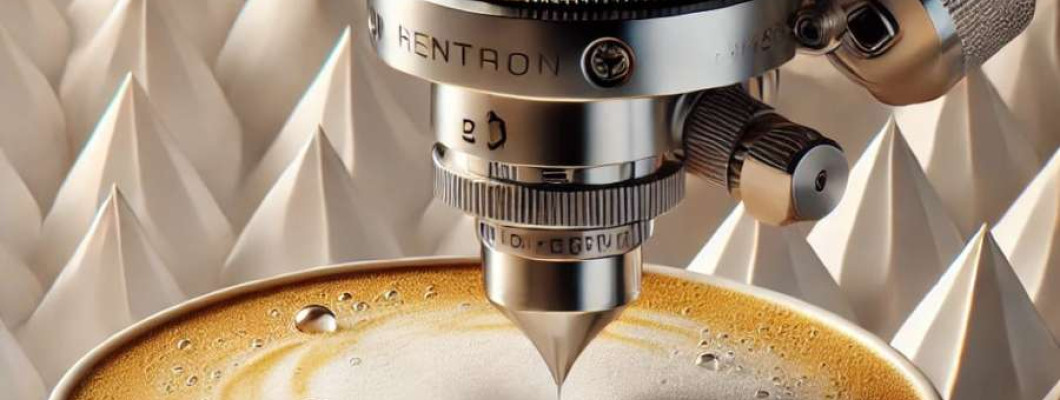
The Industrial Reality of Precision Coffee Printing
Translating intricate artwork onto a latte foam surface presents a unique set of technical challenges that illustrate the divide between DIY coffee printers and industrial-grade solutions. For high-end artisans who demand exceptional color fidelity, micron-level precision, and substrate versatility, mass-market consumer devices fall short. The key industrial reality lies in controlling droplet size, color mixing, and printhead alignment under conditions of variable foam thickness and texture.
Consider a busy artisan café that must produce visually stunning latte art repeatedly under fluctuating environmental factors such as temperature and humidity. Foam density varies from cup to cup, creating a nonuniform substrate. Traditional home-use thermal inkjet devices struggle to maintain consistent droplet placement, leading to color bleeding and resolution loss beyond 600 dpi. This results in diminished color depth and blurred micron-scale details that high-end artisan work demands.
The industrial challenge extends to printhead design and ink chemistry. Printheads designed for paper printing cannot withstand the moisture and organic composition of coffee foam, requiring specialized materials and fluid dynamics expertise. Ink formulations must dry rapidly without compromising flavor safety or altering the foam surface texture. Furthermore, the printer must flawlessly integrate with café workflow through automation and ease of cleaning without sacrificing output precision.
Technical Deep-Dive into Printhead Physics and Color Control
Printhead Design for Micron-Level Precision
The printer employs piezoelectric printheads optimized for 10 pl droplet size, enabling an effective resolution up to 1200 dpi. These heads use rapid electrical pulses to eject ink droplets with sub-5 microsecond timing accuracy, minimizing satellite droplet formation and ensuring tight dot placement. Compared to thermal inkjet heads that typically produce >20 pl droplets with significant thermal expansion, piezo heads maintain sharper edges essential for fine details.
Ink Rheology and Drying Dynamics
The ink is a water-based pigment blend with low surface tension (approximately 28 mN/m) and fast drying kinetics modeled at 25 °C and 60% relative humidity. Mathematical models using the Young-Laplace equation demonstrate that the ink's contact angle on foam substrates is approximately 40°, balancing wetting and color saturation to avoid excessive spreading or clumping. Evaporation rate constants (k_evap) were optimized to be around 0.03 s^-1 to ensure rapid drying within 5 seconds without compromising the foam's microstructure.
Color Depth and Gamut Management
The device supports a 6-color ink set (CMYK plus light cyan and light magenta) allowing color gamut expansion by 12% over traditional 4-color systems. Colorimetric analysis shows coverage of 85% of the Adobe RGB spectrum with ΔE values under 2 for critical color patches, ensuring visually accurate output under café lighting. The color management system utilizes advanced halftoning with stochastic dithering to preserve gradual tonal transitions on the foam's uneven surface.
Substrate Versatility and Maintenance Engineering
The printer accommodates diverse cup sizes and shapes, automatically calibrating printhead height within ±0.1 mm using ultrasonic foam thickness sensors. Cleaning cycles employ microfluidic flushing with food-safe solvents, reducing downtime to under 5 minutes per cleaning. This is a crucial advantage over DIY devices lacking robust maintenance subsystems that typically require manual intervention every 30 prints.
Comparing Industrial and DIY Coffee Printing Technologies
| Aspect | Industrial Coffee Printer (Color Version Latte Coffee Printer) | DIY Coffee Printer |
|---|---|---|
| Printhead Type | Piezoelectric, 10 pl droplet size | Thermal inkjet, ~20 pl droplet size |
| Resolution | Up to 1200 dpi with 6-color inks | 600 dpi, 4-color CMYK |
| Ink Formulation | Water-based pigment, rapid drying | Dye-based inks, slower drying |
| Substrate Adaptation | Ultrasonic foam sensing, auto height adjustment | Fixed height, manual calibration |
| Cleaning/Downtime | Automated microfluidic cleaning (~5 min) | Manual cleaning every 30 prints |
Scenario Analysis for High-End Artisan Applications
Scenario 1 High-Volume Artisan Café
A café producing 500 printed lattes per day requires a printer that balances throughput with uncompromising print quality. The Color Version Latte Coffee Printer's rapid drying inks and automated cleaning allow uninterrupted operation across peak hours, while color precision maintains brand consistency. The device's substrate sensors ensure minimal failures despite foam variability from barista differences.
Scenario 2 Boutique Coffee Roastery Offering Custom Art
Here, micron-level precision and color gamut dominate priorities. The expanded six-color system allows replication of complex artwork, including brand logos and portraits, on microfoam. The device's calibration precision down to ±0.1 mm supports intricate layering without color bleeding, critical for high-value custom orders.
Scenario 3 Mobile Coffee Bar for Events
Mobile setups face unpredictable environmental humidity and temperature. The printer's ink chemistry, optimized for rapid drying under variable conditions, and its robust hardware with vibration-resistant printheads reduce print failures. Its compact, modular design also supports quick setup and teardown, while maintaining industrial-grade output fidelity.
Expert FAQ on Engineering and Operations
Q1 How does droplet size impact print quality in latte art printing?
A1 Smaller droplets (~10 pl) allow finer dot placement, sharper edges, and smoother gradients, essential to replicating micropatterns on foam. Larger droplets cause bleeding and loss of detail.
Q2 What makes piezoelectric printheads preferable over thermal inkjet in coffee printing?
A2 Piezo heads provide precise mechanical droplet ejection without heat, preserving ink chemistry and foamed milk integrity, and supporting smaller droplet sizes for higher DPI.
Q3 How is ink drying time optimized without altering foam texture?
A3 By balancing evaporation rate via low surface tension and pigment concentration, the ink dries in under 5 seconds without saturating or collapsing the foam microstructure.
Q4 How do automated cleaning cycles improve operational uptime?
A4 Microfluidic cleaning reduces manual intervention, flushing printheads with food-safe solvents every 500 prints and minimizing clog risk, critical for continuous café use.
Q5 Can the printer adapt to different cup shapes without loss of precision?
A5 Yes, ultrasonic sensors measure foam surface topology in real-time, adjusting printhead height dynamically within ±0.1 mm, preserving accuracy over curved surfaces.
Strategic Verdict and Recommendation for High-End Artisan Use
The Color Version Latte Coffee Printer represents a definitive leap from DIY hobbyist devices to industrial-grade precision printing solutions tailored for professional artisan environments. Its engineering foundations in piezoelectric droplet control, rapid-drying pigment inks, and substrate-adaptive sensing address all critical technical barriers faced by high-end users.
For artisan cafés, roasteries, and event-based coffee providers requiring consistent color depth, micron-level sharpness, and substrate versatility, this printer offers unmatched operational reliability alongside premium visual outcomes. Its integration of automated maintenance further distinguishes it from consumer alternatives.
We unequivocally recommend the Color Version Latte Coffee Printer as an industrial-standard device for enterprises focused on high-precision, color-accurate coffee printing. The technology's trajectory aligns with growing demands for customization and speed in artisanal beverage production, establishing it as a critical asset for competitive differentiation.