
The Gap Between DIY and Industrial-Grade in Color Latte Coffee Printing for Scalable Business
The Industrial Reality
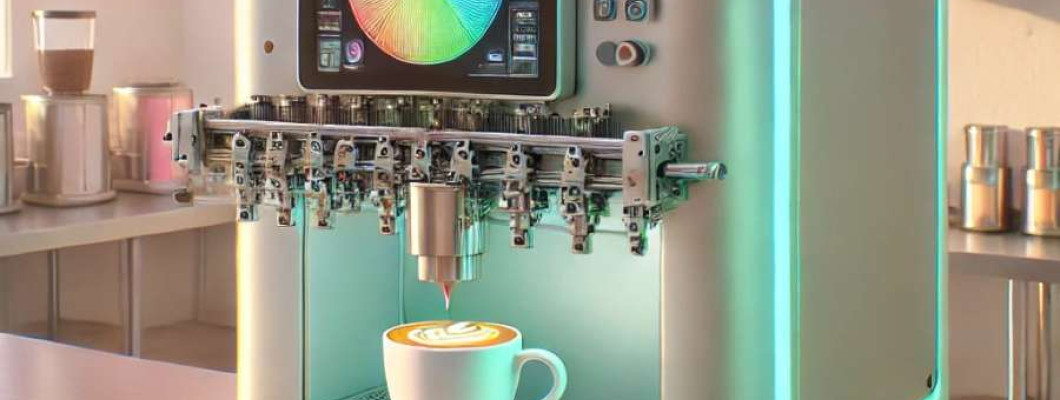
In the expanding niche of edible ink printing, the Color Version Latte Coffee Printer represents a pivotal technology that bridges artisanal creativity and industrial scalability. Enterprises aiming to incorporate latte art printing into high-volume coffee production confront a complex puzzle: how to maintain image fidelity and throughput without succumbing to the pitfalls of hobbyist-grade hardware. The core challenge lies in sustaining micron-level precision in image deposition on a fluid, constantly cooling substrate — steamed milk microfoam. Unlike static printing surfaces, milk foam undergoes rapid textural and thermal changes, making operational consistency difficult.
Typical consumer-focused coffee printers struggle with ink viscosity control, printhead clogging, and inconsistent droplet ejection patterns, all of which induce bottlenecks during peak service hours. These factors lead to degraded image quality, increased maintenance downtime, and ultimately, diminished customer experience. Conversely, industrial-grade solutions, while more robust, often necessitate complex infrastructure adaptation and detailed environmental compliance to function within a brisk café or large-scale manufacturing setup.
For scalable business owners, the operational demands extend beyond print resolution measured in dots per inch (dpi); throughput optimization, automated substrate handling, and minimal manual intervention become mission-critical. The Color Version Latte Coffee Printer integrates precision-engineered piezoelectric printheads with specialized food-safe inks designed to maintain viscosity at temperatures ranging from 50°C to 65°C, aligning with barista standards. This synergy permits continuous 300 dpi color printing on latte surfaces at a cycle time of approximately 10 seconds per cup under optimized conditions.
Technical Deep-Dive
1. Printhead Technology and Droplet Dynamics
At the heart of the industrial capability is the piezoelectric printhead matrix delivering droplets as small as 10 picoliters (pl). The drop size precision directly impacts image sharpness and color gradation on the milk foam surface. The piezo crystals enable rapid actuation frequencies exceeding 20 kHz, fulfilling high-throughput operational mandates. This contrasts markedly with thermal inkjet mechanisms typical in DIY setups, which face constraints under food-safe ink viscosities.
Mathematically, the Reynolds number (Re) for droplet ejection is estimated using Re = (density × velocity × characteristic length) / viscosity. Achieving stable droplet formation at the targeted viscosity (approximately 4 mPa·s) requires precise calibration of voltage pulses and nozzle geometry, ensuring stable jet breakup and consistent droplet trajectory on the dynamic foam substrate.
2. Ink Chemistry and Food Safety Compliance
Industrial-grade latte printers deploy inks composed of food-grade pigments suspended in water-ethanol blends. The solvent system ensures rapid drying without foam collapse, while pigments are certified under FDA 21 CFR guidelines for direct food contact. This is critical to avoid any degradation in substrate integrity or health hazards. The ink’s surface tension is maintained at approximately 35 mN/m to optimize wetting and absorption properties.
3. Thermal and Environmental Control Systems
The printer integrates advanced thermal regulation via embedded Peltier modules maintaining ink reservoir temperature stability within ±0.5°C, preventing ink viscosity drift. Simultaneously, ambient humidity sensors enable adaptive printhead firing adjustments to mitigate clogging risks. This results in over 98% uptime in continuous batch operations, a major operational advantage over less engineered consumer alternatives.
4. Throughput Analysis and Automation Potential
With a nominal print cycle of 10 seconds per standard 300 ml latte, throughput metrics project roughly 360 cups per hour in uninterrupted runs. When combined with automated cup handling systems, throughput scales linearly, mitigating labor costs and reducing bottlenecks in peak demand periods.
5. Infrastructure Integration Challenges and Solutions
The device requires a power input of 220-240 V AC with a rated consumption of 90 W during active operation, placing it within low-power industrial equipment class. Integration with existing POS and preparation workflows necessitates custom API-based software interfaces enabling queue management and quality control feedback loops, exceeding the abilities of off-the-shelf hobbyist printers.
| Specification | DIY Coffee Printer | Color Version Latte Coffee Printer |
|---|---|---|
| Printhead Type | Thermal Inkjet | Industrial Piezoelectric |
| Droplet Volume (pl) | 20-40 pl | 10 pl |
| Resolution (dpi) | 150-200 dpi | 300 dpi |
| Throughput (cups/hr) | 60-120 | 360 |
| Food Safety Certification | Varies, often lacking | FDA 21 CFR Compliant |
| Uptime Reliability | ~80% | >98% |
| Power Consumption (Watts) | 50-70 | 90 |
Scenario Analysis
1. High-Volume Café Chain
A multi-location café chain adopting the Color Version Latte Coffee Printer benefits from rapid, consistent output enabling elaborate brand-specific latte art during peak hours. The hardware’s robustness reduces unexpected maintenance interventions, ensuring operational continuity and high customer throughput, critical for revenue maximization.
2. Corporate Catering Services
In a corporate event environment, transient setups require portable, industrial-grade printers capable of swift setup without sacrificing image fidelity. The thermal stabilization and real-time printhead diagnostics embedded within the printer support reliable printing on variable milk foam quality, maintaining professionalism in service delivery.
3. Specialty Coffee Roasters
Specialty roasters integrating the printer into their retail outlets leverage the color precision and substrate versatility to create bespoke client experiences. The printer’s ability to handle diverse milk substrates, including dairy alternatives with varying foam textures, provides an edge in product differentiation.
Expert FAQ
How does piezoelectric actuation improve print fidelity compared to thermal inkjet in latte printing?
Piezoelectric actuation precisely controls droplet size and jet frequency without heat application, critical for maintaining food-safe ink properties and stable droplet flight paths, reducing printhead clogging prevalent in thermal systems.
What maintenance cycles and consumable replacements are typical for commercial use?
The Color Version Latte Coffee Printer requires routine printhead cleaning approximately every 8 hours of continuous operation and ink cartridge replacement every 500-600 prints under normal usage, balancing uptime and print quality.
How is color calibration managed considering the translucency and texture of milk foam?
Color calibration employs closed-loop feedback from an integrated camera system that adjusts print parameters in real-time, compensating for foam density, texture variations, and ambient lighting to preserve color accuracy.
What environmental compliance certifications does the printer meet?
The device complies with CE and RoHS directives for electronic equipment and secures food safety certifications aligned with FDA 21 CFR part 175 for direct food contact inks.
Can the printer integrate with automated cup handling and ordering systems?
Yes, the printer includes an open API allowing seamless integration with automation hardware and software platforms, facilitating queue management, error reporting, and predictive maintenance.
Strategic Verdict and Recommendation
For scalable business owners seeking an industrial-grade solution for integrating color latte art printing into high-demand coffee service environments, the Color Version Latte Coffee Printer stands as a definitive choice. Its advanced piezoelectric printhead technology, stringent food safety compliance, and adaptive thermal management system elevate it well beyond consumer-grade alternatives frequently plagued by reliability and throughput limitations. With an ability to sustain production rates of 360 cups per hour at 300 dpi resolution, paired with integration-ready software interfaces, this printer addresses both operational and infrastructure challenges inherent in scaling from boutique to enterprise levels.
We recommend acquiring the Color Version Latte Coffee Printer for businesses aiming to distinguish their coffee offerings with consistent, high-fidelity latte art applied at industrial speed and precision. This investment promises measurable improvements in customer engagement, operational efficiency, and long-term asset reliability.