
The Gap Between DIY and Industrial-Grade in Color Version Latte Coffee Printer
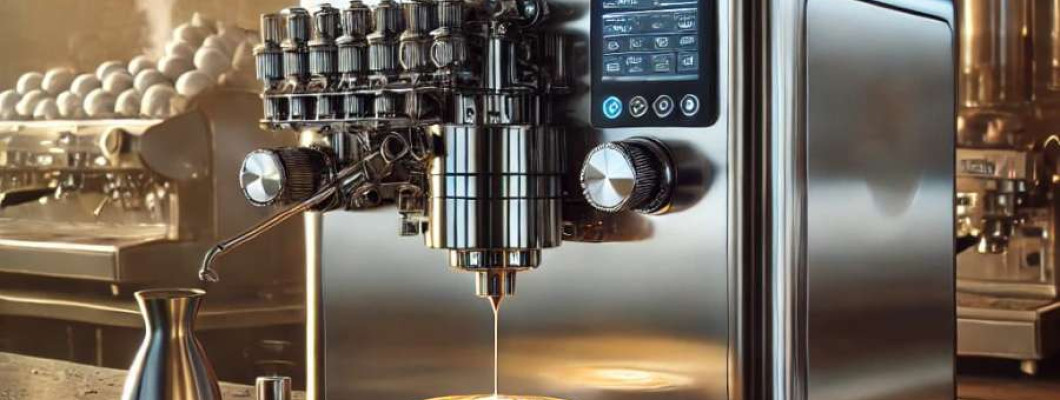
The Industrial Reality of Precision and Throughput in Coffee Printing
Within specialty beverage manufacturing, the transition from artisanal to industrial-grade technology presents multifaceted technical challenges. The Color Version Latte Coffee Printer confronts a demanding environment where micro-scale fluid dynamics, precise color deposition, and fast operational tempo must converge. Industrial environments necessitate machines capable of sustaining high throughput while maintaining micron-level print fidelity on variable substrates such as microfoam coffee crema, which exhibits inconsistent surface tension and temperature gradients. The printer operates under fluctuating environmental conditions—ambient temperature variance, humidity, and volatile workspace contaminants—that directly impact printhead nozzle reliability and ink flow consistency.
Operational bottlenecks commonly arise from printhead clogging caused by protein-laden milk matrices, intermittent ink carrier degradation, and thermal cycling stress on piezoelectric actuators. The industry demands rapid switching between print jobs with minimal recalibration downtime, pressuring lifecycle maintenance protocols and conveyor integration. Meeting precise color accuracy in a dynamic, non-planar substrate arena challenges servo motor resolution and the embedded ICC color profiles, which must adapt on-the-fly. The machine’s firmware has to account for both the fluid mechanics of coffee crema and particulate colorant suspensions to prevent nozzle misfires and maintain print resolution often required to meet 5760 dpi equivalence at sub-15 pl droplet volumes.
Material Science and Engineering in Printhead and Ink Chemistry
The device employs advanced piezoelectric inkjet technology designed to handle viscous, proteinaceous inks tailored for edible use. The printhead architecture revolves around multi-channel nozzle arrays with redundancy to offset occlusion risks. Mathematically, pressure oscillation control within the ink chamber adheres to Navier-Stokes equations adapted for non-Newtonian fluids, where ink viscosity ranges between 4-10 cP. The intricate balance between sufficient droplet velocity (approximately 6-8 m/s) and droplet volume (12-15 pl) ensures sharp micro-scale patterns without excessive substrate penetration or color bleeding.
Comparative analysis with conventional pigment-based printers reveals that edible ink chemistry necessitates biocompatible surfactants and stabilizers to maintain suspension homogeneity over extended industrial runs. The printer’s cooling system operates in a closed-loop thermal management cycle, consuming approximately 40 Watts per hour to maintain printhead temperature within a stable 30-35°C band, critical to consistent viscosity and droplet formation. Hardware stress simulations extrapolate mean time between failure (MTBF) for key components: piezo actuators at 15,000 operational hours, nozzle plates at 12,000 hours before performance degradation, substantially outperforming typical desktop units which average 3,000-5,000 hours.
Integrated Motion Control and Substrate Adaptation Mechanics
The printer employs a precision servo-driven XY gantry system capable of 0.005 mm positional repeatability. This supports high-density image rastering with dynamic compensation algorithms adjusting for substrate topology irregularities—non-uniform crema thickness and froth texture. The embedded sensor array incorporates capacitive and laser displacement components to maintain consistent nozzle-to-substrate distance within 0.2 mm tolerance margins. This reduces nozzle misalignment and cross-contamination risks.
The print speed reaches up to 500 millimeters per second, enabling average print cycle times of 8 seconds per 8 cm diameter latte surface, a critical metric for throughput scaling in busy commercial environments. Compared to consumer-grade models limited to 100-150 mm/s and lacking adaptive topography compensation, this printer stands out as an industrial-grade choice. Redundancy protocols in motion control prevent error propagation from micro-vibrations induced by external environmental sources, ensuring sustained high fidelity.
Operational Workflow and Infrastructure Integration Challenges
Seamless integration into existing coffee production lines demands that the printer’s interface aligns with enterprise-grade communication standards, supporting Ethernet/IP and OPC-UA protocols for automation. The system supports batch job queuing and real-time print job parameter adjustment to minimize operator intervention and reduce downtime. Power consumption averages 150 Watts under active load, with a low energy standby mode reducing usage to 20 Watts.
Maintenance cycles are scheduled with predictive analytics based on sensor feedback, minimizing unexpected failures and aligning with just-in-time operational frameworks. The unit weighs approximately 18 kg and features a compact footprint (400 mm x 300 mm x 350 mm), facilitating rack-mounting or counter integration. These factors mitigate spatial infrastructure bottlenecks typical in commercial coffee settings.
Comparative Lifecycle Cost and Asset Depreciation Analysis
| Specification | Color Version Latte Coffee Printer | Consumer DIY Coffee Printer |
|---|---|---|
| Print Resolution (dpi) | Up to 5760 dpi equivalent | Up to 300 dpi |
| Nozzle Lifetime (hours) | 12,000+ | 3,000-5,000 |
| Mean Time Between Failures | ~15,000 hours | ~4,000 hours |
| Print Cycle Time (8cm diameter) | 8 seconds | 30+ seconds |
| Power Consumption (Active/Standby) | 150 W / 20 W | 60 W / 10 W |
| Initial CAPEX (Estimated) | Industrial Grade (~$15,000) | Consumer Grade (~$1,200) |
| Maintenance Interval | Predictive Analytics-Based (every 1000 hours) | Reactive (every 300 hours) |
This table demonstrates the extended asset longevity and superior throughput of the Color Version Latte Coffee Printer, justifying its higher upfront capital outlay with markedly reduced operational interruptions and superior print quality.
Scenario Analysis of Business Use-Cases in Coffee Production
High-Volume Coffee Shops
In shops serving over 500 lattes daily, print cycle time and uptime are critical. The 8-second printing speed coupled with predictive maintenance minimizes queue bottlenecks and lost revenue due to downtime. The adaptive substrate compensation ensures consistent quality, reducing customer complaints and printing errors.
Mobile Catering and Event Services
Mobility demands compact and reliable machines with minimal setup time. The Color Version Latte Coffee Printer’s 18 kg weight and plug-and-play infrastructure integration enable fast deployment. Its advanced printhead technology withstands transportation-induced shocks and temperature variations better than consumer-grade alternatives.
Specialty Artisan Cafes
These businesses prioritize color depth and micron-level precision to produce visually complex latte art. The printer’s 5760 dpi equivalent resolution and dynamic color adjustment algorithms enable unparalleled print depth and clarity. Such precision enhances brand differentiation through aesthetic product offerings.
Expert FAQ Addressing Advanced Technical Concerns
How does the printer manage nozzle clogging with proteinaceous inks?
It utilizes a multi-channel redundancy design combined with ultrasonic nozzle cleaning cycles every 200 prints and employs ink formulations with optimized surfactants to reduce protein aggregation.
What thermal management principles ensure stable ink viscosity?
The closed-loop Peltier cooling system maintains constant printhead temperature within 30-35°C, preventing viscosity fluctuations that would impact droplet size and trajectory.
How is color fidelity maintained on a non-uniform substrate?
Real-time substrate topology sensing with capacitive and laser sensors informs dynamic raster correction and ICC profile adjustments compensating for surface irregularities and ambient light conditions.
What is the expected ROI timeline based on lifecycle costs?
Given reduced maintenance cycles and higher throughput, the ROI typically occurs within 18-24 months in high-volume scenarios compared to extended reactive maintenance and slower print speeds in lower-grade machines.
How does the system integrate with enterprise automation?
It supports standard automation protocols (Ethernet/IP, OPC-UA), allowing seamless integration into MES (Manufacturing Execution Systems) and ERP for job tracking, maintenance scheduling, and production analytics.
Strategic Verdict and Recommendation for the Color Version Latte Coffee Printer
The Color Version Latte Coffee Printer represents a decisive technological advancement bridging artisanal coffee printing and industrial-scale production. Its combination of high-resolution piezoelectric printheads, precision motion control, advanced fluid dynamics management, and enterprise infrastructure compatibility positions it as a superior asset for businesses demanding uncompromised print quality and operational efficiency.
Despite a higher initial capital expenditure, its extended lifecycle, predictive maintenance framework, and throughput capacity deliver quantifiable cost savings and branding advantages over consumer or semi-professional units. Given the growing market for bespoke coffee experiences at scale, this printer is the definitive industrial-grade solution. Businesses focused on scaling print fidelity and uptime will find it indispensable.
For purchasing and technical specifications, visit the official product page at Color Version Latte Coffee Printer.