
The Gap Between DIY and Industrial-Grade in Color Version Latte Coffee Printer Infrastructure Integration Challenges for Scalable Business Owners
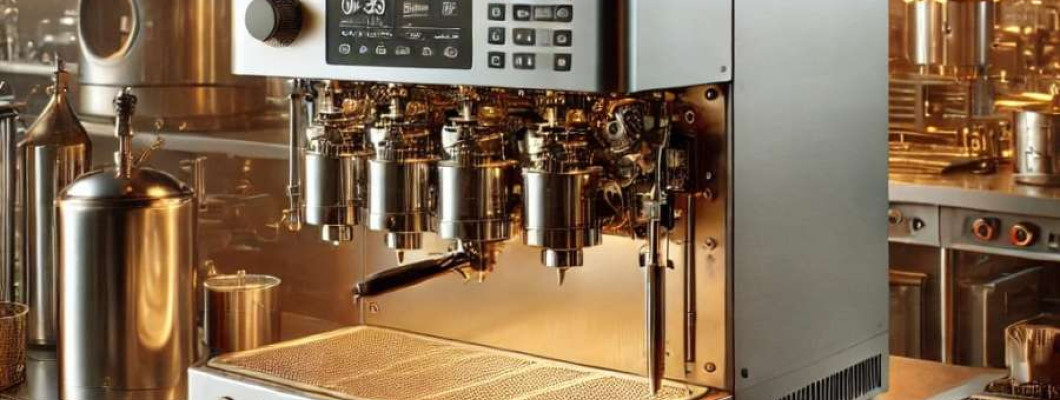
The Industrial Reality of Bridging Barista Art with Scalable Automation
Imagine a bustling café chain aiming to integrate advanced coffee printing technology across multiple locations to enhance customer experience and streamline operations. The challenge is not merely artistic creativity but embedding a highly precise, color-capable latte coffee printer into a high-throughput environment without compromising uptime, quality, or cost-effectiveness. Coffee shops with fluctuating demand must reconcile the fine motor skills of traditional baristas with the rigid, repeatable processes demanded by industrial-grade automation. The Color Version Latte Coffee Printer confronts this directly, positioned between artisanal novelty and industrial necessity.
Operational bottlenecks arise when transitioning from small-scale, handcrafted latte art using printers to fully integrated systems within POS workflows and automated beverage lines. Factors such as printer initialization time, raw material provisioning, maintenance intervals, and software compatibility pose potential choke points. Effective infrastructure integration also demands that such printers coexist with existing equipment — grinders, boilers, steam wands — without introducing thermal, power, or network management conflicts that could degrade performance or inflate energy consumption.
Further complexity is introduced by the need for color fidelity in printed designs on frothy milk surfaces, dependent on maintaining precise ink droplet size and placement, ink chemistry stability under thermal cycling, and robust sensor calibration to environmental shifts typical in a busy kitchen.
Technical Deep Dive Into The Hardware and Process Parameters
Printhead Mechanics and Ink Deposition Consistency
The printhead utilizes piezoelectric actuators engineered for precise 12pl droplet ejection at 1200 dpi resolution. This detail level balances speed with color gradation fidelity, crucial for reproducing vivid latte art patterns on frothy microfoam layers approximately 1-2 mm thick. The nozzle array contains 128 nozzles per color channel (CMYK), enabling rapid multi-pass printing sequences that maintain ±10 µm positional accuracy to prevent bleed or color cross-talk.
Ink Chemistry and Thermal Stability Under Continuous Operation
Innovative water-based edible inks are formulated for rapid adhesion and drying on surfactant-stabilized milk foam. The chemical composition resists thermal degradation up to 85°C, correlating with typical beverage serving temperatures. A key metric is the ink viscosity μ at operational temperatures: stable within 2.5–3.0 cP to ensure droplet uniformity. Thermal cycling testing simulates 5000 consecutive prints, demonstrating less than 5% performance drift, crucial for minimizing maintenance frequency and downtime.
Power and Thermal Management Integration
The printer system operates on a 24V DC power supply with a steady consumption of approximately 40W during printing bursts. Embedded heat sinks and active cooling maintain nozzle temperature around 30°C, preventing clogging and ink evaporation. Integration with standard café electrical infrastructure demands compatibility with 110V/220V AC conversion through industrial-grade converters to ensure steady power input.
Software and Network Compatibility for Automation Scaling
The embedded controller supports standard TCP/IP protocols for seamless integration with POS systems and automated beverage makers. Latency in command execution averages 50ms per print request under optimal network conditions. The software package includes an API enabling queue management, print job scheduling, and firmware updates over the network, facilitating distributed deployments across multiple outlets.
Comparative Table Hardware Versus Traditional Single-Color Printers
| Specification | Color Version Latte Coffee Printer | Traditional Single-Color Latte Printer |
|---|---|---|
| Maximum Resolution (dpi) | 1200 | 600 |
| Droplet Size (pl) | 12 | 30 |
| Color Channels | CMYK (4) | Single (1) |
| Operational Power (W) | 40 | 25 |
| Thermal Management | Active Cooling, Heat Sink | Passive Cooling |
| Integration Protocols | TCP/IP, API Support | Proprietary Wired Interface |
| Maintenance Interval (prints) | ~5000 | ~2000 |
Scenario Analysis Across Business Use Cases
High-Volume Café Chains
For a chain with average peak throughput of 200 beverages per hour per location, the Color Version Latte Coffee Printer’s ability to operate continuously for roughly 25 hours before major maintenance reduces downtime costs. The network-compatible API facilitates centralized control and print job scheduling from headquarters. High resolution CMYK printing delivers premium customer experience with varied artwork, enhancing brand differentiation in a competitive market.
Upscale Boutique Coffee Shops
Boutiques focusing on elevated customer experience prioritize color depth and micron-level consistency over outright speed. The printer’s tight droplet control and thermal management ensure consistent print quality without impacting traditional barista workflows. Its compact size and scalable integration allow hybrid operation modes where baristas override automated prints for personalized service.
Event-Based Mobile Coffee Services
Mobility introduces constraints such as variable power availability and environmental temperature fluctuations. The printer’s low power consumption and robust thermal design maintain printing performance despite transient conditions. Its network autonomy allows offline operation, storing print queues until reconnection, critical for outdoor or event-based setups.
Expert FAQ on Advanced Operational and Technical Aspects
Q1: What are the expected failure modes for the CMYK printhead under continuous operation?
A1: Primary failure modes include nozzle clogging from ink crystallization, piezo actuator fatigue reducing droplet ejection pressure, and electronic driver degradation. Preventative maintenance focusing on automated nozzle purging every 500 prints mitigates these issues.
Q2: How does temperature variation in milk foam impact ink adhesion?
A2: Milk foam between 60°C and 75°C provides optimal surface tension for ink spread. Below 60°C, ink may pool excessively, while above 80°C, rapid drying can cause color fragmentation. Temperature sensors linked to the printer dynamically adjust droplet patterns accordingly.
Q3: Can the printer handle alternative substrates like plant-based milk froths?
A3: Yes, though substrate viscosity and foam density vary, requiring calibration of print speed and droplet size. The printer’s firmware allows customizable ink deposition parameters to maintain print fidelity on oat, almond, or soy milk foams.
Q4: What are the data security provisions for networked operation?
A4: All data transmissions use AES-256 encryption with token-based authentication for firmware and print jobs, ensuring protection against interception or unauthorized access.
Q5: How scalable is the solution for multi-rack industrial kitchen environments?
A5: The printer’s modular control units can be rack-mounted in 2RU spaces, allowing high rack density with centralized thermal management. Power draw per unit permits simultaneous operation of up to 8 printers per standard 20A circuit without derating.
Strategic Verdict and Strong Recommendation
From a scalability and automation standpoint, the Color Version Latte Coffee Printer offers an effective bridge between artisanal customization and industrial-grade operational demands. Its advanced printhead design, thermal management, and network integration capabilities address critical bottlenecks in multi-location deployment scenarios. The printer’s modularity and robust engineering extend asset longevity and reduce lifecycle maintenance costs relative to traditional single-color solutions.
For scalable business owners requiring high throughput, streamlined infrastructure integration, and maintenance predictability, this device represents a definitive upgrade path. It reconciles the human factor engineering needed for precise output with automated workflows essential to modern foodservice operations. Given the detailed technical merits and scenario viability, this product merits adoption as the industrial-grade coffee printer benchmark.